Tonight, I think it’s about time we had some music on the intheboatshed blog. Boating isn’t just about boats and sheds, boatbuilding or restoration, or even about navigating your boat – it’s also about a rich tapestry of personalities and culture.So tonight we have sea songs from my old friend Keith Kendrick. I hope Keith won’t mind when I say that with his dangerous smile he has something piratical about him and that when he sings with his concertina, he looks every inch everyone’s idea of the old fashioned sailor man. I’m sure he won’t mind when I say he’s a great singer of sea songs, as the MP3s I’m posting tonight will prove.
Ironically, Keith is a land-lubber by birth, originally hailing from the English county of Derbyshire and still living there today. Despite this, he did live on the East Kent coast for eight years where he was able to nurture more effectively an already strong leaning towards all things maritime. He has a long established and well documented history of performing and recording all kinds of music of the sea worldwide both solo and with various collaborations over forty years!
Keith is clearly passion-driven in his performance of sea shanties, fore-bitters and various other maritime related material including dance tunes on the English and Anglo concertinas.
He draws his influence from the old sailors and source singers of the material like: Stan Hugill (the last real shanty man), Bob Roberts and Cyril Tawney to name just three.
All of these three great singing heroes are now sadly gone and singers who have really studied their singing styles and songs, such as Keith, play an important role in carrying their legacy forward.
Listen in particular for the breaks and turns in his voice in the shanty set, for example – they’re one of the keys to real shanty singing.
Here are two tracks from his latest CD on the Wildgoose label Songs from the Derbyshire Coast. The first is the shanty Bold Riley (I’ve read somewhere that it’s a halyard shanty) and a set of three shanties, A Hundred Years Ago, Essiquibo River, and Rolling Down the Bay to Juliana. The files will take a moment to download but I can assure you that they’re well worth the short wait – this is shanty singing with real class.
Bold Riley is a windlass shanty that started life making the sugar run from the West Indies to the UK. Who ‘Riley’ was, unfortunately, is anybody’s guess.
A Hundred Years Ago is to one of two melodies commonly associated with this halyard Shanty from the USA – the other one is English in origin and both can be found in Stan Hugill’s seminal book, ‘Shanties From The Seven Seas’. Two other shanties: ‘A Long Time Ago’ and ‘Leave Her Johnny Leave Her’, share the same metre and are likely its two closest relatives.
The name of the Essiquibo River gives away the West Indian origins of this song – it would likely have been used originally inland for heavy shifting work and would have been lead by a Negro ‘shantyman’ eventually finding it’s inevitable way to sea where it’s use would need little adaptation. I take this at a slightly faster lick than it would have been sung in a working context.
Among the shanty set, I guess Rolling Down the Bay to Juliana, sometimes called Emma, is probably the least well known. It’s nevertheless one of the best halyard shanties around, and Keith tells me he believes it was collected in the early 1950s by folklorist A L Lloyd from ex-sailor Ted Howard. Ted, it is said, was on his death bed in a sailors’ hospital surrounded by all his shipmates when he sang this to Mr Lloyd. Apparently, his dying words were ‘Strike up South Australia and let me die happy!’
Bold Riley
Shanty set
Songs from the Derbyshire coast is available here:
http://www.guestlistwebarts.co.uk/eyup/cds.htm
More songs from Keith and friends:
http://intheboatshed.net/?p=78
A song from me:
http://intheboatshed.net/?p=609

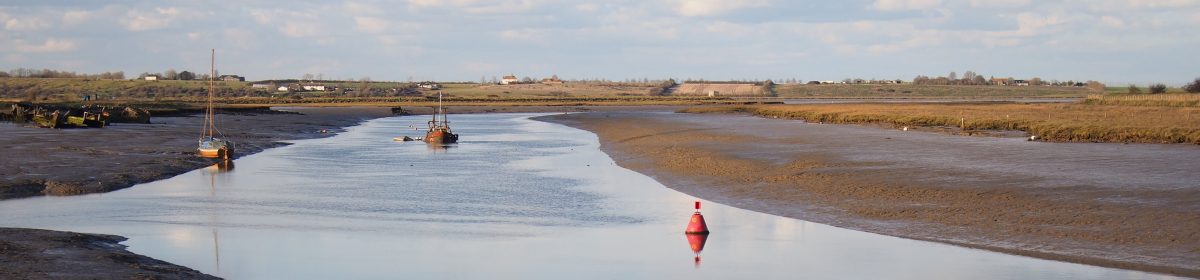
Photo by Andrew D C Basford (2006)