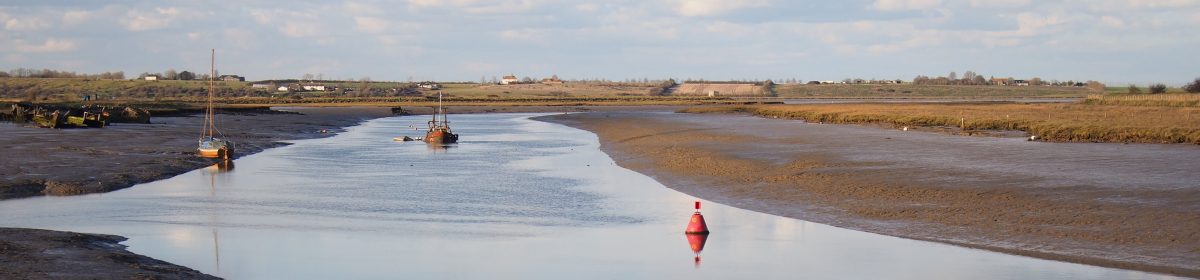
12 metre Sharpies at Wells, Norfolk

12 metre Sharpie

12 metre Sharpie 12 metre Sharpie 12 metre Sharpie

These 12 metre Sharpies were photographed at their national racing chapionships held at Wells in Norfolk a couple of weeks ago – the shots were sent in by intheboatshed.net regular Jim Van Den Bos.

‘Staying at Wells we stumbled onto a Sharpie championship. Very narrow boats and the steel boards are truly frightening. Apparantly once they capsize, they need to go ashore to be righted.

‘The  photos are from the Sunday when the boats were coming back in. On the Monday morning the weather was much nicer, but that day’s race turned out to be one of the slowest I’ve seen. Watching from the dunes at Holkham Bay I was at first amazed at how they were able to hold to the boats still at the start line – but then I realised  they had already started! The tide was stronger than the wind and some were going backwards.

‘In the end the first passed the windward mark 90 minutes after start. The full race results are here: British Sharpie Championship,Wells S.C. Norfolk, 18-20 June 2011.’

I’m not sure about Jim’s point about the steel boards – one of our family dinghies has one, and it hasn’t caused me any concern up to now – except the day the painter got jammed in the centreboard case and I couldn’t see how to go ashore!

The 12 metre Sharpie was designed in 1931 and was at its most popular in 1956, when it was a racing class at the Melbourne Olympics. The class is sailed competitively in the UK, Holland, Germany and Portugal using boats built to the original design – although I gather sail areas have increased from the original 12 square metres. Australians race a lighter-weight modified version they call the Australian Sharpie.

Scottish Coastal Rowing St Ayles skiffs triumph in wind and waves regatta


Anstruther Regatta 2011 photos by Ron Wallace

Anstruther Regatta 2011 photos by Ron Wallace Anstruther Regatta 2011 photos by Ron Wallace

These shots of the 2011 Anstruther Regatta taken by Ron Wallace at the end of last month show various Scottish Coastal Rowing Association St Ayles skiffs racing in the harbour – it looks like they’re having quite a time, doesn’t it?

There are more of Ron’s fabulous shots here and here.

Alec Jordan, who originally conceived the idea for Scottish Coastal Rowing, has this to say about the event:

‘It was a little wild and windy, and the St Ayles performed superbly. None of the skiffs took more than a couple of pints of water during the races.’

Perhaps that’s not so surprising as the boats are derived from traditional craft and were designed by Iain Oughtred.

The Scottish Coastal Rowing phenomenon continues to be awe-inspiring, with a very lively racing calendar and new boats being built all the time – and not all in Scotland.

XOD racing keelboat centenary celebrations, Royal Lymington Yacht Club, 3rd June

XOD-Fleet-at-Cowes-R-Tomlinson-lr Skandia Cowes Week 2007 day 1, Saturday August 4 X166 Swallow, X86 Aora
The XOD fleet racing at Cowes; photo taken by Rick Tomlinson

The XOD keelboat class will kick off its its centenary celebrations by holding a day race in Edwardian costume at Royal Lymington Yacht Club on Friday 3rd June.

I trust there will be plenty of tweed, eminently twiddleable moustachios, and of course bonnets and demure but practical long skirts!

Some 100 or so boats are expected to compete in a three day centenary regatta including the Lymington and Yarmouth XOD fleets.

In 1911 Yachting Monthly reported that seven 21ft keelboats of a newly established one design class came to the start line for their first race, off Hythe in Southampton Water. The boats were gaff-rigged, and the Bermudan rig came in during 1928.

By 1939, 81 X One Design boats had been built. In 1961, there were 52 starters at Cowes Week, and now a hundred years after the first race the class hasn’t just survived but grown to become the largest fleet on the start line at Aberdeen Asset Management Cowes Week.

The original racewas won by Portsmouth brewer Harry Brickwood. One of the boats in the original race X5 Madcap, is still racing today, while the first XOD, X1 Mistletoe, which was built by Alfred Westmacott on the Isle of Wight, is now at the National Maritime Museum Cornwall.

Cowes Week 2010 was won by X26, which was built in 1923.

The XOD is a pretty wooden yacht of just under 21ft in length; it has two or three crew, and crews of all sizes compete on equal terms. The spinnaker can be flown from within the safety of the cockpit, which avoids any need for foredeck work.