First of three Yankee Jack shanty CDs about to be launched

Yankee Jack John Short

The first of three CDs presenting the entire collected repertoire of the legendary Somerset shanty singer John ‘Yankee Jack’ Short will be launched at the end of May this year.

The songs were collected from the deep water sailor by the great folklorist Cecil Sharp in 1914. In all, Yankee Jack gave Sharp a total of 60 songs, 47 of which were included in Sharp’s influential book English Folk Chanteys.

Some of the sixty are familiar but others are rarer, and the songs not included in the book have remained unsung – until now.

Within the three CDs can be found everything from wild chants from the cotton ports of the Southern United States to texts of classic English folk songs, and from wistful contemplative laments to outright bawdiness.

Some of the shanties are believed to date from a very early point in shanty-singing.

All the songs on the CDs have been taken directly from Sharp’s manuscripts rather than from his book, with the aim of making them as close to Short’s versions as possible.

The genesis of the project was when well known singers Tom and Barbara Brown found the shanty Rosabella tucked away in one of Sharp’s manuscripts in the Vaughan Williams Memorial Library at Cecil Sharp House in London – they then passed the song on to friends including shanty singers Johnny Collins and Jim Mageean, and it quickly became popular among revivalist singers.

As well as Tom and Barbara, the performers on this disc on the WildGoose label include Jim Mageean, Keith Kendrick, Sam Lee, Jackie Oates, Roger Watson, Brian Willoughby and Jeff Warner, from the USA.

The CD is also dedicated to the memory of Johnny Collins, who would certainly have been involved in the project if he had not sadly died two years ago.

The launches of the first CD of the series are to be an invitation-only event on the evening of Tuesday 24th May at the Esplanade Club at Watchtet and at the Saturday afternoon of Chippenham Folk Festival at Chippenham in Wiltshire on the Whitsun bank holiday weekend.

The remaining CDs will be released as a double album later in the year.


A new yard building ‘zompen’ sailing barges at Enter, in Holland

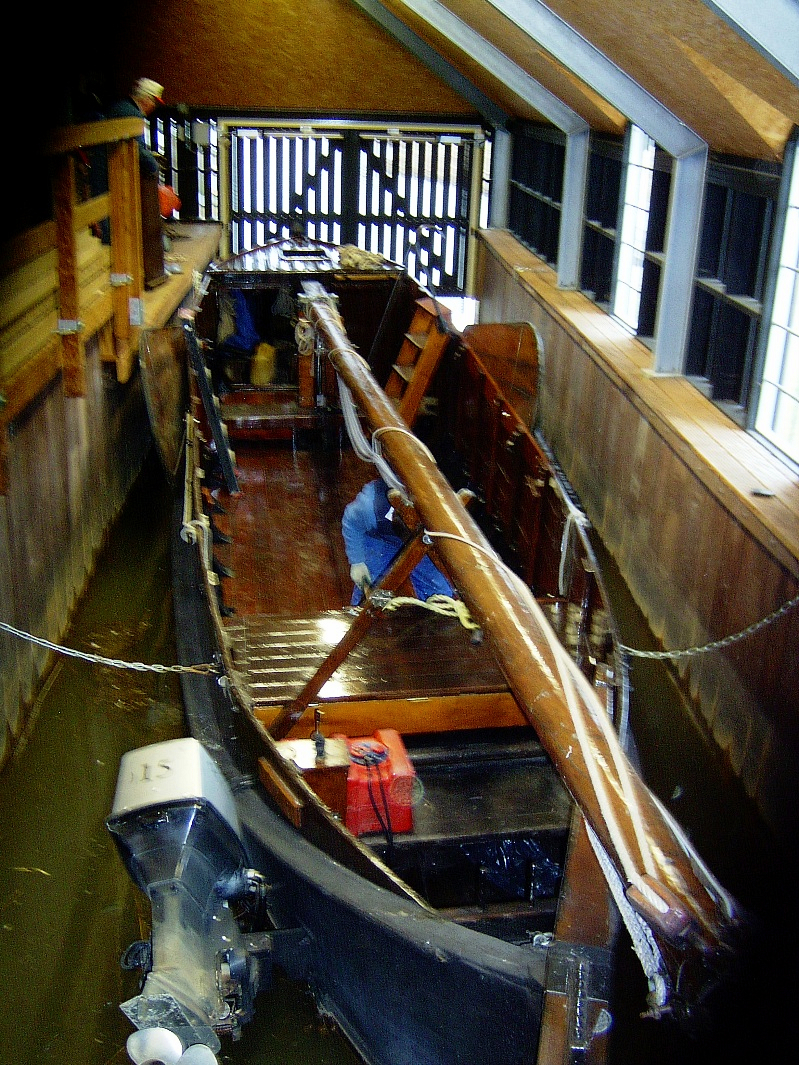
Boatyard at Enter, Netherlands

Boatyard at Enter, Netherlands the first zomp Boatyard at Enter Boatyard at Enter

Boatyard at Enter Boatyard at Enter, Holland

Hans-Christian Rieck took a trip to a modern boatyard at Enter in Holland, which he rightly argues shows the value of maintaining historic boatyards. Take note Swale planners and Faversham councillors!

Here’s what Hans has to say.

‘From the 17th century river traffic in the east of the Netherlands and the north west of Germany was carried out mostly using a working craft known as a zomp. The little ships worked the rivers Berkel, Regge, Schipbeek, Dinkel and Vechte. They were about 12m long and could carry a load of about 10 tones.

‘From the 1850s onwards bigger canals were built and the rivers were made more easily navigable, and so larger hips with bigger payloads came into use. The zompen as a type came under pressure, and within one generation the disappeared almost completly. The last original zomp was kept in a museum in Arnheim in 1940, when it was hit by a grenade during Operation Market Garden and badly damaged.

‘But the Dutch are proud of their maritime heritage and the remains of the last zomp were preserved. In the 1980s Dr G-J Schutten made a reconstructed drawing of the lines of the old zomp and published them, which awakened a great deal of interest in the little village of Enter, which has a long history of involvement with the zomp trade.

‘During the 19th century, of 150 families in the village 120 were involved in shipping goods using zompen. By tradition, at Christmas every zomp skipper had to be at home to attend church, and it must have been an impressive picture, seeing 120 ships packed into such a small port!

‘To keep the history alive, the inhabitants of Enter decided to reconstruct the old zomp and with the help of Dr Schutten in 1984 a wooden boatyard in Giethoorn built the first new zomp for over 100 years – it is now used for carrying tourists along the River Regge.

‘But the brave folks of Enter wanted more a shipyard of their own, where they could build their own zompen – and they were successful. In 2009 the Zomp Wharf in Enter opened its doors.

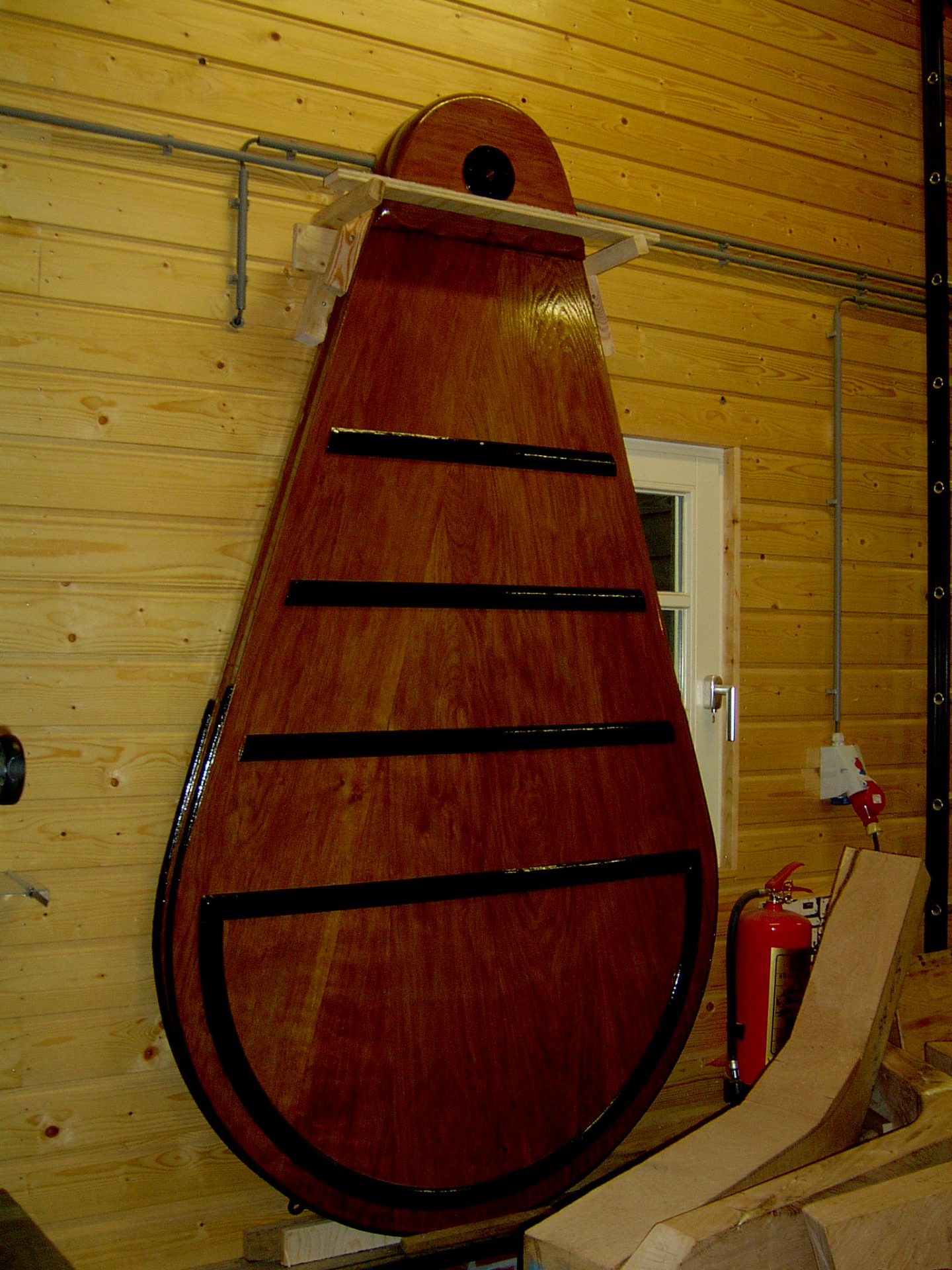
‘It is a paradise of wooden boatbuilding, with steamed planks an inch thick and frames of grown oak, and a team of old-time shipwrights keep up the tradition of woodworking. If ever you are around the Regio Twente in the Netherlands go to Enter and visit the wharf. It will be worth it, I promise you.’

Thanks Hans! See the project website: http://www.entersezomp.nl.


A splendid new Faversham Creek poster

Faversham Creek Trust poster

Faversham Creek Trust poster Faversham Creek Trust poster Faversham Creek Trust poster

Click on the images for a much bigger view!

Bob Telford of the Faversham Creek Trust has sent me this splendid poster telling the story of the creek and its industries, including boatbuilding at Standard Quay. It also outlines the trust’s proposals for its future.

The pdf version is Faversham Creek Trust poster.

I’m reminded that there’s a meeting tonight that will provide an important opportunity for voices in support of preserving to creek to be heard. See this earlier post for details. I’m sorry to say I won’t be able to attend as I’m currently battling a nasty bout of bronchitis, but I’m hoping some local intheboatshed.net readers will be there, and I’m very much looking forward to hearing how the event went.

Also on the subject of Standard Quay, don’t forget the petition calling on the council and planners to preserve this historic working quay and boatyard for the future – it needs your signature now!

PS – Regular readers will be pleased to know that it looks like the meeting on Tuesday went well from the campaign’s point of view!