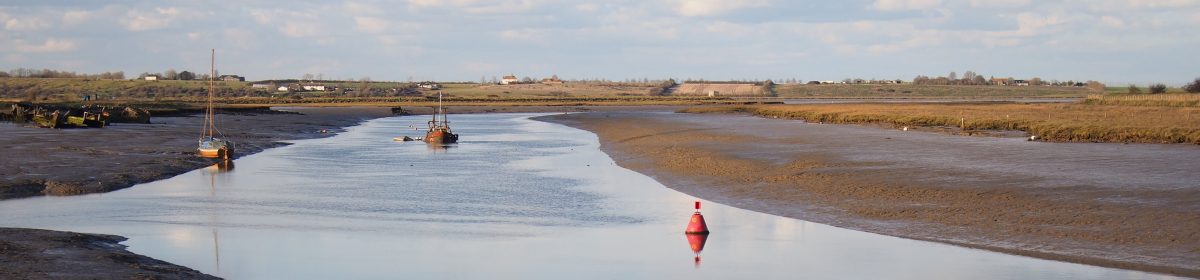
Nick Smith motor launch Lisa at sea

[ad name=”intheboatshed-post”]

lisa-at-sea-fave-3

lisa-at-sea-fave-1 lisa-at-sea-fave-2

Lisa at the mouth of the Yealm

Nick Smith has just sent me these photos of motor launch Lisa at the mouth of the Yealm on the day she was launched. Read all about her here.

If you don’t already know him, Nick comes from Devon, learned boatbuilding the traditional way and specialises in new builds in clinker and carvel for sail, motor and rowing power from 8ft to 28ft with a special emphasis on West Country style and design, and also takes on repairs and refits from 25ft to 50ft. These days he’s based in Hampshire, and can be contacted by email at nick_smith_boatbuilder@yahoo.com and by phone on phone on 07786 693370.

The almost unbelievable galley

[ad name=”intheboatshed-post”]

galley01-470

Galley drawing from On the High Seas – click for a larger image

Idly reading my first edition copy of On the High Seas by E Keble Chatterton, I was astonished to find this drawing of a galley.

The book itself is a largely unstructured collection of salty yarns about mutiny, exploration, slavers, pirates and high adventure – the chapter headings themselves tell a story, for they include: Chpt 1 Deep Sea Roving, Chpt IV The Profession of Piracy, Chpt VIII St Helena and the Slavers and Chpt XI Gambling with Death.

I can’t be sure that the proportions of the tippy-looking vessel shown are truly representative, but for me at least, this drawing of a galley from the chapter on the Profession of Piracy raises some practical points. It has a rig that would normally be expected to be best in beating rather than running – but I suspect sailing upwind was not its main purpose. For one thing I imagine the rowing galleries must have been vulnerable to digging-in when heeled, causing a kind of wild reverse-broach; for another I’d guess that like one of Pete Culler’s recreational skiff users, the commanders of these craft would row upwind when it was faster than sailing.

The power question is interesting. By my count there are two galleries of 27 oars here, each with six oarsmen. If well trained and well they fed, could theoretically deliver 0.2hp each – and by my calculation hat’s 324 oarsmen who, in my calculation should be able to deliver a total of 65hp. That’s not a huge amount of grunt for a ship this size, but even this figure would have to be reduced by some factor because it must have been difficult for the oarsmen at the inner and outer extremes of each oar to deliver their theoretical maximum, either because of the lack of travel or because of too much.

Surely, the man by the gunwale must have been chosen for his massive strength and the man at the far end for his height and span?

The detail shown here is fabulous. Just look at the warlike group on the forecastle and the three guns. I’d hate to see one of these coming my way, particularly if I had no wind to escape!

Here’s what Keble-Chatterton has to say:

‘The corsairs of Tunis rarely emerged from the Mediterranean, but sailed about off the south of Sardinia, or Cape Passaro at the heel of Sicily, or that historic pirate area among the Ionian Islands. The latter was a risky sphere, for the Venetian naval galleys with sails, masts, big crews of oarsmen, and with bow-guns, wsere not infrequently to be met with. The Moors feared these Venetians as their deadliest enemies, nor was the Battle of Lepanto yet forgotten. Using handy lateen-sail feluccas, with plenty of men to row as required in light or head winds, the Tunis pirates had and endless series of bays, creeks, and islands wherein to creep for rest and recreation. Such islands as Candia, Lampedusa, Rhodes and Cyprus could be used; but Tunis itself, being an open roadstead with inadequate protection from the fort, was not for them an ideal base. Algiers, on the contrary, was protected by a mole and a citadel; and there was a light showing to enable the rovers to get home from the sea.’

Don’t miss something good. Subscribe to intheboatshed.net’s weekly newsletter.

Sir Robin reflects 40 years after winning the Golden Globe

[ad name=”intheboatshed-post”]

sir-robin-knox-johnston

Sir Robin Knox-Johnston

Today is the 40th anniversary of the day Sir Robin Knox-Johnston sailed his Colin Archer-style boat (designed by Billy Atkin, I believe) Suhaili into Falmouth Harbour and became the first man to circumnavigate the world solo and without stopping.

It was a breathtaking achievement in an era with few of the technical sailing, navigation, communication and safety aids available to ocean sailors today. Although the world knew little about it, Sir Robin had eventful voyage – by the time he passed the Cape of Good Hope he was already in the lead, but a knockdown shifted Suhaili’s coach roof, her water tanks were polluted and her radio was out of action, and later he had problems with his automatic steering.

But despite these difficulties Sir Robin and Suhaili continued and completed the journey to win the Sunday Times newspaper’s Golden Globe Award. There’s a famous story that when she sailed into Falmouth Harbour on 22nd April 1969 to be greeted by Customs officials with the traditional demand of ‘Where from?’ the single-word answer from her skipper was ‘Falmouth’.

Although not at all a conventional racing yacht and not in fact the boat Sir Robin originally intended to use for the circumnavigation, in many ways she could have been made for the job. Built from teak, she is said to be a strong, resilient boat built to a design highly respected for its seaworthiness.

I asked Sir Robin for his reflections on the Golden Globe after 40 years. Here’s his most interesting reply:

‘It’s hard to put the Golden Globe into perspective. I was the outsider, the one the Sunday Times said was most unlikely to succeed, so they did not give me a radio or contract as with the others. It was this attitude which meant it became impossible for me to find sponsorship.

‘Thus I knew little of the others’ plans, and to be honest, was not bothered as I had enough on my plate getting myself and Suhaili ready. The fact that my radio broke down meant that there was no news of me after I departed New Zealand until I was passing the Azores, so attention was on the others.

‘My re-appearance caused surprise to the organisers who by this time were focused on the race to be first between Donald Crowhurst and  Nigel Tetley and I am not sure it was very welcome. Certainly their representative in Falmouth on my arrival was more interested in asking me to attend Tetley’s arrival celebrations, to the extent he never congratulated me.

‘But that did not bother me, I was pleased to be back with family and loyal friends and began to think about what I would do next. My intention was to return to sea but this became unattractive as British India Steam Navigation Company, for whom I was an employee, had disappeared. At 30 years of age, and in those days, you did not retire, you could not afford to.’

Even at this distance in time, the lack of mental flexibility and insensitivity shown by the Sunday Times people seems breathtaking, but Sir Robin’s seems to have risen gracefully above such trifling matters.

See Sir Robin’s website and the National Maritime Museum Cornwall’s online exhibition, and hear him this morning on BBC Radio 4.

Also see Ben Crawshaw’s The Invisible Workshop piece here and the Bursledon Blog’s story about seeing Suhaili, Lively Lady and Gypsy Moth IV racing together in the Solent – it must have seemed strange to see this trio with crews on board instead of a lone figure.

In fact, many of the boating and sailing weblogs are making a bit of day of it, at the suggestion of Messing About in Boats.

Also, while I don’t know what Sir Robin would say about it, there’s also this intriguing new book describing the Golden Globe race and its effects on the lives of the entrants A Race Too Far.