
Last night the Purifier Building, which is to be used by the new shipwright apprentice scheme as a training workshop and premises was declared open by the Faversham Creek Trust’s guest of honour Admiral Michael Cecil Boyce, Baron Boyce, KG, GCB, OBE, DL.
I could not hear all that he said, but I did form the impression that Admiral Boyce made an articulate and encouraging speech, and I certainly heard him declare his strong support for the Trust’s aims. Admiral Boyce is chairman of HMS Victory Preservation Company and trustee of the National Maritime Museum, and also as chairman of the Royal National Lifeboat Institution – he’s clearly as busy as he is decorated.
I also got a chance to find out about Mayhi, the unusual skimming-dish of a racing yacht that the first batch of apprentices are to work on, and to talk with Griselda Musset about Creek’s history potential for regeneration, which with the right management and support could be tremendous.
Check out the photos. The Purifier Building itself is a relic of the town’s gas works, but behind it is an area where gunpowder used to be made on a series of islands set between ditches – the reason for the ditches is that it was safer to move the gunpowder by punt rather than using iron-rimmed cartwheels that might cause a spark.
Despite this precaution, however, there was at least one large explosion that brought down one of the two towers of the neighbouring Norman parish church at Davington.
The wharves around the Purifier Building date back two hundred years – the one on which the building stands is known as Ordnance Wharf, and I gather gunpowder from this site was used against the Spanish Armada and at Waterloo.
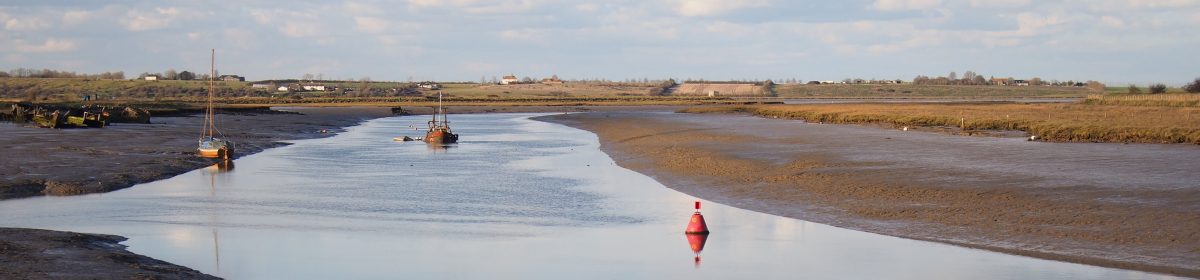
This area of the Creek is a pool controlled by sluices and a swing bridge that was built at the time of the horse and cart and is now no longer working due to damage caused by the weight of the vehicles that cross it in the modern age.
Griselda explained all this and suggested I consider how the area could be, with the brickwork of the old wharves restored, the pool dredged and full of barges and Creek itself an important centre for traditional boats and boat building and repair. I have to say that for me it certainly made a compelling picture – and more than enough reason to give the Trust my support.
PS – Richard Fleury has put two short videos on Vimeo – one of Griff Rhys Jones visit to the Purifier Building a couple of weeks ago, and one recording the arrival of Mayhi.
Click on the thumbnails below to see larger photographs.


