
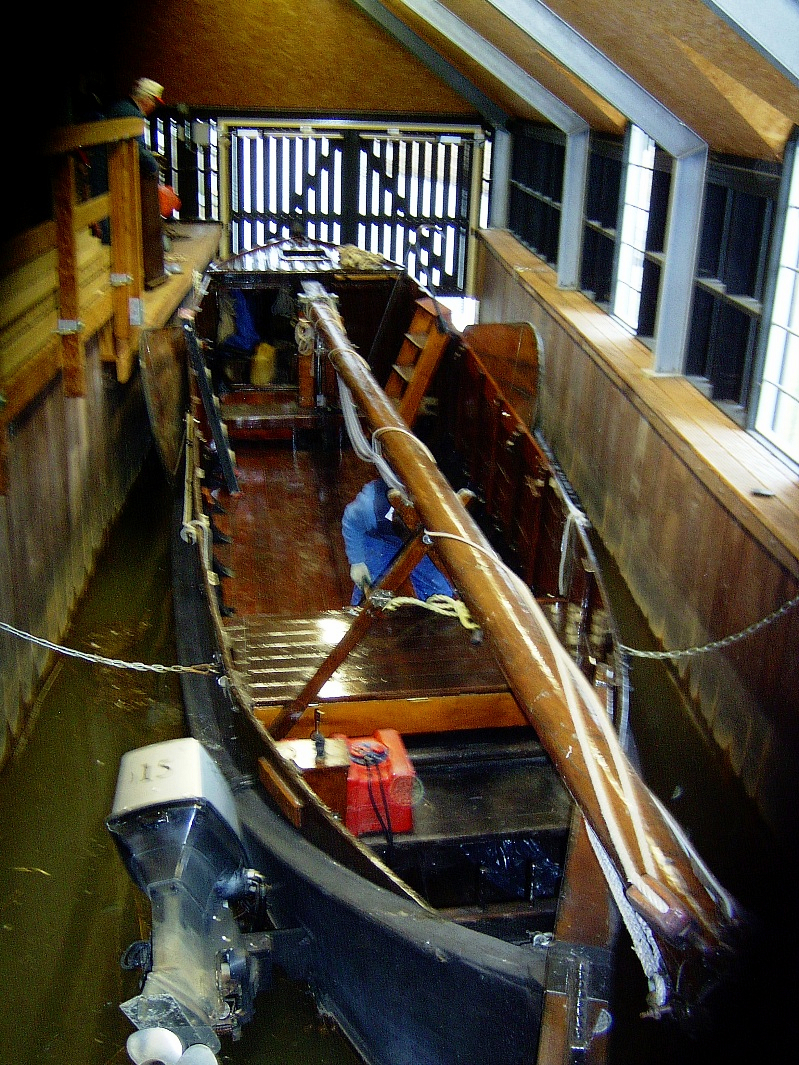
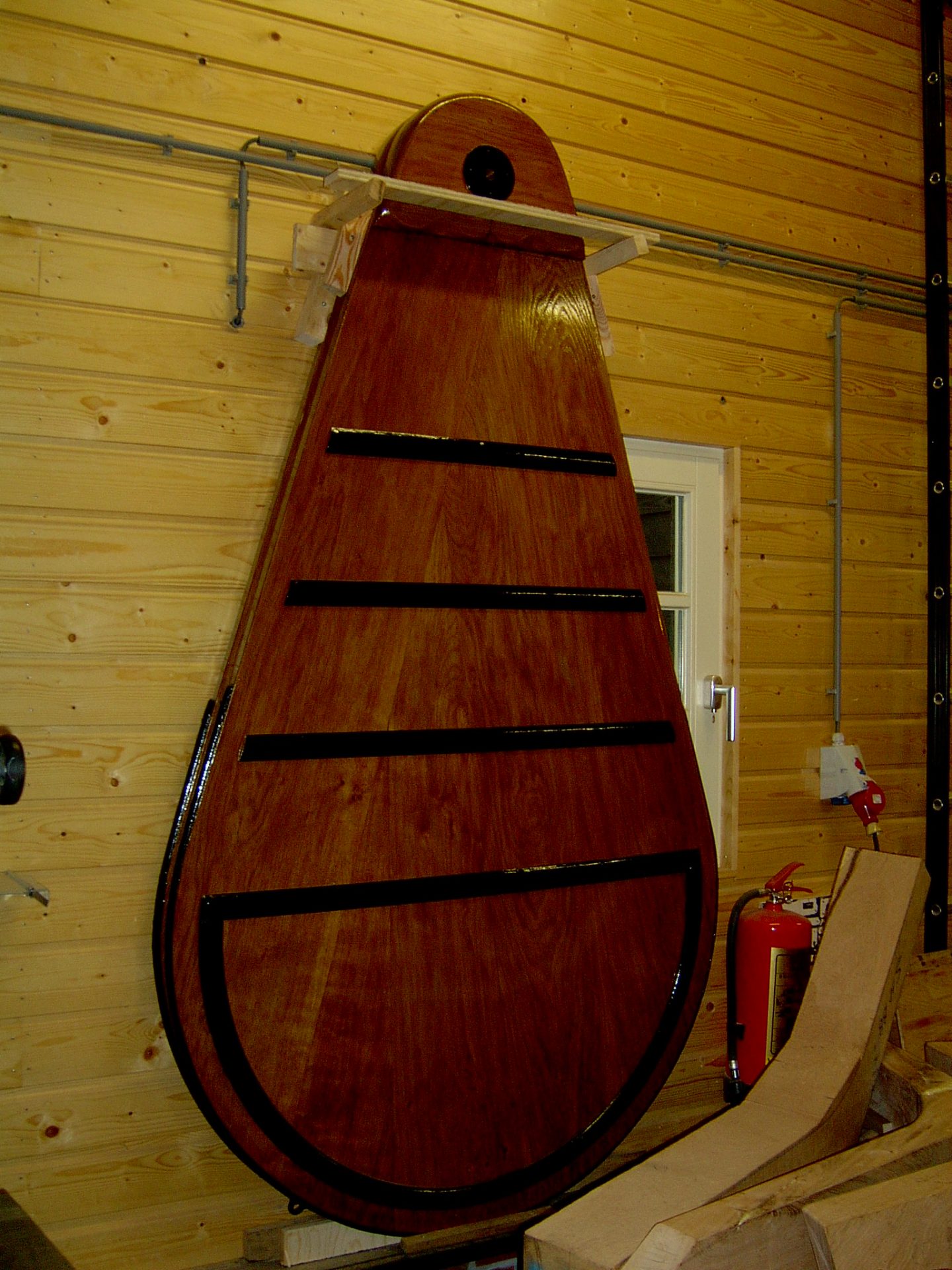
A new yard building ‘zompen’ sailing barges at Enter, in Holland

Boatyard at Enter, Netherlands

Boatyard at Enter, Netherlands the first zomp Boatyard at Enter Boatyard at Enter

Boatyard at Enter Boatyard at Enter, Holland

Hans-Christian Rieck took a trip to a modern boatyard at Enter in Holland, which he rightly argues shows the value of maintaining historic boatyards. Take note Swale planners and Faversham councillors!

Here’s what Hans has to say.

‘From the 17th century river traffic in the east of the Netherlands and the north west of Germany was carried out mostly using a working craft known as a zomp. The little ships worked the rivers Berkel, Regge, Schipbeek, Dinkel and Vechte. They were about 12m long and could carry a load of about 10 tones.

‘From the 1850s onwards bigger canals were built and the rivers were made more easily navigable, and so larger hips with bigger payloads came into use. The zompen as a type came under pressure, and within one generation the disappeared almost completly. The last original zomp was kept in a museum in Arnheim in 1940, when it was hit by a grenade during Operation Market Garden and badly damaged.

‘But the Dutch are proud of their maritime heritage and the remains of the last zomp were preserved. In the 1980s Dr G-J Schutten made a reconstructed drawing of the lines of the old zomp and published them, which awakened a great deal of interest in the little village of Enter, which has a long history of involvement with the zomp trade.

‘During the 19th century, of 150 families in the village 120 were involved in shipping goods using zompen. By tradition, at Christmas every zomp skipper had to be at home to attend church, and it must have been an impressive picture, seeing 120 ships packed into such a small port!

‘To keep the history alive, the inhabitants of Enter decided to reconstruct the old zomp and with the help of Dr Schutten in 1984 a wooden boatyard in Giethoorn built the first new zomp for over 100 years – it is now used for carrying tourists along the River Regge.

‘But the brave folks of Enter wanted more a shipyard of their own, where they could build their own zompen – and they were successful. In 2009 the Zomp Wharf in Enter opened its doors.

‘It is a paradise of wooden boatbuilding, with steamed planks an inch thick and frames of grown oak, and a team of old-time shipwrights keep up the tradition of woodworking. If ever you are around the Regio Twente in the Netherlands go to Enter and visit the wharf. It will be worth it, I promise you.’

Thanks Hans! See the project website: http://www.entersezomp.nl.


Rotoiti 2011 photos by Owen Sinclair


Russel Ward's Romany (see steam.co.nz). With a setting like this it would be a crime not to run an event

Russel Ward’s Romany (see steam.co.nz). A lovely boat in a fabulous setting

Reader Owen Sinclair has written in with a short report and some stunning photos from the 2011 New Zealand Antique & Classic Boatshow at Lake Rotoiti. His photos appear on this weblog with his permission. Many  thanks Owen!

Here’s what he says:

‘Hello Gavin,

‘Numbers seemed to be down this year, presumably due to the Christchurch earthquake, and perhaps also due to a forecast for heavy rain. But after heavy rain early in the morning the clouds cleared and the day became brilliantly sunny.

Whaleboat built by Ron Perano Whaleboat built by Ron Perano

‘This whaleboat was built recently by Ron Perano to the lines of a whaleboat built in Tasmania and used for whaling in Cook Strait, and donated to the Canterbury Museum in 1926. I think this was one of the few shore-based whale fisheries in the world. The Perano family was one of several associated with whaling and has many descendants in the area today.

‘Another whaling family was the Guard family, and a Guard was on the whaleboat today. I was offered a row, an entirely new experience. The oars are long, heavy, flexible and pivot between thole pins. Although it was an impromptu crew with half probably aged over 70 the boat moved along really well with six rowers and a man steering with a sweep oar. A wonderful opportunity, greatly enjoyed. Thank you Messrs Perano and Guard.

Russel Ward's Romany (see steam.co.nz). With a setting like this it would be a crime not to run an event

Romany – see owner Russell Ward’s website: steam.co.nz .

Canoe-yawl built to the lines of Eel Canoe-yawl built to the lines of Eel Canoe-yawl built to the lines of Eel

Canoe-yawl built to the lines of Eel, a George Holmes design, by a man from Timaru whose name I unfortunately didn’t get. He has built many boats and it shows.

Hamilton jetboat built about 1973, steam launch, stitch and tape version of Rushton's Wee Lassie, and a lug yawl designed and built by an Australian boatbuilder

Hamilton jetboat built about ’73, steam launch, stitch and tape version of Rushton’s Wee Lassie, and a lug yawl designed and built by an Australian boatbuilder. I think this boat and some detail of the builder was posted recently on Dave Perillo’s website: openboat.co.nz .

Yellow boat is a John Welsford Whaler, built and sailed by Peter Murton.

The yellow boat in this shot is a John Welsford Whaler, built and sailed by Peter Murton.

Wooden trailer Wooden trailer

Trailer built in Oregon pine, otherwise known as Douglas fir. I didn’t see what it carries. Nice work!

Pipedream, built in England Pipedream, built in England

Pipedream, built in England.

‘Regards,

‘Owen Sinclair’

Photos of Stirling & Son Victorian cutter build

Stirling & Son Victorian cutter Integrity housed dovetail on companion (never to be seen again!)

Difficult-looking housed dovetail joint

Stirling & Son Victorian cutter Integrity ash and copper fastened blocks Stirling & Son Victorian cutter Integrity bronze bound bowsprit roller Stirling & Son Victorian cutter Integrity finishing the 24ft bowsprit

Ash and copper fastened blocks; bronze-bound bowsprit roller; finishing the 24ft bowsprit

Will Stirling of Stirling & Son has sent in some more photographs from the building of the Victorian-style cutter Integrity. Here’s what he has to say:

‘Integrity is coming on well. We are putting on her deck which has been an exercise in higher mathematics. It is tapered and swept so that the outboard planks follow the covering board yet the planks midships are on the centreline. A typically Victorian attitude of seeking the aesthetic with little regard for labour!

‘To us it seems relatively complicated; as one of the shipwrights wryly commented, perhaps that is why it died out! I shall send a photo of the sequence once it is all on.

‘Hope all continues well, best wishes,

‘Will’


Will and his colleagues are always up to something interesting, and he has a very interesting range of plans for traditional craft for sale. For more posts about Stirling & Son, click here.

Stirling & Son traditional yacht building and wooden boat repair is based at Tavistock, Devon. For more information see www.stirlingandson.co.uk.