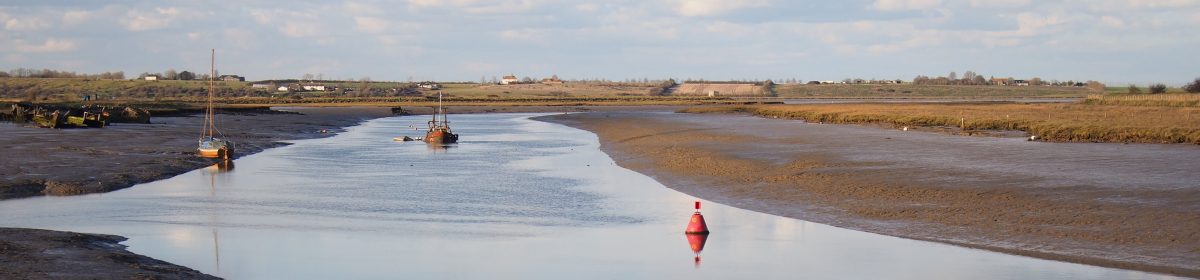
Humber sloop Spider T, rescued and restored by Mal Nicholson and friends

[ad name=”intheboatshed-post”]

Spider T today – click on the thumbnails for larger images

Spider T before restoration work began

Some people rescue old yachts while some adopt smaller craft – but perhaps the bravest are those who take on big old working boats. Mal Nicholson has restored the wonderful Spider T, a 62ft Humber sloop described as a ‘super sloop’ that  he now operates as a charter boat offering holidays and day trips out of Keadby Lock, near Scunthorpe. See the Spider T website.

Spider T was launched in 1926, and was one of two similar craft built at Warrens Yard at New Holland. I’ll let Mal take up the story:

‘Her sister ship was the Zenitha, as we recently learned with the help of Peter Warrens, of the Warrens Shipbuilders dynasty. We recently welcomed him on board with his wife Marjorie and his two sons, and he has taken the Spider T to his heart, and we talk now on a frequent basis and much more information is coming together.

‘He recently told me that Spider T & Zenitha were designed by his uncle Frederick Warren just before he died, and that they encompassing everything they knew about hull design, I suppose that is why they were labeled ‘super sloops’.

‘His father and grandfather built the Spider T. She is 70.4 gross cargo tons, and was launched as Spider T for captain JJ Tomlinson for whom she was the pride of his fleet. The name Spider was his nephew’s nickname, while the T stood for Tomlinson.

‘I have all the documentation for her including the plans and registration documents showing her registered as a ship. She has always been referred to as a ship by her past masters, one quite famous old master was George ‘Buck’ Harness. George told me at the age of 92 that she was not a barge or a boat but a ship, and asked if I knew the difference? ‘No,’ I replied. ‘Well, ship is short for a shipment, which is a vessel that is capable of taking in excess of 100 tons to sea!’ So that was me put straight very early on in my tenure!

‘Many years later I discovered what he said was absolutely correct, as I found her registration documents, and there it was in black and white: she was registered as a ship number 149049, yard number 216.

‘Unfortunately the Zenitha no longer exists, but I have spoken to the son of the original owner and apparently she was very fast and came 2nd in the 1928 Humber Reggatta. He has sent me some details of vessels and owners.’

In recent years, Spider T has been restored, refloated and re-rigged for the first time since the 1930s, and her crew have sailed to Scotland and Holland, and have chalked up some notable achievements. She was the first vessel from the National Historic Fleet to attend the World Port Festival in Scarborough, and was the first Humber sloop to cross the North Sea directly since before World War II. I have a sense that there’s more of this story to come, so I hope Mal will keep me informed!

And, finally, I’d like to put out a message from the management. This post about Mal keeping Spider T alive is just the kind of story we like to put up here at intheboatshed.net. If you have a story about an old boat, traditional boatbuilding and design, boat restoration, boat history or even a modern boat with traditional features you would like to share, please let us know at gmatkin@gmail.com.

Intheboatshed.net highlights of 2009

[ad name=”intheboatshed-post”]

It’s almost impossible to pick out my favourite posts of the year – there are simply too many, and for too many different reasons.

For example, the editor-residents of Intheboatshed.net Towers would have no difficulty picking out the students’ launch at the Boatbuilding Academy in December, but for entirely different reasons we’d equally easily choose the astonishing details of the wherry yacht Hathor, or the various posts on the zulus of the Scottish West Coast, or the review of the lovely new book Holmes of the Humber, or, for that matter, the story of the Iain Oughtred-designed St Ayles skiff and the Scottish Coastal Rowing Project.

And how remiss would we be if we failed to mention Ben Crawshaw’s awesome sailing exploits in his Light Trow, or Dylan Winter’s wonderful Keep Turning Left videos about sailing anti-clockwise around the coasts of Great Britain? I’d like to offer my apologies if I’ve left out your favourites here, but I’m working from memory here – I simply haven’t got the energy required to re-read the 250-or so posts I’ve put up this year.

With the hit-counter below cruising gently towards our millionth, what were readers’ favourite posts? There seems little doubt that the posts that have caught most people’s interest have been about free boat building plans. For example, the post announcing the boatbuilding plans for the Julie skiff 15ft 8in plywood flattie rowing boat has been viewed a whopping 27,647 times. We think it goes to show how powerful is the draw of free plans – but also how effective an advert on this site can be.

A little behind that comes a favourite with model makers and admirers of small Scottish skiffs, A challenge for home boatbuilders: a sweet 10ft clinker-built double-ended skiff, our boatbuilding plans for the sailing version of the 12ft plywood Ella skiff and for the boatbuilding plans for the Sunny 14ft plywood rowing flattie.

Why not let us know what your favourites of the year might have been? We’re very friendly and can be reached at gmatkin@gmail.com.

What will next year bring at intheboatshed.net? It’s impossible to say who will be in touch and what they may send me for publication. I only hope they continue to do so. In the meantime, I can tell you about two projects that are in the works here, the Low -power outboard skiff, and a mark II stitch and glue version of the well tried Light Trow rower-sailer in both its rowing and sailing versions.

Poole canoes – the motorised flat-bottomed skiffs of Poole Harbour

[ad name=”intheboatshed-post”]

Poole canoes, photographed by John Lockwood

Home Built Boat Rally UK (HBBR) member John Lockwood has sent me these photos of a British Isles flattie I hadn’t known about until recently: the oddly-named Poole canoe.

The British Isles aren’t generally thought of as the home of flat-bottomed boats, and I can’t tell you how often I have told me that a flat-bottomed boat can’t work. And yet, there are quite a few around our inland waters and even on our coasts, including the turf boats and flatners of Somerset, the punts of the Rivers Thames and Cam, various gun punts, the Fleet trow and the Wexford cot. And, of course, going up-scale a range of lighters and coastal barge types including the celebrated Thames barge have flat bottoms.

So I was pleased a few weeks ago to learn of the Poole canoe a few weeks ago, and I’m now grateful to John for capturing these slender flattie skiffs with his camera before the original wooden boats disappear. I have the impression that they range up to around 22ft by 4ft or a little over. Thanks for the informative shots John!

A message from ‘Tranona’ on the PBO forum suggests that the boats built in the area for use in Poole Harbour were built by eye – and that British Seagull proprieter Mr Weyhope spent years experimenting to get the best speed out of the boats driven by a Seagull 102 model, which I’d guess was a 2hp type. Looking at the boats in these pictures, they mostly have the small amount of rocker I would expect for a low powered boat, though one or two seem to have rather flatter runs, which would suggest they were intended for a bigger power plant.

In this connection, some weeks ago I put up a post linking to an online ad in which someone was selling an old Seagull outboard still in its original packaging, and accompanied by a set of drawings for building a flat-bottomed skiff, which I suppose is likely to be one of Mr Weyhope’s designs. I’ve posted a tiny thumbnail of the drawings at the bottom of this post, and although it only affords a little information there seems little doubt that the ‘20ft trunnel boat‘ it presents is a Poole canoe, or something very like it.

I must say that I’m particularly interested in these boats at the moment, as they are so similar to a design project I’ve been working on for a friend for some time, and I can’t help feeling that they’re a kind of endorsement of the basic idea.

My project is a little different – my ‘client’ wanted a flat-bottomed design he could build in his garage and that would work with a 4-5hp motor rather than Mr Weyhope’s 2hp model – but the drawings I made before I’d even heard of the Poole canoe seem very like the South Coast boats. See my initial drawings here.

I plan to complete them as soon as I can decide whether the end of the prop should be inside or outside the transom when raised – I notice that the long wells seen in most of these photos imply that the prop is inside the well when the motor is raised – and yet I wouldn’t want to find a flailing prop in my well after hitting an underwater obstruction. Does anyone have any insights on this question?

By the way, I gather GRP Poole canoes are still made for fishermen by Salterns and that the yard has developed a higher powered 22ft model designed for sun bathing, fishing and exploring Poole Harbour, and powered by a 30hp electric start outboard. It even comes with a sun deck, picnic table, cool box, navigation lights, fishing rod holders, a tray in the stern for ring netting and flush decks. All of that seems a long way from the boats in the photos!

Thanks for the shots John!