What it’s really all about…

[ad name=”intheboatshed-post”]

Out to sea

Barge boat Barge boat 2 Red sails

Smack 3 Smack 2 Smack

Click on the images for much larger photos. The one at the top
makes a particularly fine background – click on the thumbnail,
then click on your right mouse button when the large image loads

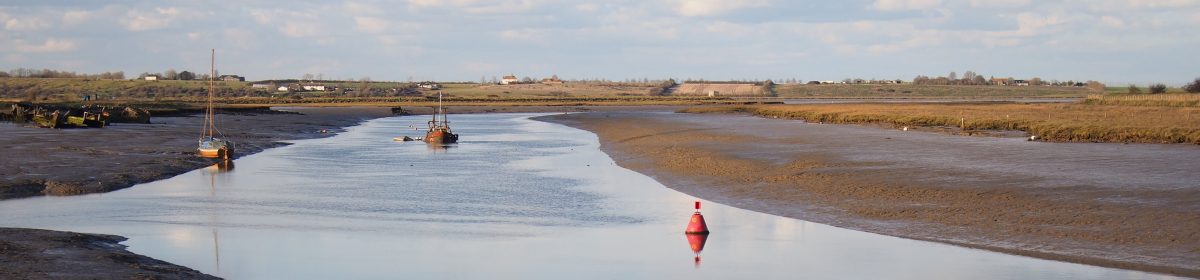
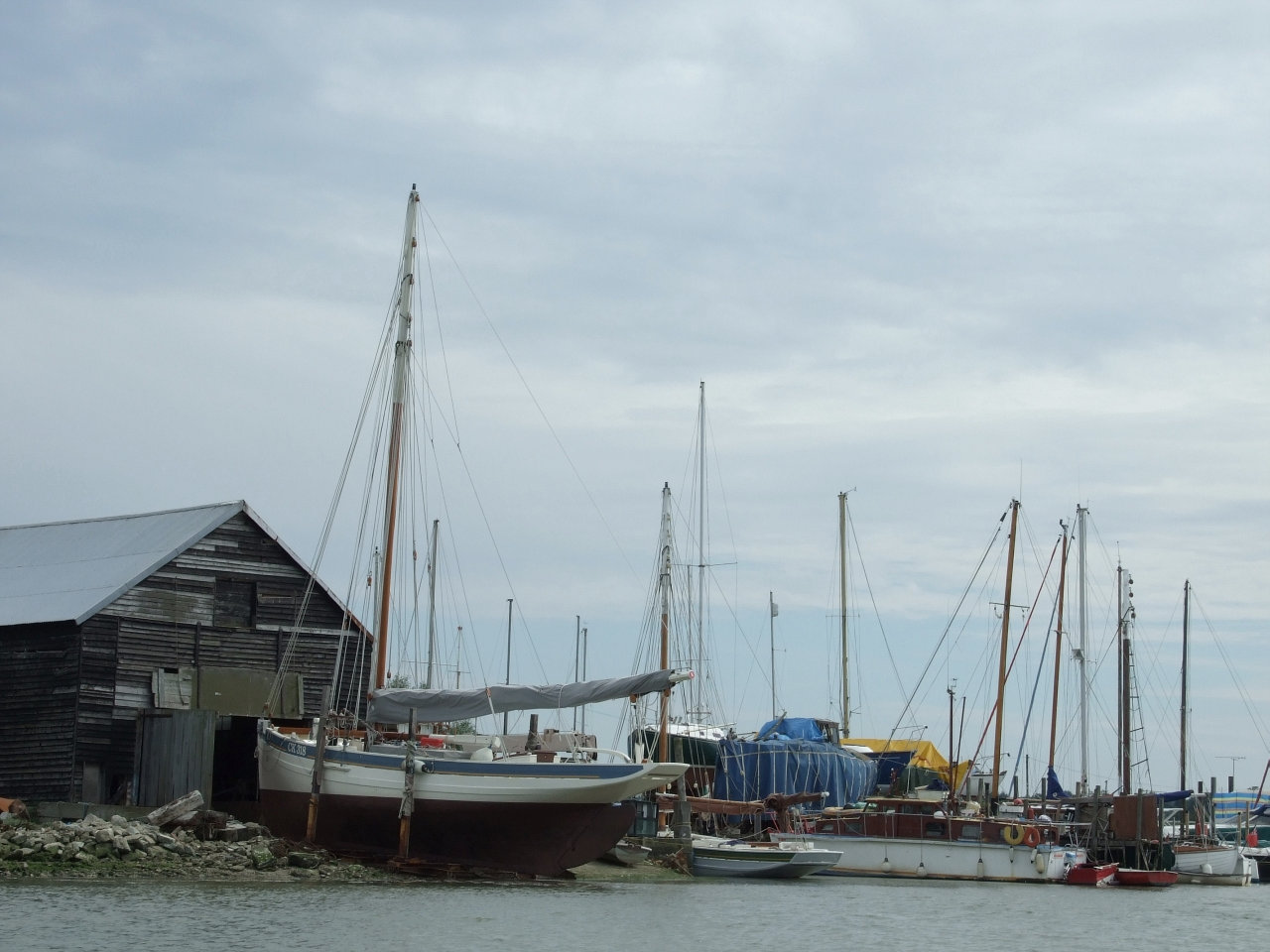
We’ve just got back from a blissful weekend’s sailing around the Swale in our little Ian Proctor-designed Prelude, and here are some photos to prove it. From the top: an unknown yacht making her way seaward at low tide in the morning light; two shots of a boat belonging to one of the local sailing barges (there are two shots because one reveals something about its hull form – for more more on barges, click here); an unknown yacht rides the afternoon tide; three shots taken by Julie of a smack at Tester’s yard at the mouth of Oare Creek.

Don’t miss something good. Subscribe to the free weekly intheboatshed.net email newsletter now!

The new James Caird at the Beale Park Thames Boat Show this weekend

[ad name=”intheboatshed-post”]

more-james-caird-3

more-james-caird-4 more-james-caird-1 more-james-caird-2

The new James Caird, photographed a few days ago

If you’re wondering what to do this weekend – perhaps now’s the time to decide, for Friday sees the first day of the three-day Beale Park Thames Boat Show at Pangbourne!

An important attraction of the show this year is a recreation of the small ship’s boat that Sir Ernest Shackleton and his small crew used to reach Elephant Island, the James Caird, which is currently being built by students of the International Boatbuilding Training College (IBTC) at Lowestoft. We saw it during a brief visit to the college last week, and were made very welcome – the college is always pleased to receive visitors.

I was particularly amazed by the scale and diversity of the traditional boatbuilding projects under way at the IBTC, and will be writing more about it shortly.

At the Beale Park show students are scheduled to work on the James Caird’s deck beams and caulking. If you don’t know the story, after Shackleton’s expedition ship Endurance became trapped in pack ice in the Weddell Sea he and 28 men crossed a chaotic maze of ice in three salvaged boats and finally a small group including Shackleton sailed across the Southern Ocean to South Georgia to safety and to organise the rescue of the rest of the crew. The successful journey stands as one of the most impressive small boat voyages ever made – there were gales almost all the way, and it took 17 days of constant constant pumping and chipping ice from the hull and rig to prevent capsize before the little boat landed at South Georgia.

Three of the crew then climbed a four thousand foot mountain climb before staggering into Stromness whaling station to raise the alarm.

Commissioned by The Honourable Alexandra Shackleton, the new James Caird is to be used by by an expedition to re-create the voyage and mountain climb led by environmentalist and explorer Tim Jarvis.

The original boat was constructed of Baltic pine on steamed elm frames; in the absence of these, the students are using European larch on steamed oak. She is copper fastened with keel stem and a stern of grown oak. The students have planked her to the same original sheer and then built up with a further three planks in the same way as the original James Caird, and she will be decked in and canvassed. Caulking will be with cotton and she will be paid up with white lead putty, and then the whole boat will be painted white.

For more intheboatshed.net posts on the James Caird voyage and project including stunning photos of South Georgia, click here.

For more intheboatshed.net posts relating to the Beale Park Thames Boat Show, click here.

Don’t miss something good – subscribe for free and start receiving the weekly intheboatshed.net newsletter now!

Free plans for the intheboatshed.net Ella skiff now online and available to download


[ad name=”intheboatshed-post”]

skiff-zip-drawing

12ft length overall by 4ft beam, by 400lbs displacement, designed for stitch and glue construction using 1/4in or 3/8in 4ft by 8ft plywood

If you build this boat PLEASE send me a report about how the project went and how it works on the water, together with photos! I’m at gmatkin@gmail.com, and will usually be available to  provide online advice.

At last I’ve managed to find a few hours to make up a plans package! I hope it was worth the wait. In a mass of material like this there will no doubt be an error or two, so if you find any, please let me know and I’ll put them right.

For previous posts on the development of this little boat, click here and here.

From the notes:

The Ella skiff as laid out in these plans is a lightweight general purpose stitch and glue flattie skiff for use in sheltered waters with no strong currents or tides. It is not suitable for use on the sea or in hazardous waters.

It is meant to be a simple and quick stitch and glue building job of a size that is convenient for building in domestic garages made to take a small to medium-sized car, which probably describes the building area available to most people.

Like this boat? Send your comments to me at gmatkin@gmail.com.

The boat is designed with rowing primarily in mind, though it could also be used with a VERY small outboard of NO MORE than 2hp. Too many accidents take place because outboards of the wrong size have been used, and far too many of these are fatal. If a small outboard is to be used, the transom should be doubled to ensure it can support the weight of the engine.

The name came from my daughter, who has taken rather a shine to the boat – readers of intheboatshed.net will find photos of a model she has made.

Compared with the Julie skiff, the form of a boat like this must be strongly influenced by the need to work in a decent amount of displacement into a shorter hull, as anyone who compares the lines drawings of the two boats will quickly see. The Ella skiff is therefore a more curvy boat than her big sister, but I hope that her more jaunty sheerline lends a certain cuteness people will like. The stem is angled somewhat in order to turn splashes and ripples downward, for I know that dryness is an important part of comfort in small craft, especially for those unused to boating.

Sailing enthusiasts will note that I have not drawn any details for a sailing version of this boat and I would prefer that no builder should add a sailing rig to this bare design. Boats like this should not be converted for sailing without serious thought about the safety and construction issues.

However, my daughter has asked me to develop a sailing version for her, and at some point I intend to do so. The design for this boat will feature a good amount of built-in bouyancy for safety, will be half-decked, and will probably have a balanced lug rig for ease of sailing.

This boat has been designed by an amateur with no qualifications in boat design or boatbuilding and should be regarded as experimental. The designer accepts no liability for any loss or accident that may result from following these instructions or plans or from any loss or accident that may follow from using this boat.

Click here to download the latest version of the free Ella skiff plans.

PS If you’re looking for a longer, sleeker but equally easy to build rowing skiff, click here.

PPS There’s now a 14ft version, the Sunny skiff. Click here.

This boat is designed to be built using the stitch and glue technique – if you haven’t done this before you might be interested in my book Ultrasimple Boat Building: 17 Plywood Boats Anyone Can Build or one of the other books on this topic available from Amazon.