Tait’s Seamanship, or how to sail a ship, part III

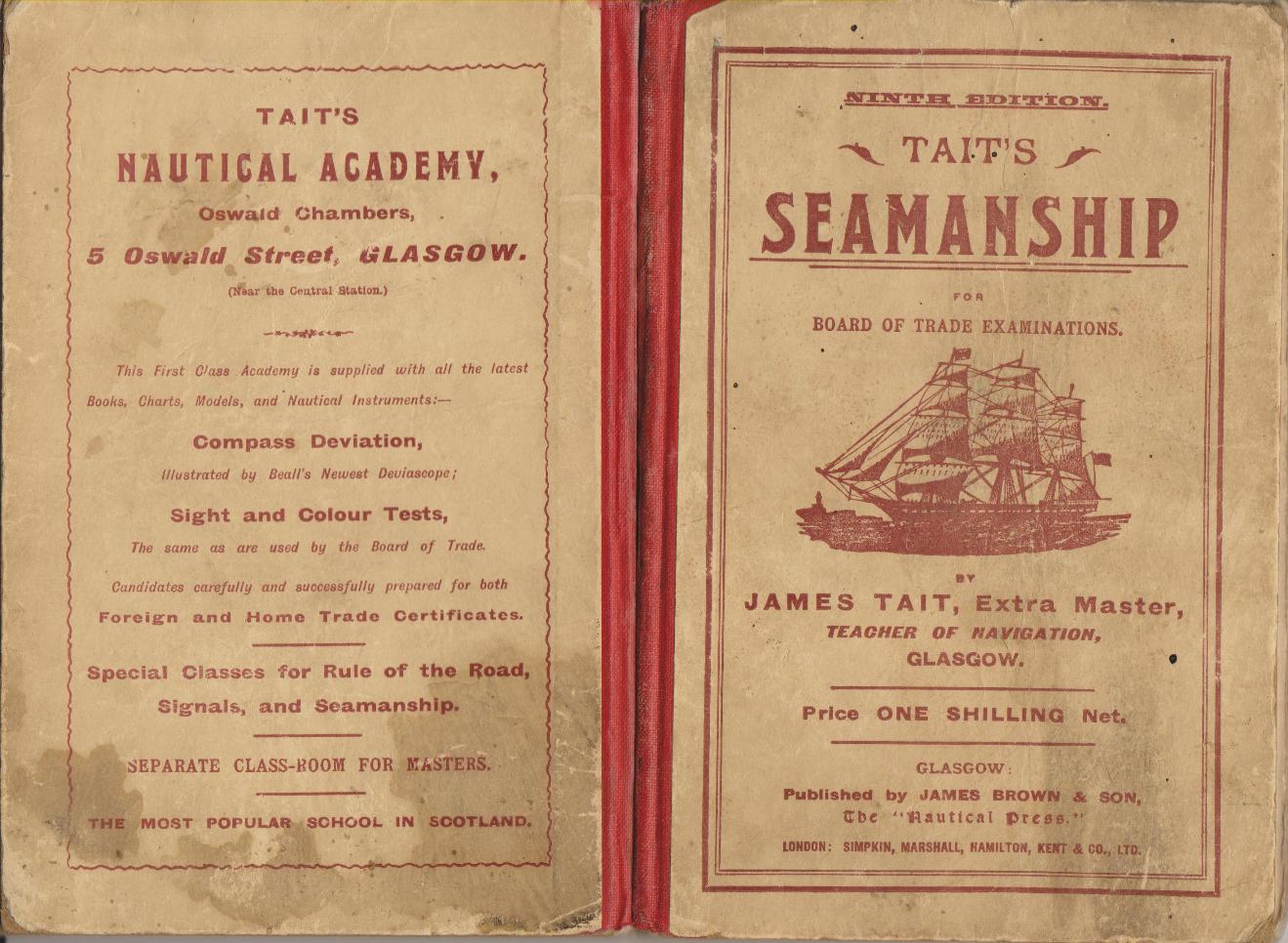
Tait's Seamanship 1913 Cover

Here’s another segment of the Tait’s Seamanship primer for the Board Of Trade examination for ships’ officers. See part I and part II.

Once again, it’s in the time-honoured maritime question-and-answer format. Among the points covered are how to tack and wear ship, when to start cutting down masts when the ship is on its beam ends, and which mast to start with, the importantce of maintaining ships boats in usable condition, and the reason why seamen who are cast adrift should soak their underpants in sea water. I’m not sure I really believe that last one, by the way.

Click on the thumbnails in turn for much larger images.

Tait's Seamanship page 25 Tait's Seamanship page 27 Tait's Seamanship page 29

Tait's Seamanship page 31 Tait's Seamanship page 33 Tait's Seamanship page 35

Tait's Seamanship page 37 Tait's Seamanship page 39 Tait's Seamanship page 41

Tait's Seamanship page 43 Tait's Seamanship page 45 Tait's Seamanship page 47

Tait's Seamanship page 49 Tait's Seamanship page 51 Tait's Seamanship page 53

Tait's Seamanship page 55

Tait’s Seamanship, 1913, part I, or how to sail a ship

[ad name=”intheboatshed-post”]

Tait's Seamanship 1913 Cover

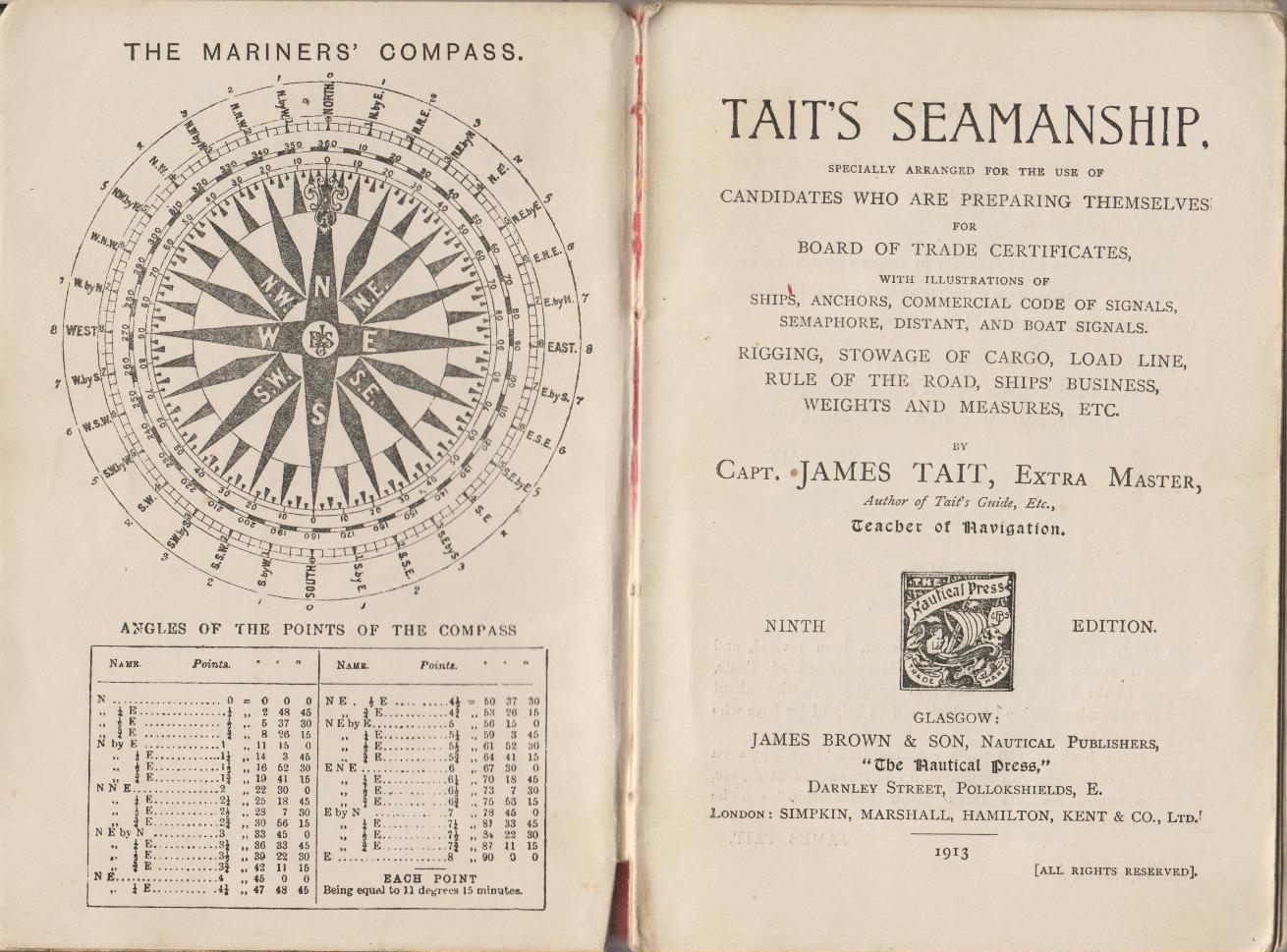
Tait's Seamanship 1913 Cover adverts 1 Tait's Seamanship 1913 adverts 2 Tait's Seamanship 1913 Compass and frontispiece

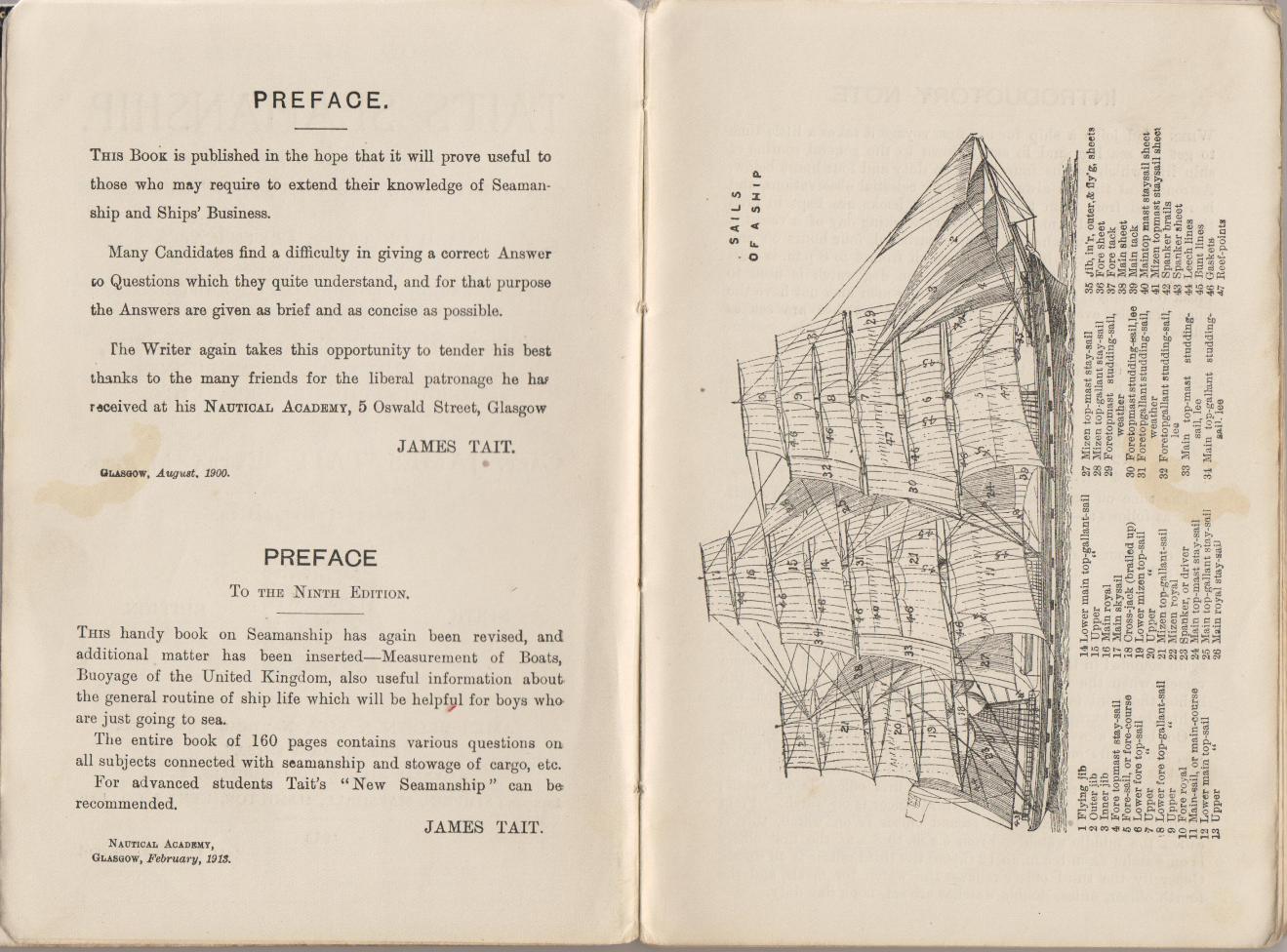
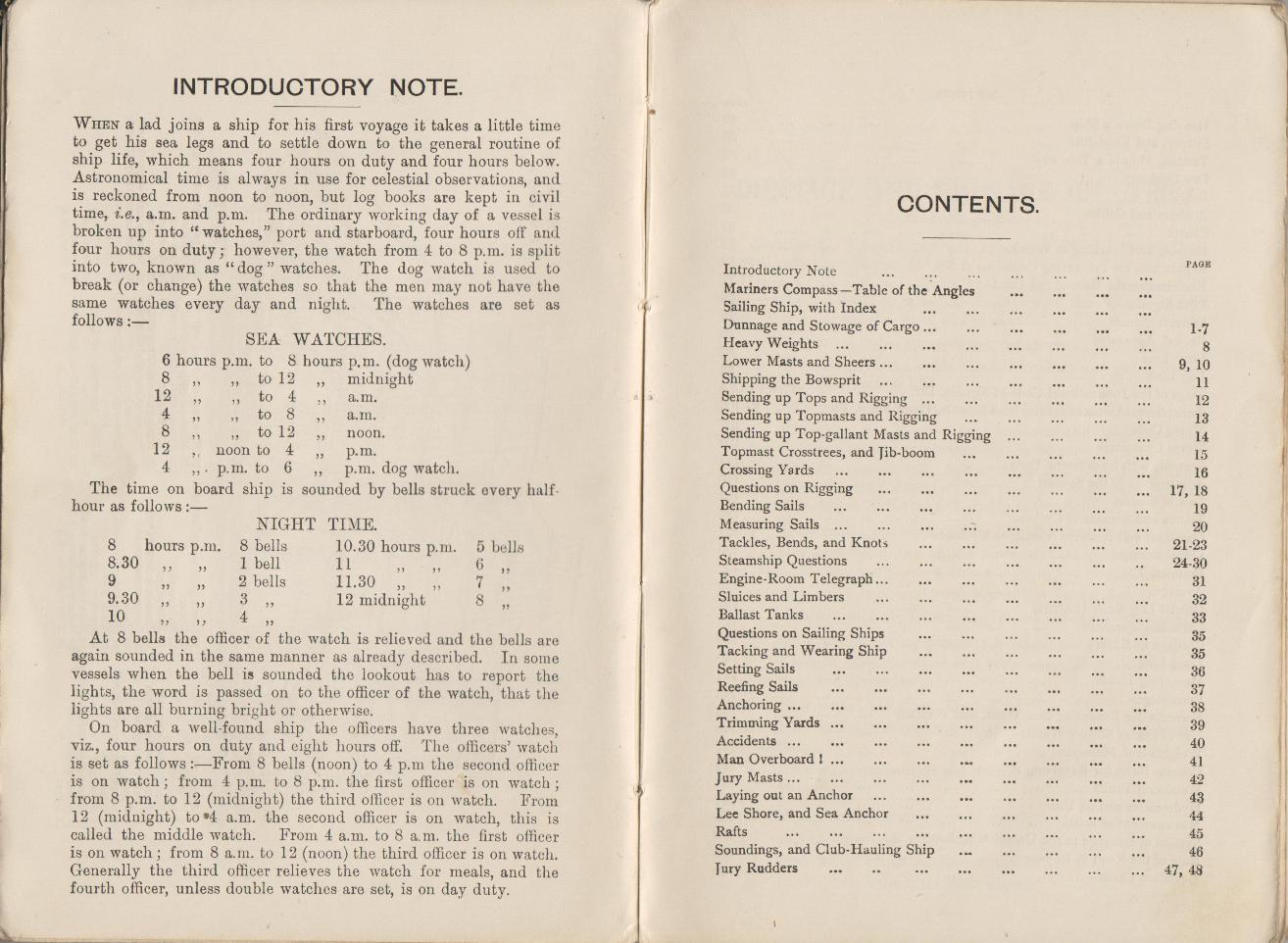
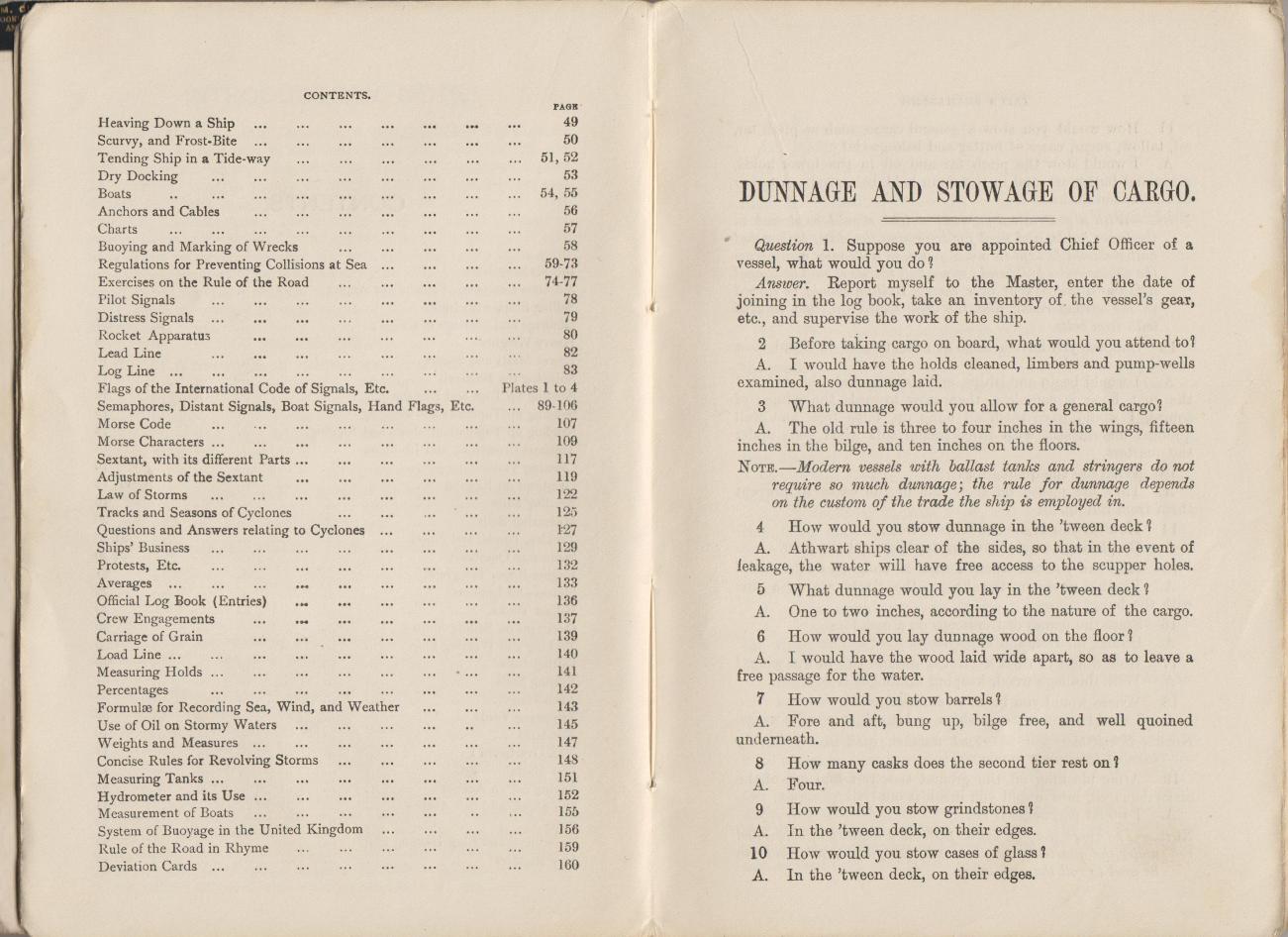
Tait's Seamanship 1913 preface Tait's Seamanship 1913 Introductory note and contents Tait's Seamanship 1913  contents

I’ve often wondered what ‘seamanship’ really is and who, if anyone, has the definitive article in their posession.

It’s not that I don’t understand or approve of the aims of seamanship – it’s about keep lives safe and protecting boats from harm while successfully travelling on the water. But, like the proverbial skinners of cats,  boat users all have their own methods, and there seems to be at least as many forms of correct seamanship as there are sailors.

Whatever sea-related activity you care to name, someone somewhere does it differently and will tell you all about it in a very firm and authoritative way – in the club bar, online or, sometimes, even on our own boats.

So I thought it might be fun and informative (and hopefully uncontroversial) to consider what seamanship was thought to be a century or so ago. So here are the cover and first few pages of Tait’s Seamanship, a splendid little document produced by a Glasgow maritime educational establishment whose principals had the good sense to provide courses for masters discreetly in a separate room.

I hope you enjoy the scans – as usual, click on the images for much larger, easily readable images.

Calshot tender tug trust seeks 20ft lifeboats for Titanic maiden voyage 100th anniversary

[ad name=”intheboatshed-post”]

Tender tug Calshot with Olympic, sister ship to the Titanic

Tender tug Calshot with Olympic, sister ship to the Titanic

The Tender Tug Calshot Trust is seeking two 20ft ship’s lifeboats for the tender tug Calshot in time for an event marking the 100th anniversary of the day the liner Titanic left Southampton and set off on her maiden voyage.

Sadly, the Calshot’s original lifeboats were left in a yard by the former owners, with the result that they deteriorated to a point where they had to be scrapped.

The anniversary is on the 10th April 2012, and I gather television historian Dan Snow is scheduled to present a live television programme.

In addition to the two replacement lifeboats, the trust is also seeking information about whether any of the original Titanic lifeboats have survived, as it has learned that they were reallocated to other White Star liners following the ship’s famous and tragic sinking.

The Tender Tug Calshot Trust was set up in 1997 with the prime aim of restoring Calshot to the way she was in the 1930s.

She’s included in the National Historic Ships list of 200 vessels of pre-eminent national significance, and in fact she’s no ordinary tug. Built in Southampton by Thornycroft’s at Woolston, she was a tender as well as a tug, and was certified to carry 566 passengers in first and second class saloons: often the larger liners would anchor offshore as it was uneconomic to negotiate into the docks to transfer a few passengers, and Calshot would then ferry these passengers and small items of freight.

In her time, she also manoeuvred the world’s greatest ocean liners, including the Queen Mary, the Queen Elizabeth, the United States, the France and the Olympic, sister ship of the Titanic.