Tait’s Seamanship, 1913, part I, or how to sail a ship

[ad name=”intheboatshed-post”]
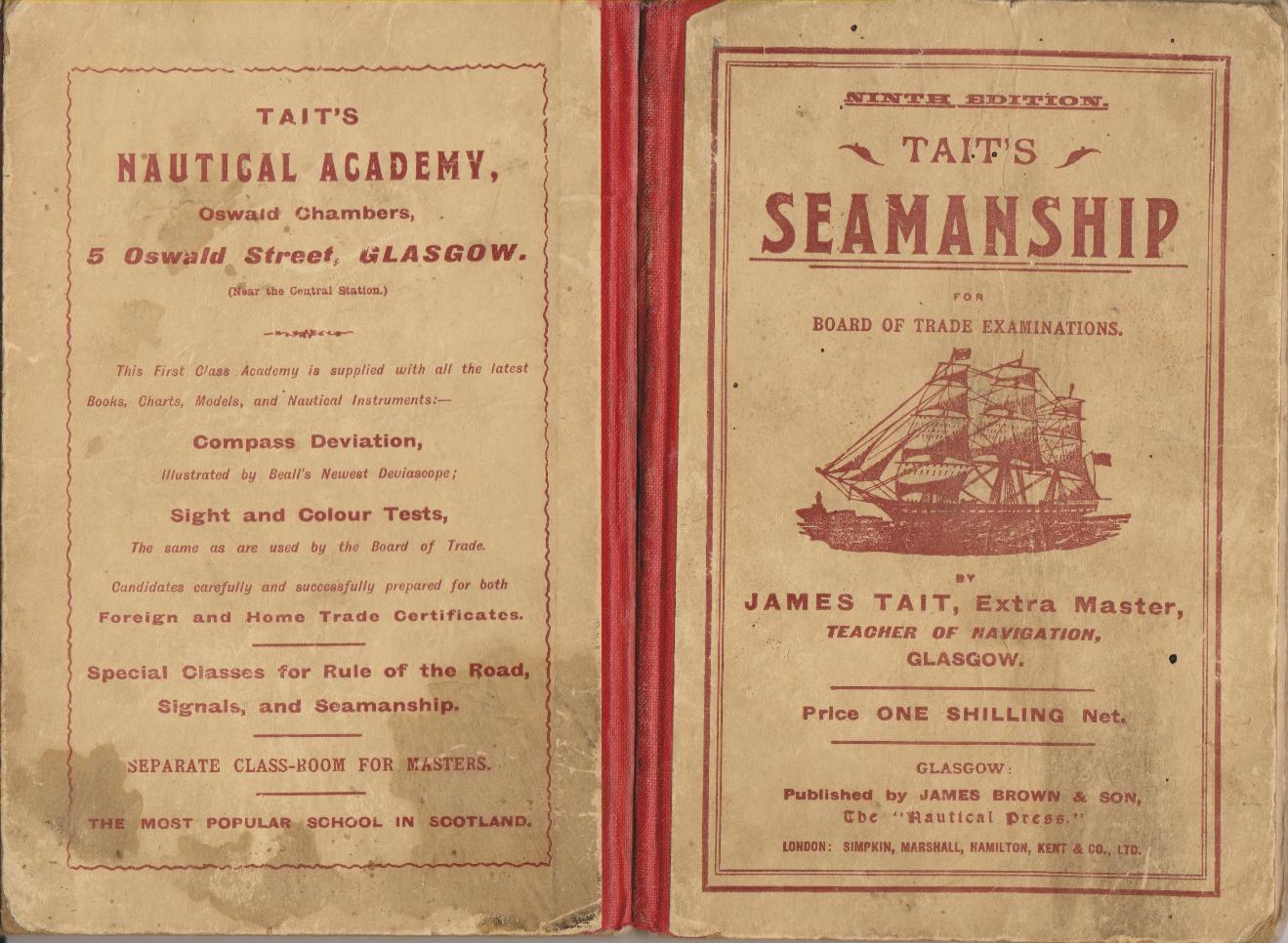
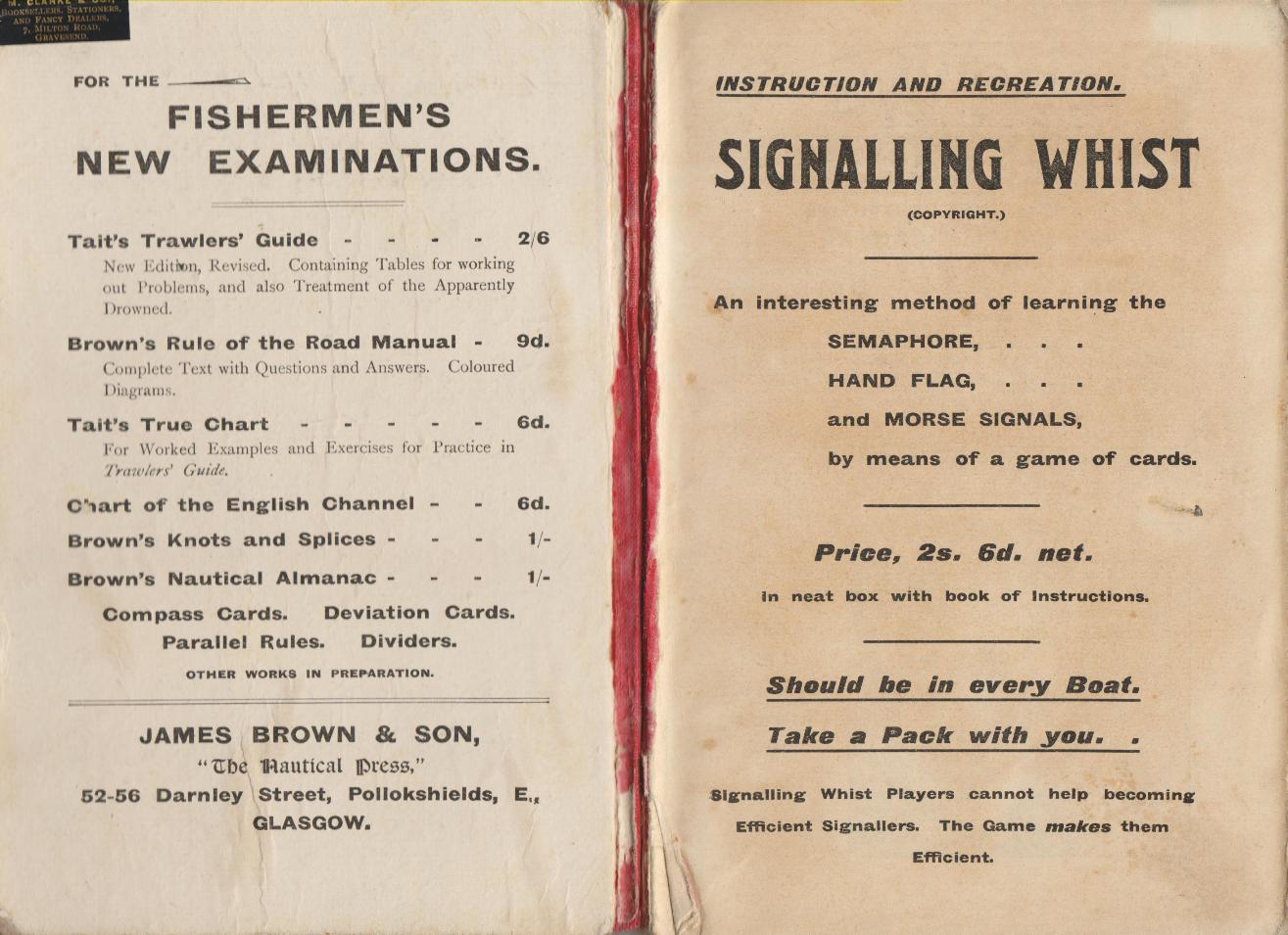
Tait's Seamanship 1913 Cover

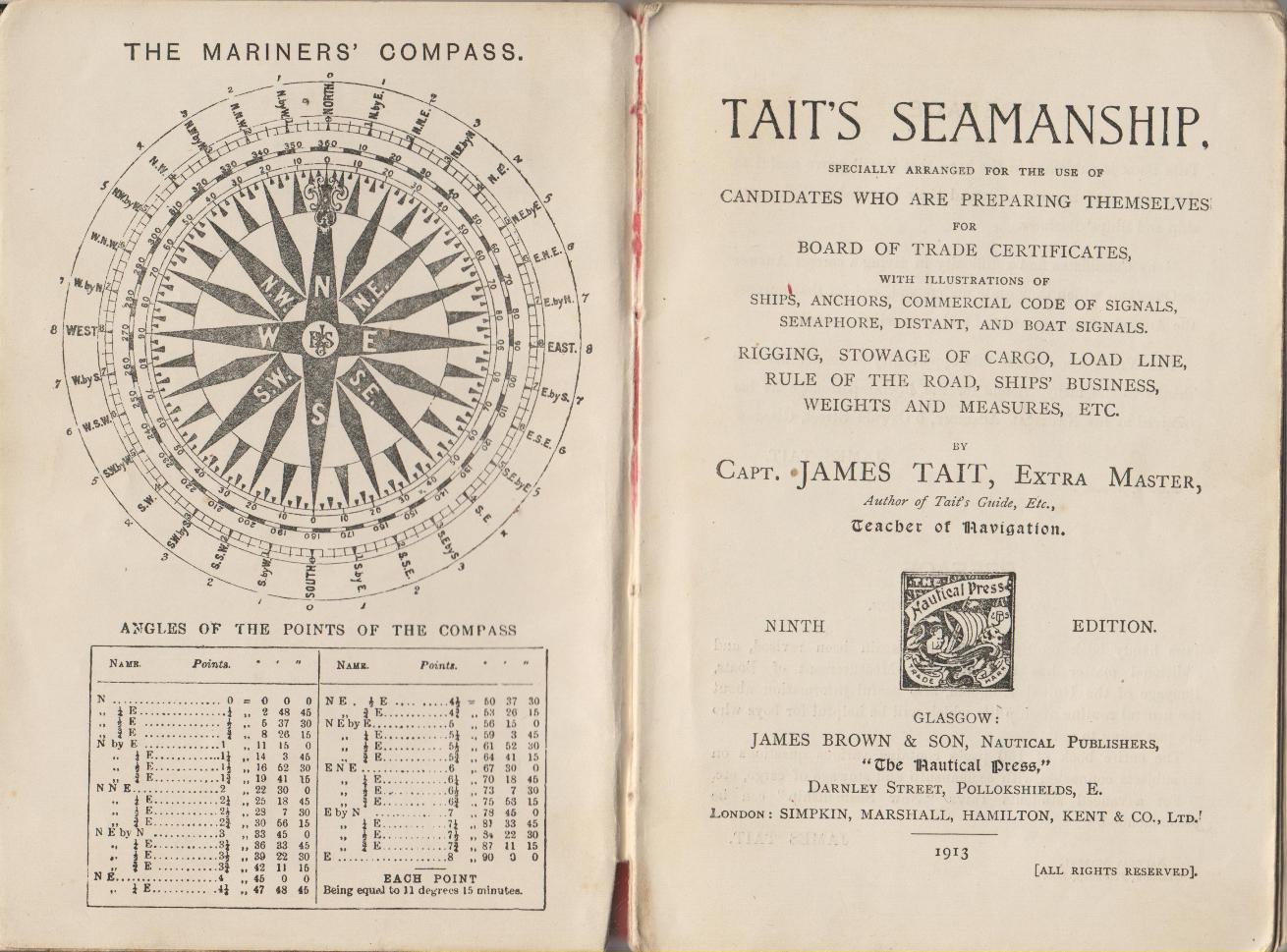
Tait's Seamanship 1913 Cover adverts 1 Tait's Seamanship 1913 adverts 2 Tait's Seamanship 1913 Compass and frontispiece

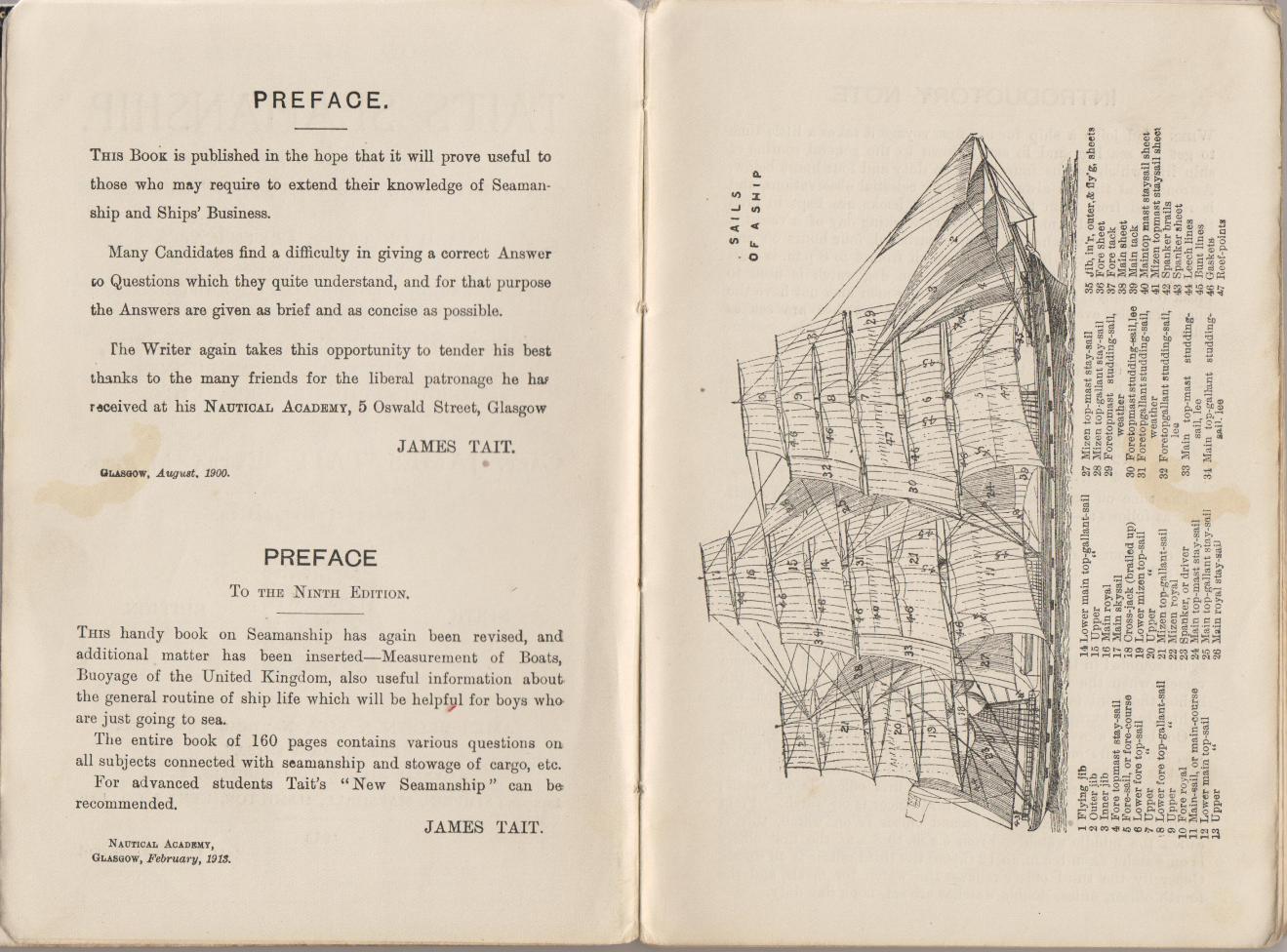
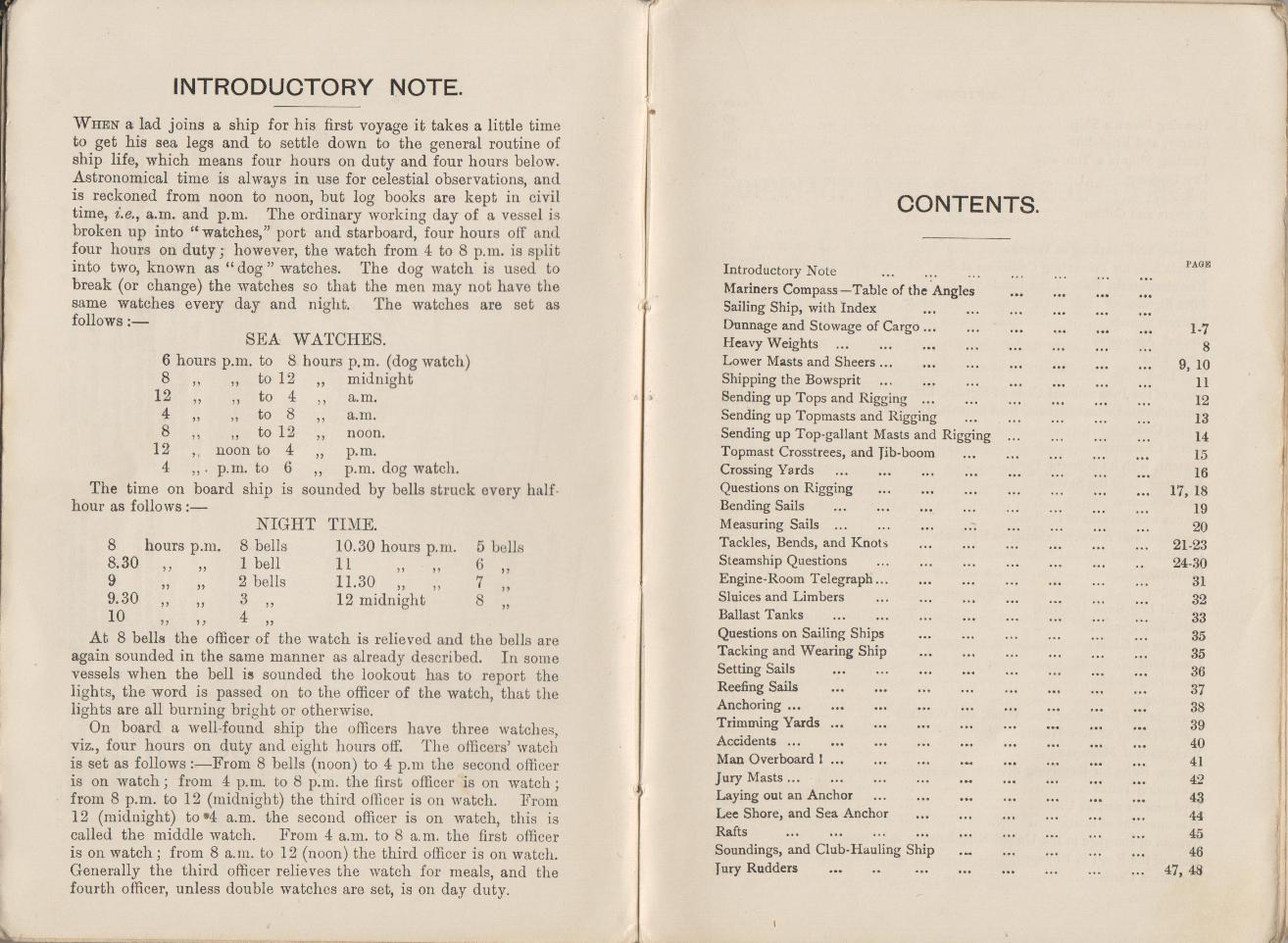
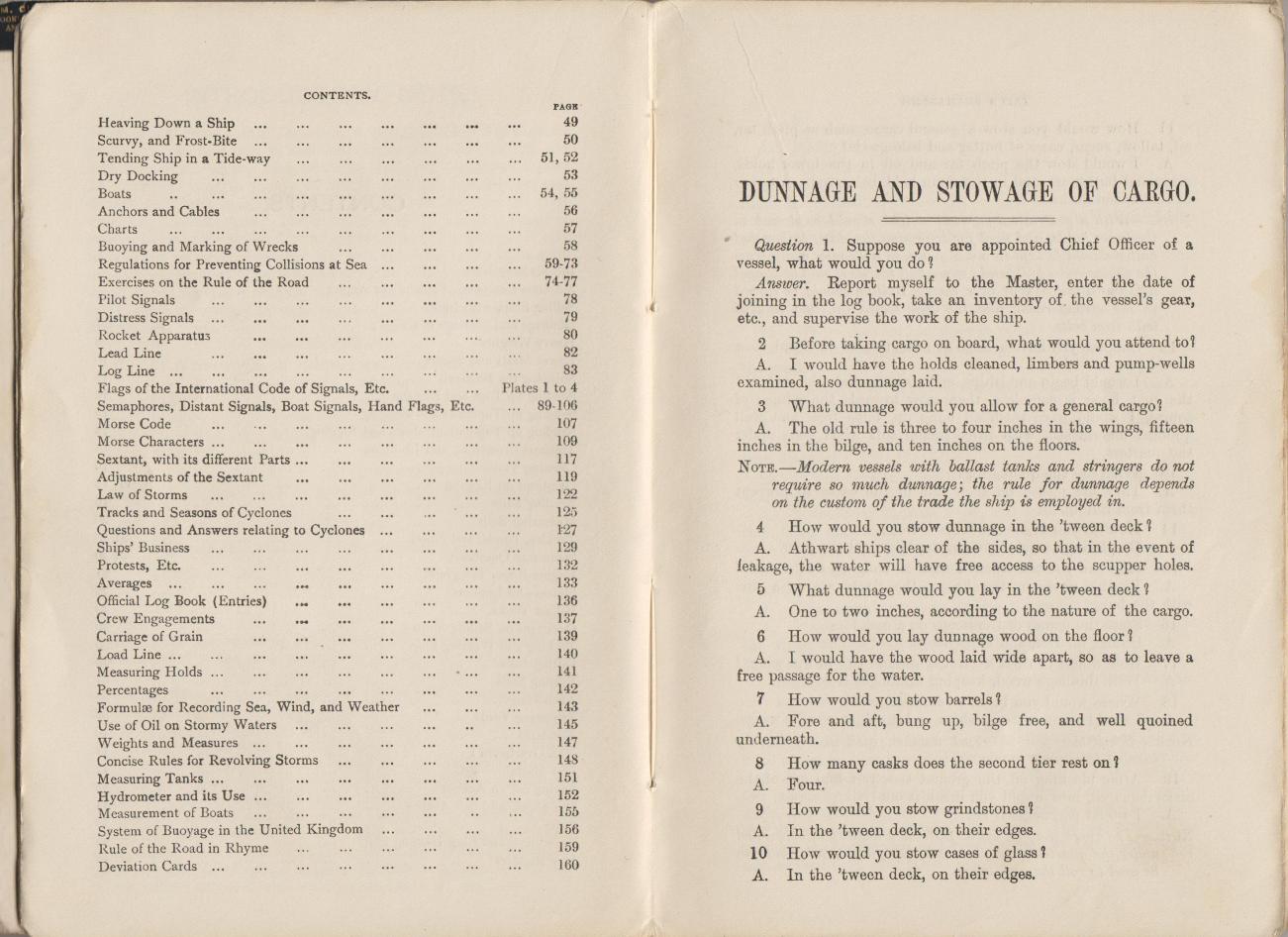
Tait's Seamanship 1913 preface Tait's Seamanship 1913 Introductory note and contents Tait's Seamanship 1913  contents

I’ve often wondered what ‘seamanship’ really is and who, if anyone, has the definitive article in their posession.

It’s not that I don’t understand or approve of the aims of seamanship – it’s about keep lives safe and protecting boats from harm while successfully travelling on the water. But, like the proverbial skinners of cats,  boat users all have their own methods, and there seems to be at least as many forms of correct seamanship as there are sailors.

Whatever sea-related activity you care to name, someone somewhere does it differently and will tell you all about it in a very firm and authoritative way – in the club bar, online or, sometimes, even on our own boats.

So I thought it might be fun and informative (and hopefully uncontroversial) to consider what seamanship was thought to be a century or so ago. So here are the cover and first few pages of Tait’s Seamanship, a splendid little document produced by a Glasgow maritime educational establishment whose principals had the good sense to provide courses for masters discreetly in a separate room.

I hope you enjoy the scans – as usual, click on the images for much larger, easily readable images.

Embarrassing RN submarine grounding in the Kyle of Lochalsh

[ad name=”intheboatshed-post”]
Kyle of Lochalsh

The story of high-tech Naval submarine HMS Astute getting stuck in the Kyle of Lochalsh is possibly disappointing for  tax payers who paid for all the technology and training that’s meant to prevent this kind of thing – and probably even worse for the officers involved.

Still, it does make me feel a little better able to forgive myself for all errors I’ve made in sailing over the years – and leads me to fervently hope all my future mistakes will have equally minor consequences. I also recommend reading Ewan Kennedy’s musings about the event – he knows the area, and argues that it is in fact well charted though it’s lucky the big, expensive boat hit gravel and not rock. My thanks to John Lockwood for tipping me off about this.

One other thought thought is this. I’ve never has occasion to look at a map of the area before, but I must say the Kyle looks like a super cruising ground for small boats.

PS – Thanks to John again, I’ve learned that the sub got damaged by the tug that pulled it free.

12ft rowing dinghy built by Stirling & Son of Tavistock

[ad name=”intheboatshed-post”]
Rowing Will Stirling 12ft Dinghy

Rowing Will Stirling 12ft Dinghy boat Bow and Fairlead Rowing Will Stirling 12ft Dinghy  boat Stirling and Son - transom Rowing Will Stirling 12ft Dinghy  boat Thwarts Aft sternsheets and transom

Stern of 12ft Dinghy Rowing Will Stirling 12ft Dinghy  boat

A recent 12ft rowing dinghy by Stirling & Son

These delicious photos come from regular contributor, boat builder, historian and designer Will Stirling of Stirling & Son. The plans for this boat are available to buy, as his letter below explains:

‘Dear Gavin,

‘Attached photos of the most recent dinghy, a 12ft pulling boat. She is built of mahogany and oak with copper and bronze fastenings.

‘The clocks have gone back now so it is time to string up some lights otherwise the working day is too short.

‘I now have plans available in the following format:

  • two sheets of A2 tracing paper
  • two sheets of A1 tracing paper, a scantlings list
  • a list of materials
  • a CD with photographs of various stages and details of dinghy building

‘The A2 sheets contain the lines draught and consrtuctional detail, the A1 sheets have templates of the moulds and transom with the planking marked out and templates of the backbone members (stem, sternpost, stern knee etc).

‘Plans in this format are now available for a 9ft general purposes dinghy and an 11ft pilot’s punt of circa 1900 and a 17ft salmon boat. These plans cost £50 plus postage and packaging of £2.50 in the UK.

‘Plans without templates are available for a 21ft frigate’s longboat of 1757, a 37ft smuggling lugger of 1835 and a 43ft gentleman’s cutter of 1880.

‘I hope you are well. The Intheboatshed website is going from strength to strength; it is very popular with Google.

‘Best wishes,

‘Will’

Many thanks Will! I do hope your plans go as well as they deserve – it’s only a shame that there aren’t more professional and home builders of these kinds of boats in the world.

Stirling & Son is based near Tavistock, Devon. See the company’s website  www.stirlingandson.co.uk
tel 01822 614259.