Can anyone help Keith Johnston find out about his ancestor’s guano trade ships?

Chincha Guano Islands, Peru, engraving published by The Illustrated London News February, 21st, 1863, photographed by Manuel González Olaechea y Franco

This London Illustrated News illustration of 1863 shows ships in the guano trade anchored among the Chinca guano islands off Peru. Image from the Wikipedia and photographed by Manuel González Olaechea y Franco

Regular reader and contributor Keith Johnston has written in to ask whether anyone can help him learn more about one of his forebears, Liverpool shipping agent and ship owner William Cliffe, who specialised in guano.

It seems Cliffe had four sailing barques ranging from 200 to 600 tons gross, all of which are mentioned in the 1883 Lloyds Register of Shipping.

Their trade was mainly in the valuable commodity of guano, ancient nitrate and phosphate-laden deposits of the faeces and urine of bats, seabirds, and seals used as a fertiliser and as an ingredient in gunpowder. It was found on remote islands in low rainfall areas, where there is little rainwater to wash away the nitrate fraction.

In what seems to be a textbook example of how foreign policy is often decided by commercial interests rather than by any sense of right or wrong, during guano’s heyday in the mid-19th century, the United States of America passed a law permitting US citizens to claim any guano island they found for themselves, so long as the guano recovered was to be used by US citizens.

Keith says the Merseyside Maritime Museum in Liverpool has been very helpful in tracking down this information, but wonders whether any intheboatshed.net readers have come across the ships listed as belonging to Cliffe, as he would like to try and find more detail about the actual ships, crews, cargos, ports of call and definitely pictures or drawings of them so that he can make models, if at all possible.

The vessels are:

  • Boldonsailing barque, 656 tons net, 689 tons gross, 628 tons under deck; 168.1ft LOA 32.2ft beam 19ft depth, built at Sunderland by Crown in January, 1873
  • Guatemala Packetsailing barque, 201 tons net, 326 tons gross, 110ft LOA 25ft beam 16.5ft depth, built by Harrington in 1852
  • Nimroudsailing barque, 670 tons net, 693 tons gross, 135ft LOA, 30ft beam, 20ft depth, built at Scarborough by Tindalls in 1853
  • Quito, sailing ship, 503 tons net, 503 tons gross, 117.5ft LOA, 28ft beam, 18.7ft depth, built at Sunderland in 1850

If you have any information, please pass it on to me at gmatkin@gmail.com, and I’ll forward it to Keith.

PSHugh Jenkins has written in with some snippets of information about the guano trade that might be of interest. They turned up during his research into a sailing ancestor who worked for a Liverpool guano shipper. Hugh comments that the company mentioned, WJ Myers, was quite a substantial business, and yet today finding any reference to it is now very difficult.

Thanks Hugh!

Sea songs from Gavin Davenport’s new CD

[ad name=”intheboatshed-post”]

Gavin Davenport concertina and sea songs

My musician and singer friend Gavin Davenport has kindly agreed to let me publish a couple of MP3s of two sea songs from his new album Brief Lives, which is available from the shop section of his website. In each he accompanies himself using a beautiful old ebony-ended Wheatstone anglo concertina.

The songs, British Man Of War and On Board Of A Ninety-Eight come from the Navy’s wooden walls era, are striking and are really two sides of the same coin.

In the first, a swaggering and excited young tells his worried lover that he’s joining the Navy and will return covered in glory; in the second an old sailor tells the story of his heroic career as a sailor in the Navy, and finishes by explaining that he has been well looked after, and is now nearly 98. The ninety-eight of the title is a ship with 98 guns, by the way.

Neither really engage with the downsides of war and, like many sea songs, contain strong elements of boasting and wishful thinking. Well, I guess they had to have something to keep them going.

Tait’s Seamanship, 1913, part I, or how to sail a ship

[ad name=”intheboatshed-post”]

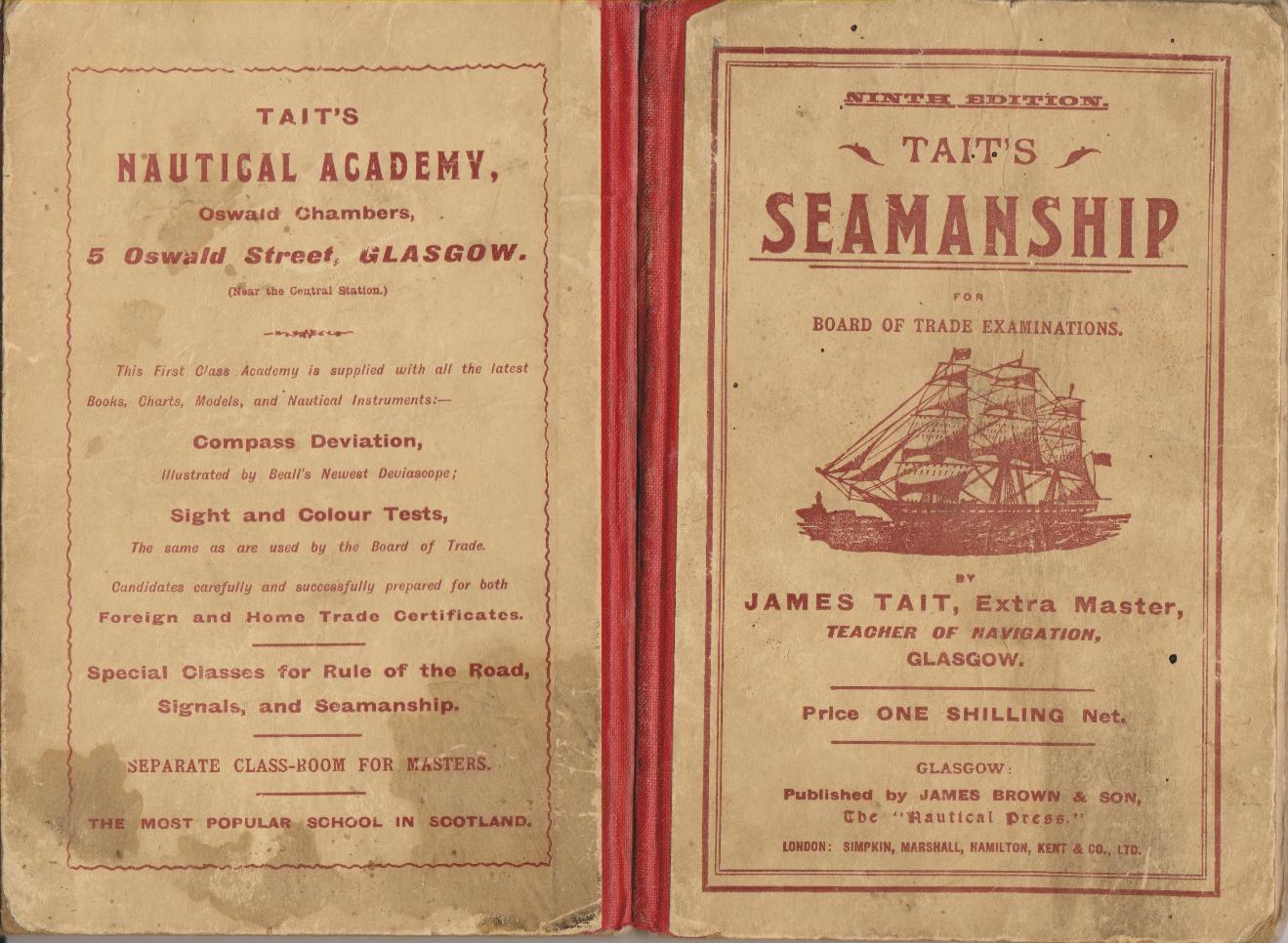
Tait's Seamanship 1913 Cover

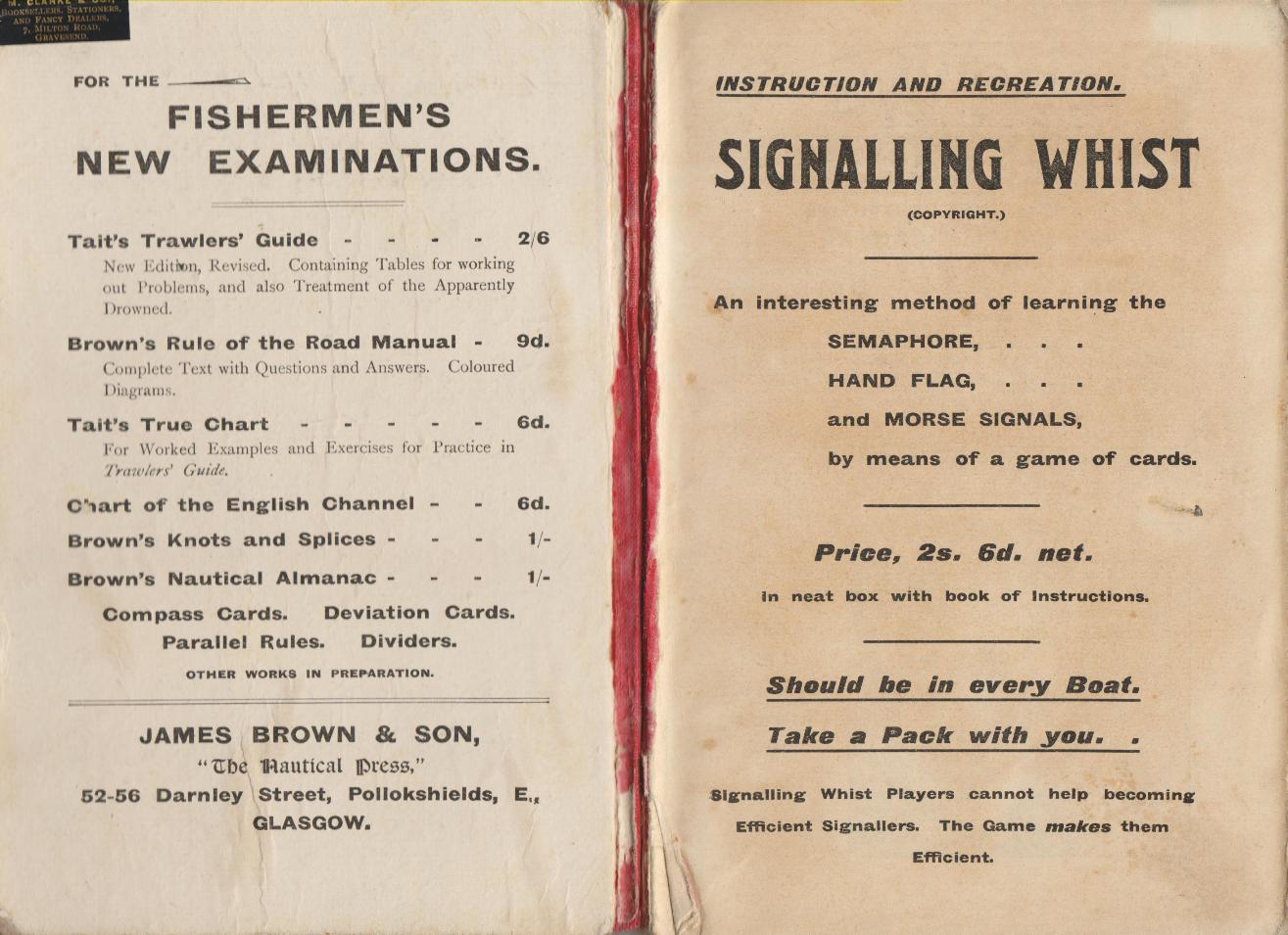
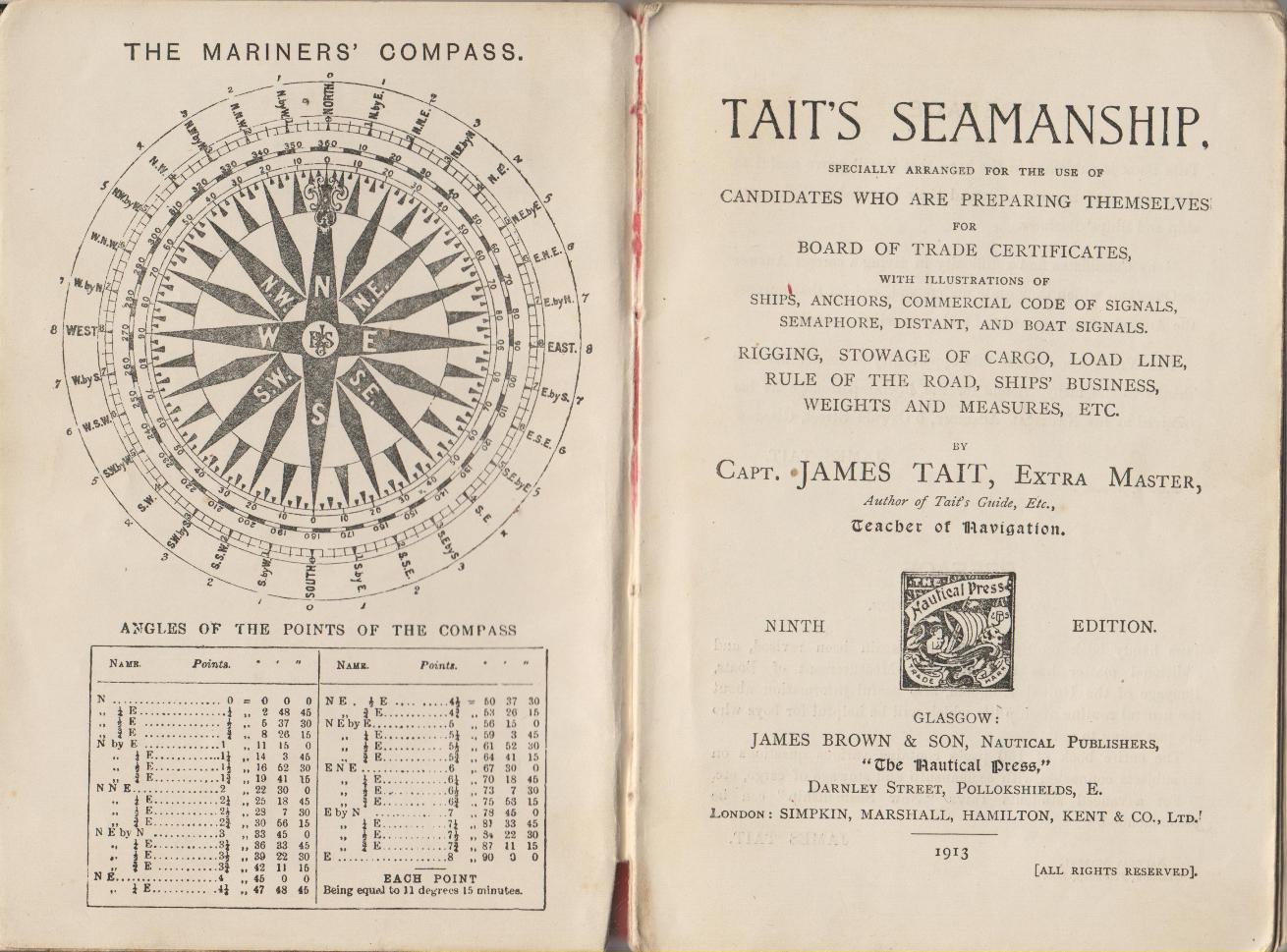
Tait's Seamanship 1913 Cover adverts 1 Tait's Seamanship 1913 adverts 2 Tait's Seamanship 1913 Compass and frontispiece

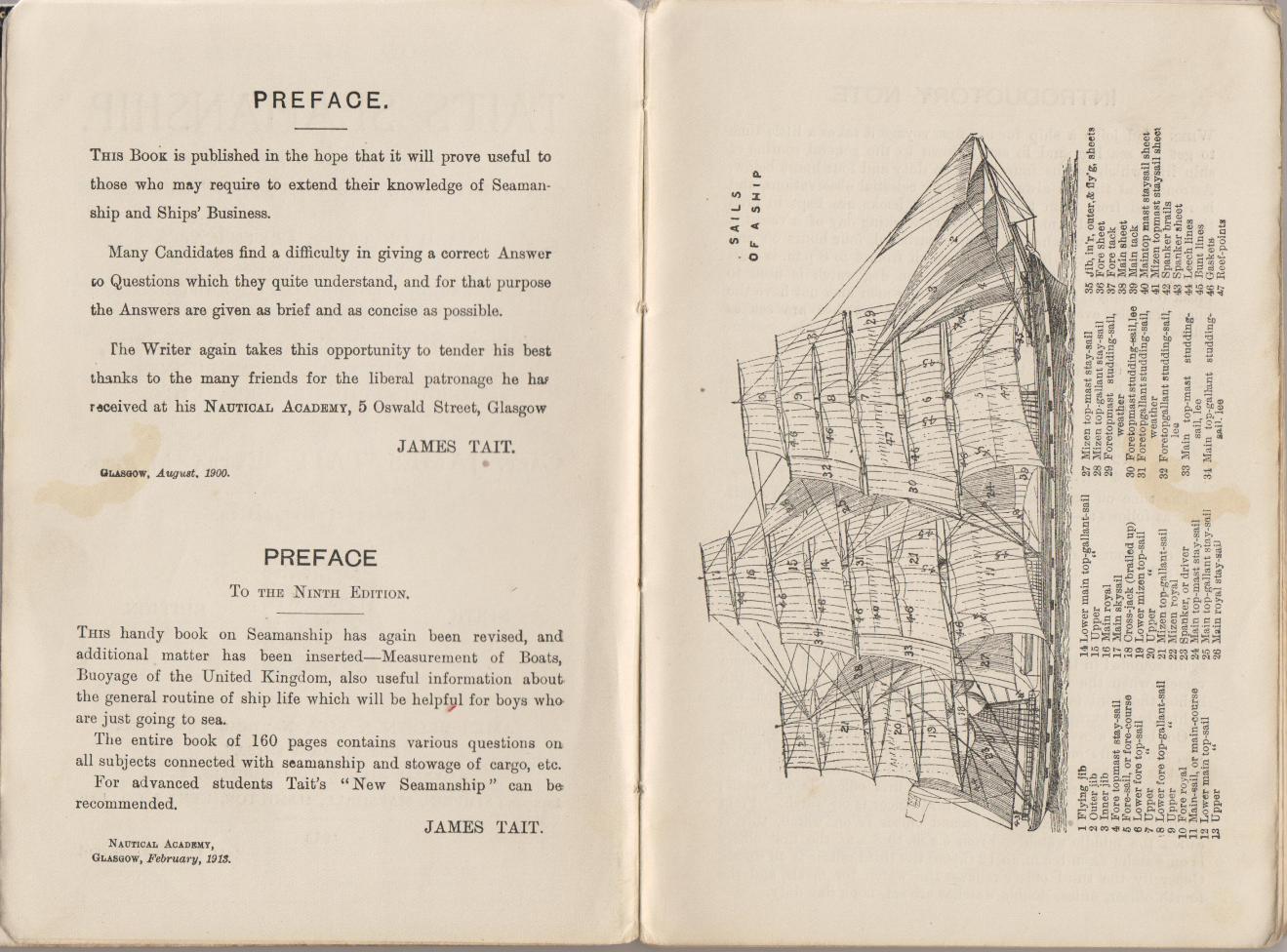
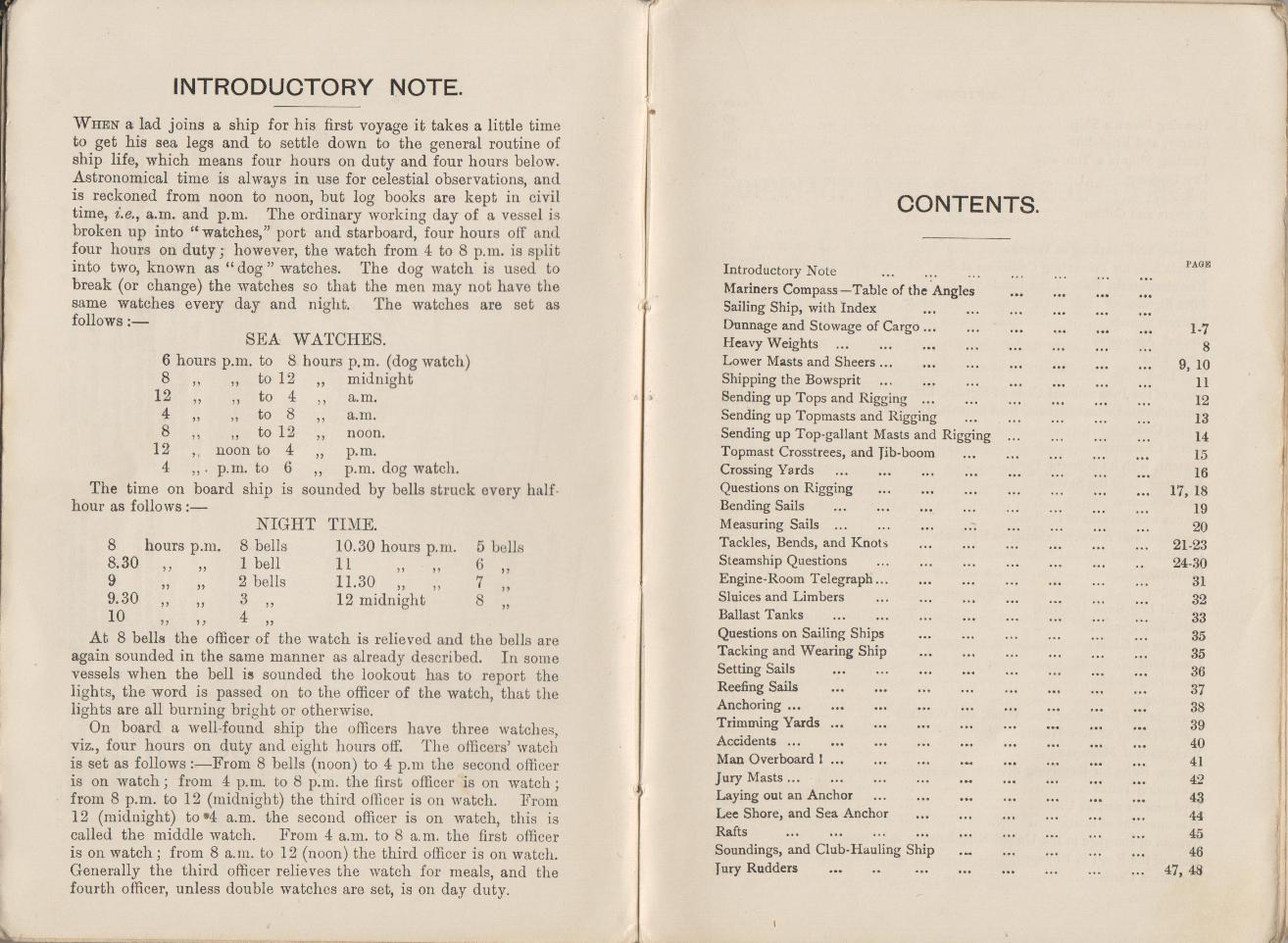
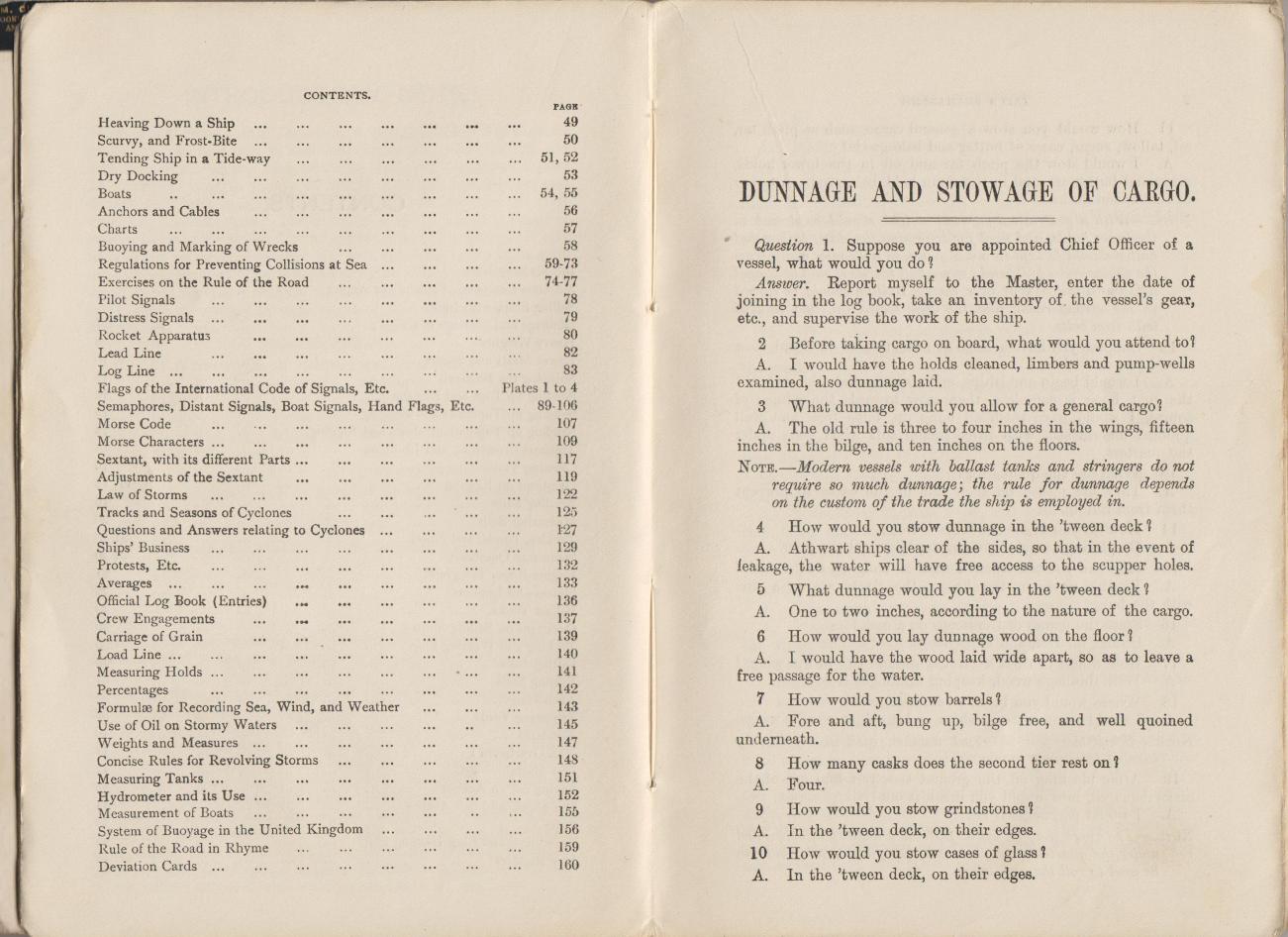
Tait's Seamanship 1913 preface Tait's Seamanship 1913 Introductory note and contents Tait's Seamanship 1913  contents

I’ve often wondered what ‘seamanship’ really is and who, if anyone, has the definitive article in their posession.

It’s not that I don’t understand or approve of the aims of seamanship – it’s about keep lives safe and protecting boats from harm while successfully travelling on the water. But, like the proverbial skinners of cats,  boat users all have their own methods, and there seems to be at least as many forms of correct seamanship as there are sailors.

Whatever sea-related activity you care to name, someone somewhere does it differently and will tell you all about it in a very firm and authoritative way – in the club bar, online or, sometimes, even on our own boats.

So I thought it might be fun and informative (and hopefully uncontroversial) to consider what seamanship was thought to be a century or so ago. So here are the cover and first few pages of Tait’s Seamanship, a splendid little document produced by a Glasgow maritime educational establishment whose principals had the good sense to provide courses for masters discreetly in a separate room.

I hope you enjoy the scans – as usual, click on the images for much larger, easily readable images.