[ad name=”intheboatshed-post”]

Rowing boat built from wood in the traditional way – and isn’t
it so much more attractive than plastic? Photo from Flickr
Creative Commons, taken by Rick Rowland
Several times now I’ve been promised short articles that answer this question, but as yet no-one has sent me any clear answers – not even those who really should have the information at the top of their heads and have an obvious interest in making the case.
So I was intrigued to find some answers to this question about wooden boatbuilding laid out in a recent post at Tiernan Roe’s weblog Roeboats. Here are his key points (some are slightly paraphrased):
•Where light weight and strength are needed wood is the best material to use.
•Pound for pound, wood is stronger than than steel, most fiberglass and aluminium.
•On the same basis, wood is stiffer than fiberglass, kevlar or steel.
•Wood absorbs vibrations and this includes sound, so wooden boats are quieter.
•Wood does not fatigue with repeated loading.
•Wood is a renewable resource and the growing of wood removes carbon dioxide from the atmosphere.
•Wood is eco friendly in that it can be recycled, fiberglass cannot.
•Wood looks good.
•Wood allows economical, in both materials and cost, custom production of boats.
•Wooden boats require similar maintenance to fiberglass boats. Gel coat is not the wonder material it was thought to be.
Tiernan adds that the reason most boats for sale today are made of fiberglass is that they can be made by semiskilled and unskilled workers who are cheaper to hire than the skilled craftspeople needed to build a wooden boat.
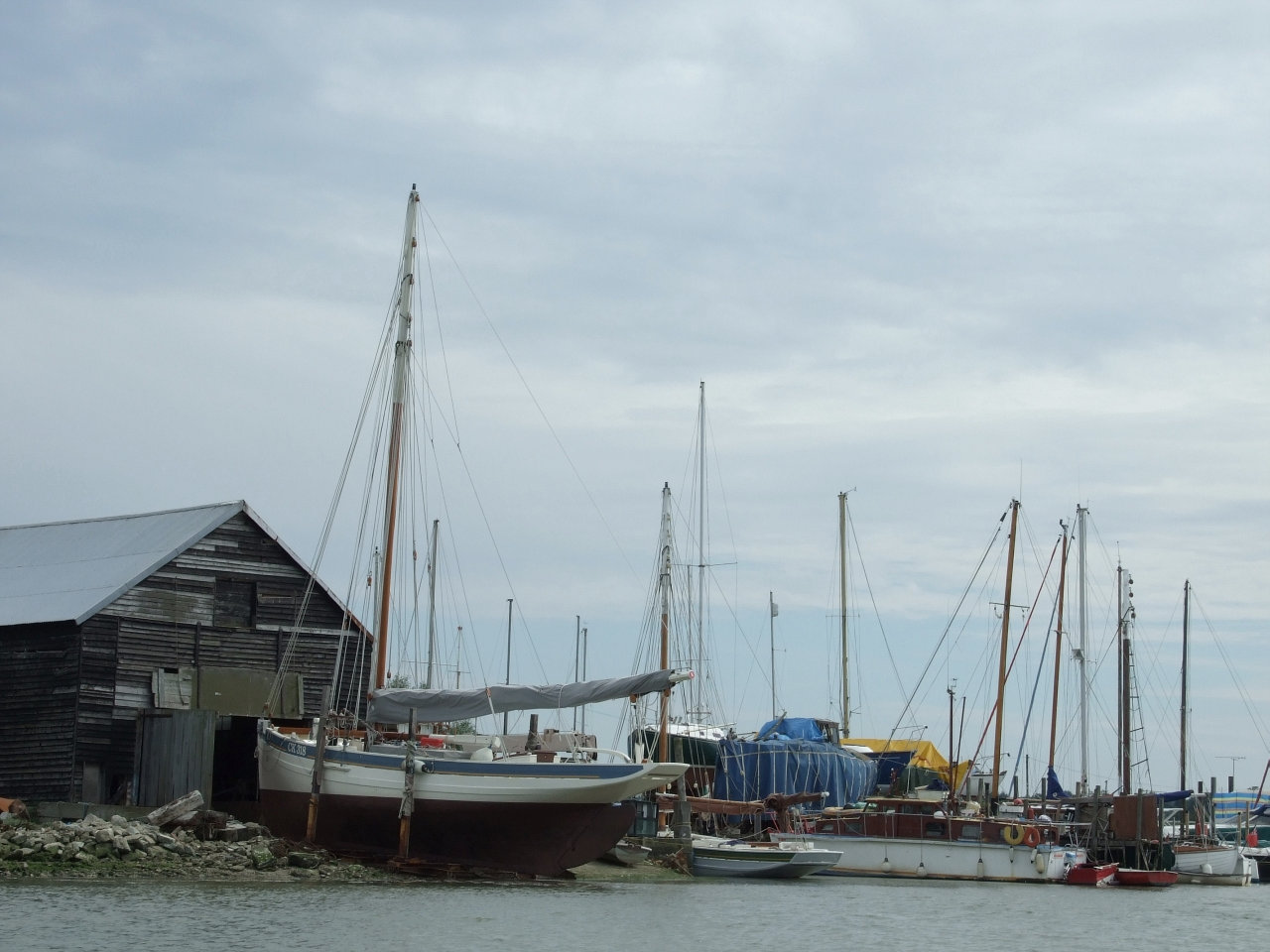
I’d add a couple of points to Tiernan’s list. One is that traditional wooden boats bring so much to the landscape – there are many precious places in the UK that would be utterly changed without their characteristic wooden boats – including The Broads, the River Thames, the creeks of the East Coast, and the beaches at Cromer and Hastings.
Another is that when we build in wood or commission others to do so, we are helping to maintain an important tradition. Boatbuilders teach each other, and the skills have long been conveyed by oral transmission. To my mind, this makes boatbuilding a culturally important tradition.
But although I’m obviously an enthusiast for wooden boats and boatbuilding, I’m sure the cause of the wooden boat is best served by a realistic view of the issues, and that many readers of this weblog will have different perspectives based on their own exeriences.
For example, I’m not sure the maintenance argument is entirely justified. I’ve learned that anything in the open air that is covered with gelcoat or a epoxy and a two-part paint requires far less maintenance than anything wooden that’s covered with alkyd paints, varnish or even teak oils. With our busy working and family lives I have no hesitation in saying that we own and use at least one boat that we wouldn’t be able to keep up it on a DIY basis if it was made from wood.
I wonder also whether the argument that building from wood is environmentally friendly has really been made. I’m inclined to believe in global warming and the trouble it is bringing, but I feel also that the arithmetic we presume when we’re making judgements about environmental issues is often overly simplistic. For example, when wood eventually rots its breakdown must release carbon dioxide and the much worse global warming gas methane. So what is the lifetime cost of a wooden boat to the environment compared with a plastic one? I haven’t a clue, but I don’t think the answer should be taken as obvious until someone clever works it through and provides us with the result of their calculations. Just to add a factor that seems relevant, what is the contribution to global warming made by the drying of spirit-based paints and varnish?
These are just a few thoughts of mine.What do you think? Are there any points here you’d argue with? Are there any arguments to add? Comments via the comment link below and at Tiernan’s weblog please!
PS Fans of the US designer John Atkin will be interested to know that Tiernan is currently weblogging the build of a clinker-built Atkin Ninigret.
PPS I’d draw your attention to some of the comments below, particularly those of West Country boat designer, occasional building and general sailing man John Hesp.