
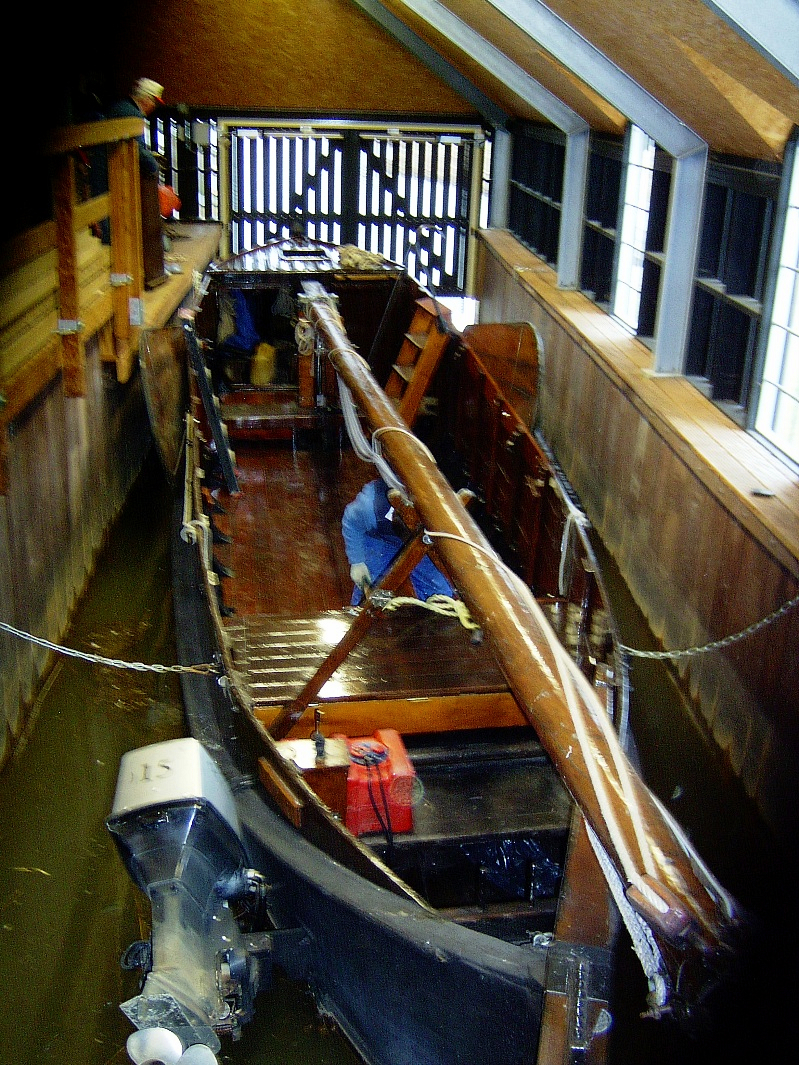
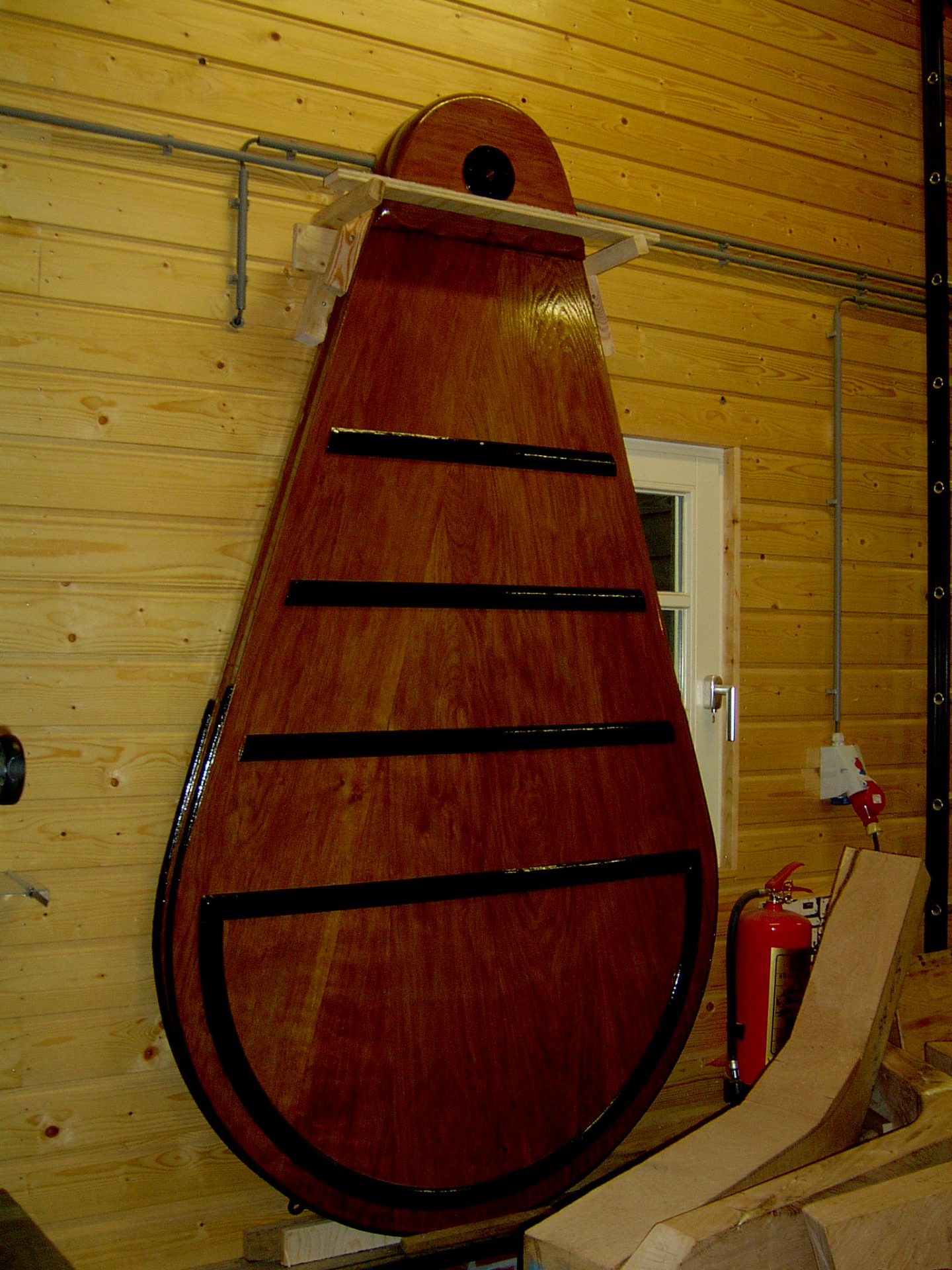
A new yard building ‘zompen’ sailing barges at Enter, in Holland

Boatyard at Enter, Netherlands

Boatyard at Enter, Netherlands the first zomp Boatyard at Enter Boatyard at Enter

Boatyard at Enter Boatyard at Enter, Holland

Hans-Christian Rieck took a trip to a modern boatyard at Enter in Holland, which he rightly argues shows the value of maintaining historic boatyards. Take note Swale planners and Faversham councillors!

Here’s what Hans has to say.

‘From the 17th century river traffic in the east of the Netherlands and the north west of Germany was carried out mostly using a working craft known as a zomp. The little ships worked the rivers Berkel, Regge, Schipbeek, Dinkel and Vechte. They were about 12m long and could carry a load of about 10 tones.

‘From the 1850s onwards bigger canals were built and the rivers were made more easily navigable, and so larger hips with bigger payloads came into use. The zompen as a type came under pressure, and within one generation the disappeared almost completly. The last original zomp was kept in a museum in Arnheim in 1940, when it was hit by a grenade during Operation Market Garden and badly damaged.

‘But the Dutch are proud of their maritime heritage and the remains of the last zomp were preserved. In the 1980s Dr G-J Schutten made a reconstructed drawing of the lines of the old zomp and published them, which awakened a great deal of interest in the little village of Enter, which has a long history of involvement with the zomp trade.

‘During the 19th century, of 150 families in the village 120 were involved in shipping goods using zompen. By tradition, at Christmas every zomp skipper had to be at home to attend church, and it must have been an impressive picture, seeing 120 ships packed into such a small port!

‘To keep the history alive, the inhabitants of Enter decided to reconstruct the old zomp and with the help of Dr Schutten in 1984 a wooden boatyard in Giethoorn built the first new zomp for over 100 years – it is now used for carrying tourists along the River Regge.

‘But the brave folks of Enter wanted more a shipyard of their own, where they could build their own zompen – and they were successful. In 2009 the Zomp Wharf in Enter opened its doors.

‘It is a paradise of wooden boatbuilding, with steamed planks an inch thick and frames of grown oak, and a team of old-time shipwrights keep up the tradition of woodworking. If ever you are around the Regio Twente in the Netherlands go to Enter and visit the wharf. It will be worth it, I promise you.’

Thanks Hans! See the project website: http://www.entersezomp.nl.
 

Photos from the Stirling & Son yard

Stirling & Son Victorian cutter Integrity counter

Stirling & Son Victorian cutter Integrity is that straight! John Gallagher fitting the mast step Stirling & Son Victorian cutter Integrity Stirling & Son Victorian cutter Integrity safety boots

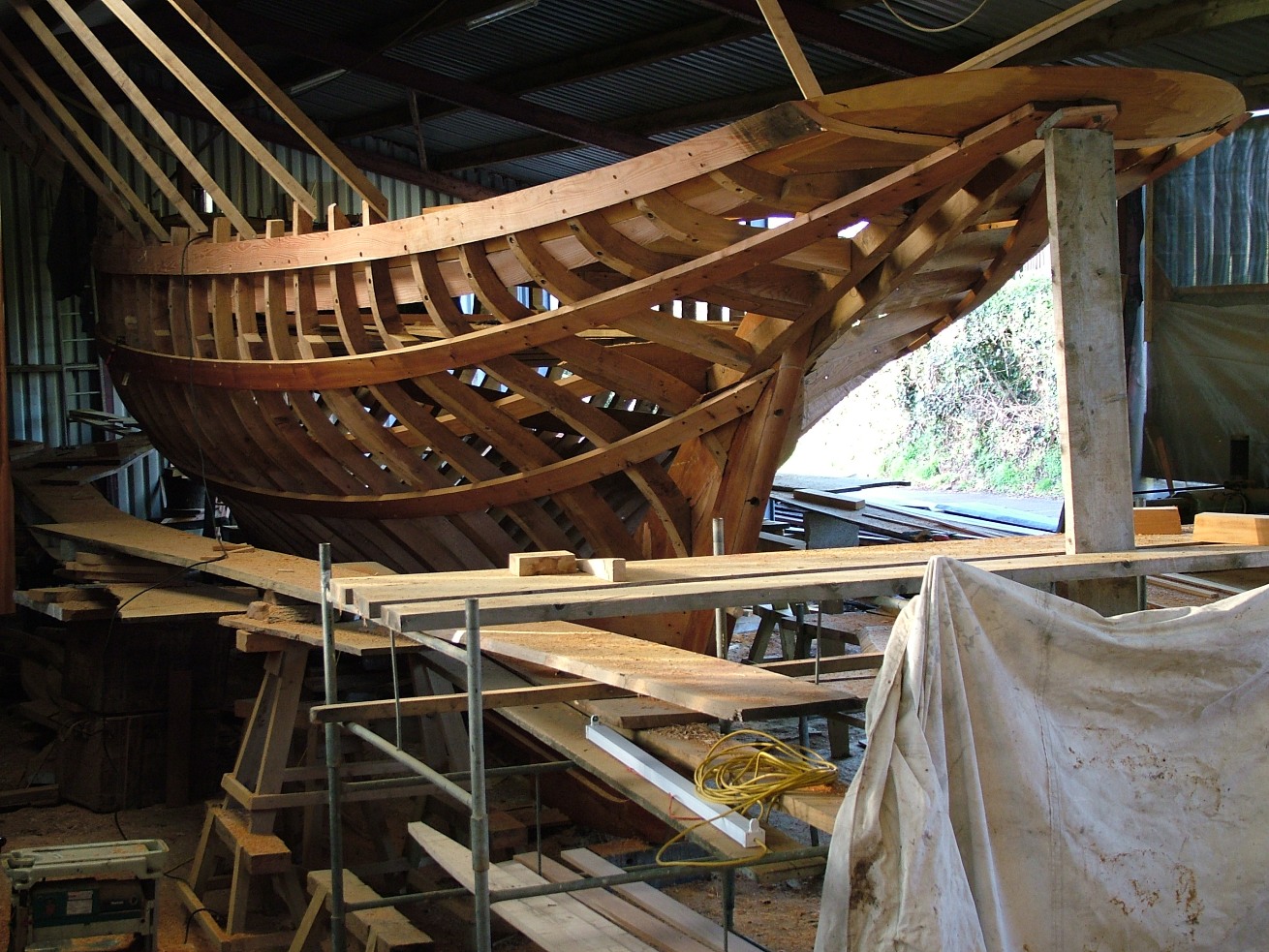
Will Stirling’s had his camera out over at the Stirling & Son yard and has come up with these photos.

They starting with the cutter Integrity’s impressive counter stern – click here for more about this project.

I’m strongly reminded of an original Victorian cutter named Leila we saw some months ago. Leila isĀ  currently being restored at Southwold; see a post about her here.

The others show John Gallagher fitting the mast step; Ted Luck eyeing up the sheer and Will’s son Alf adjusting a batten he feels perhaps could be a little fairer. I can’t imagine a better place for any of these boys to play.

Thanks Will – you take a nice shot!

Stirling & Son traditional yacht building and wooden boat repair is based at Tavistock, Devon. For more information see www.stirlingandson.co.uk.

Tom Dunderdale sailing dinghy launched by 2010 Boat Building Academy students

Boat Building Academy launch December 2010

Boat Building Academy launch December 2010 Boat Building Academy launch December 2010 Boat Building Academy launch December 2010

Boat Building Academy launch December 2010

‘Proud builder’ and ‘thumbs-up’ photo featuring Ian Davidson’s wife Liddy were taken by Chelsea Davine and James Bird respectively; the last two were taken by Derek Thompson LRPS. Many thanks to you all for permission to use these shots

Emma Brice of the Boat Building Academy at Lyme has sent me the first of five instalments showcasing the boats built by the Academy’s class of March 2010.

Ian Davidson’s 18ft strip planked gaff rigged daysailer Annie, designed by Tom Dunderdale, is the first of its kind to be built. After a lot of thought, Ian invented the name Kisuli after the three women in his life, daughters Kimberley and Susy and wife Linda.Ā  Then he found out Kisuli means dizzy in Swahili – apparently the women in question have have forgiven him.

The 18ft boat built by Ian and Keian Gillett, among others, has a shallow draft and will be used for sailing outings on Chichester Harbour – it is big enough for Ian to take his family out. It’s a pretty craft, and it would be great to hear how it sails.

Ian’s a keen sailor, and boats and the sea have always been part of his life and describes himself as a fixer with a thing about wood. After serving in the army for 37 years, Ian joined the Academy to learn a skill that he could practice and be proud of.

In the New Year Ian will tackle a house fit out, and afterwards will look for work as a marine carpenter in Hampshire.

Keian, who was Ian’s main partner on the build is a chef who gained a reputation on the course for making excellent bacon sandwiches. From London, he also loves sailing and is now off to Singapore to help a friend with the complete refit of a 43ft strip-planked boat, and from there will join another friend in the Sailing for Sustainability community project in Fiji, building wooden catamarans.