BBA student Jonathan Palmer wins a big photography prize

[ad name=”intheboatshed-post”]

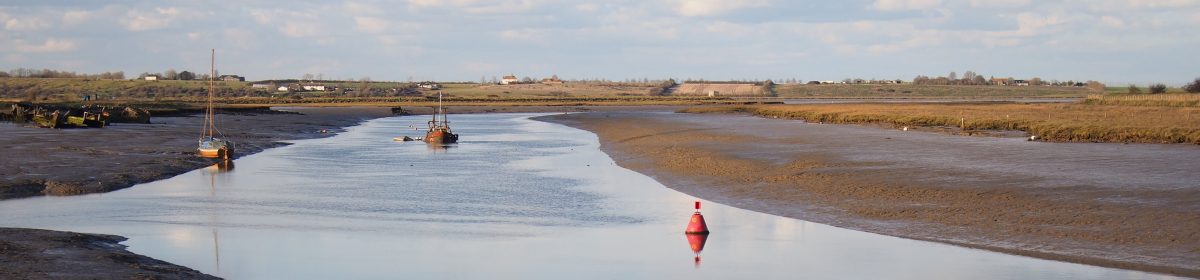
Beer Lugger 2010 Winning Photo

Boat builder Jonathan Palmer has won a first prize in the traditional maritime skills in action section of a photographic competition sponsored by National Historic Ships and Classic Boat magazine.

Jon’s winning photograph (above) was taken in May at the Boat Building Academy workshops where he has been a student.

Titled Beer Lugger 2010, the photograph from the building of the new Beer boat Steadfast by students on Jon’s course. He caught the boat on camera as it was awaiting the frenzied process of hot nailing, in which copper nails are quickly hammered into freshly steamed timber ribs and riveted into place.

The prizes were awarded at the National Maritime Museum in Greenwich – after the ceremony Jon apparently enjoyed a game of croquet and a very civilised afternoon tea. He says he will spend the prize money on tools for LP Boatworks, a company that he and fellow Boat Building Academy graduate Ben Larcombe have set up in Colyton, Devon. They plan to offer traditional and modern boat building, restoration and repairs.

Jon’s photo can also be seen in the November issue of Classic Boat or on the National Historic Ships website.

Positioning the copper nails before hot nailing Holding the ribs in postion while the nails are being hammered

Readying the copper nails before hot nailing; the hot nailing process itself

Nick Smith motor launch Bella – fitting the engine and shaft

[ad name=”intheboatshed-post”]

Nick Smith motor launch Bella drilling the shaft log

Nick Smith motor launch Bella ply template holding necessary from motor, shaft line, mounts Nick Smith motor launch glueing tapered engine beds Nick Smith motor launch Bella fitting stern tube, shaft and engine

Nick Smith motor launch Bella fitting stern tube, shaft and engine Nick Smith motor launch Bella after deck khaya mahogany king plank and cover boards, iroko planks

Nick Smith and colleagues has been fitting the engine to the motor launch Bella – it’s quite a process as these photos and his notes below reveal – and fitting the aft deck, which is now looking very special.

Find more posts about Nick’s boats here.

The photos are in order, from the top and numbered left to right in Nick’s notes. Here’s what hehas to say:

1 Drilling the shaft log to take the stern tube. Notice the rudimenary drilling  jig, which is simple and effective; I use the same method to drill through the keel deadwood, from the outside in.

2 The ply template holds all the necessary information taken from the motor, dimension of shaft line, engine mounts etc. The old boys would use a string line to line up the shaft, but I use straight edges – they have to be right and don’t get the false readings that can happen when you inadvertently lean on the string with your knee.

3 Once happy with the shaft angle I can glue on the tapered engine beds. These are angled exactly to the shaft angle. Now we are getting somewhere!

4 Simple as that! Fit the stern tube, slide the shaft in, lift the engine into place, sort the engines’ fore and aft position, adjust the four mounts to line up the couplings exactly,drill off for the coach screws to hold the flexible mountings down, and then bolt down. Add the flexy coupling and bolt shaft to gearbox. A good day’s work.

5 As 4 above.

6 Whilst the stern gear engineers were knocking up their bit, I got on with other jobs, including laying the after deck, making up the locker front and locker door, and some paintwork, including varnish on the seats. I’ve got a gloss on them already, even only after one coat of 50/50 and one full coat. Here’s the after deck, khaya mahogany king plank and cover boards, iroko planks, payed with black polysulphide compound. The mahogany is to be fully varnished and the deck planking is to be fed with a linseed oil-white spirit mixture.

Bella is six to eight away from completion, but as the old boatbuilders in Salcombe used to say ‘a boat’s only finished when it goes away’. Looking at my timesheets, so far I have been building her for 13 weeks in workshop time, so I’m reasonably pleased with the progress.

More photos next week.

Cheers

Nick

Nick comes from Devon, learned boatbuilding the traditional way and specialises in new builds in clinker and carvel for sail, motor and rowing power from 8ft to 28ft with a special emphasis on West Country style and design, and also takes on repairs and refits from 25ft to 50ft. These days he’s based in Hampshire, and can be contacted by email at nick_smith_boatbuilder@yahoo.com and by phone on phone on 07786 693370.

Schnellboot S130 in restoration at Roving Commissions

[ad name=”intheboatshed-post”]

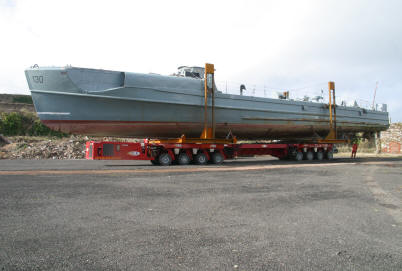
Schnellboot S130 - the last remaining Schnellboot or E-Boat

The last remaining viable example of the feared German Schnellboots, S130 has been in restoration at the Roving Commissions yard at Southdown in Cornwall for some time.

Roving Commissions is run by John Owles, the man who identified the wreck of the historic yacht Scoter as a bawley type. Read more about Scoter.

The 35m torpedo boats had three 2500hp engines a maximum speed of 40knots, and it turns out that S130 was a particularly successful example. Commissioned in the autumn of 1943, she was part of the 9th S-Boot flotilla that in March 1944 found and attacked the American invasion force in Lyme Bay during Operation Tiger, the D-Day preparation training exercise at Slapton Sands that ended in the deaths of more than 740 American forces.