The Life-boat and its Work, a history from 1911

[ad name=”intheboatshed-post”]

lifeboat, lifeboat institution, john cameron lamb, lukin, wouldhave, tyne lifeboat, greathead, history, lifeboat history

‘It is impossible to assign to any one person the merit of inventing the Life-Boat’

Based on a 1910 Royal Society of Arts lecture, Sir John Cameron-Lamb’s small book The Life-boat and its Work was published in the following year, and sold for the now-laughable sum of one shilling. I promised the gentlemen who look after Southwold’s historic Alfred Corry I’d scan this book, and so here’s the first instalment!

To see the rest of this series:

The Life-boat and its Work, a history from 1911 – part I

The Life-boat and its Work, a history from 1911 – part II

The Life-boat and its Work, a history from 1911 – part III

lifeboat, lifeboat institution, john cameron lamb, lukin, wouldhave, tyne lifeboat, greathead, history, lifeboat history

lifeboat, lifeboat institution, john cameron lamb, lukin, wouldhave, tyne lifeboat, greathead, history, lifeboat history lifeboat, lifeboat institution, john cameron lamb, lukin, wouldhave, tyne lifeboat, greathead, history, lifeboat history lifeboat, lifeboat institution, john cameron lamb, lukin, wouldhave, tyne lifeboat, greathead, history, lifeboat history

lifeboat, lifeboat institution, john cameron lamb, lukin, wouldhave, tyne lifeboat, greathead, history, lifeboat history lifeboat, lifeboat institution, john cameron lamb, lukin, wouldhave, tyne lifeboat, greathead, history, lifeboat history

lifeboat, lifeboat institution, john cameron lamb, lukin, wouldhave, tyne lifeboat, greathead, history, lifeboat history lifeboat, lifeboat institution, john cameron lamb, lukin, wouldhave, tyne lifeboat, greathead, history, lifeboat history lifeboat, lifeboat institution, john cameron lamb, lukin, wouldhave, tyne lifeboat, greathead, history, lifeboat history

lifeboat, lifeboat institution, john cameron lamb, lukin, wouldhave, tyne lifeboat, greathead, history, lifeboat history

Alfred Corry, Southwold’s fabulous old lifeboat

[ad name=”intheboatshed-post”]

alfred corry, southwold, lifeboat, cromer, pier, henry blogg, john craigie, harbour, clinker, standing lug, dipping lug

alfred corry, southwold, lifeboat, cromer, pier, henry blogg, john craigie, harbour, clinker, standing lug, dipping lug alfred corry, southwold, lifeboat, cromer, pier, henry blogg, john craigie, harbour, clinker, standing lug, dipping lug alfred corry, southwold, lifeboat, cromer, pier, henry blogg, john craigie, harbour, clinker, standing lug, dipping lug

alfred corry, southwold, lifeboat, cromer, pier, henry blogg, john craigie, harbour, clinker, standing lug, dipping lug alfred corry, southwold, lifeboat, cromer, pier, henry blogg, john craigie, harbour, clinker, standing lug, dipping lug alfred corry, southwold, lifeboat, cromer, pier, henry blogg, john craigie, harbour, clinker, standing lug, dipping lug

alfred corry, southwold, lifeboat, cromer, pier, henry blogg, john craigie, harbour, clinker, standing lug, dipping lug, clinging to rigging alfred corry, southwold, lifeboat, cromer, pier, henry blogg, john craigie, harbour, clinker, standing lug, dipping lug

One of Southwold’s best attractions for boat enthusiasts is the Alfred Corry Museum, a small museum by the harbour where the main attraction is the lifeboat named Alfred Corry itself.

The Alfred Corry came into use in 1893 and continued in service until it was withdrawn in 1918. Provided by the Lifeboat Institution, it was built at a time when it was customary to discuss the boat’s size, type and sail plan with local lifeboatmen. The result of their deliberations was that the boat should be and improved 44ft by 13ft Norfolk and Suffolk type, non-self-righting, and capable of being both rowed and sailed. It was to have five tons of water ballast (the boat itself weighed 8.3 tons), and 14 oars – though the finished boat actually had 16.

Not surprisingly, perhaps, the lifeboatmen had their new craft rigged like one of the local beach yawls and fishing punts, with a dipping lug on the foremast and a standing lug on the mizzen.

Over the two and a half decades following her launch, the Alfred Corry was launched 41 times on service, and saved 47 lives.

On retirement she had a long life as a yacht until she was abandoned on the Blackwater, from where she was rescued by John Craigie, great grandson of her original coxswain, also known as John Craigie. The Craigies began the process of repairing the boat (see a clip of her sailing as a yacht here); she has since been restored in her original lifeboat form under the auspices of a charitable trust.

The museum building itself has a story worth telling. Built in 1922 it previously stood on Cromer pier, where it was the home of that town’s lifeboat. It is said to have seen over 1000 lives saved and was of course associated with legendary and highly decorated lifeboatman coxswain Henry George Blogg.

Start receiving the weekly intheboatshed.net newsletter: sign up here

Marcus Lewis restores a Troy, and plans to make clinker dinghy drawings available

[ad name=”intheboatshed-post”]

marcus lewis, fowey, cornwall, carvel, clinker, rowing boat, troy, yacht, boatbuilding plans,  plans, restoration

marcus lewis, fowey, cornwall, carvel, clinker, rowing boat, troy, yacht, boatbuilding plans,  plans, restoration marcus lewis, fowey, cornwall, carvel, clinker, rowing boat, troy, yacht, boatbuilding plans,  plans, restoration

Troy class yacht Ruby restoration

marcus lewis, fowey, cornwall, carvel, clinker, rowing boat, troy, yacht, boatbuilding plans,  plans, restoration marcus lewis, fowey, cornwall, carvel, clinker, rowing boat, troy, yacht, boatbuilding plans,  plans, restoration

Taking the lines from a 1947 9ft dinghy

Down in Fowey in Cornwall, boatbuilder Marcus Lewis has been as busy as a bee, and a few days ago wrote to tell us what he’s been doing, and about some of his plans. Here’s what he has to say:

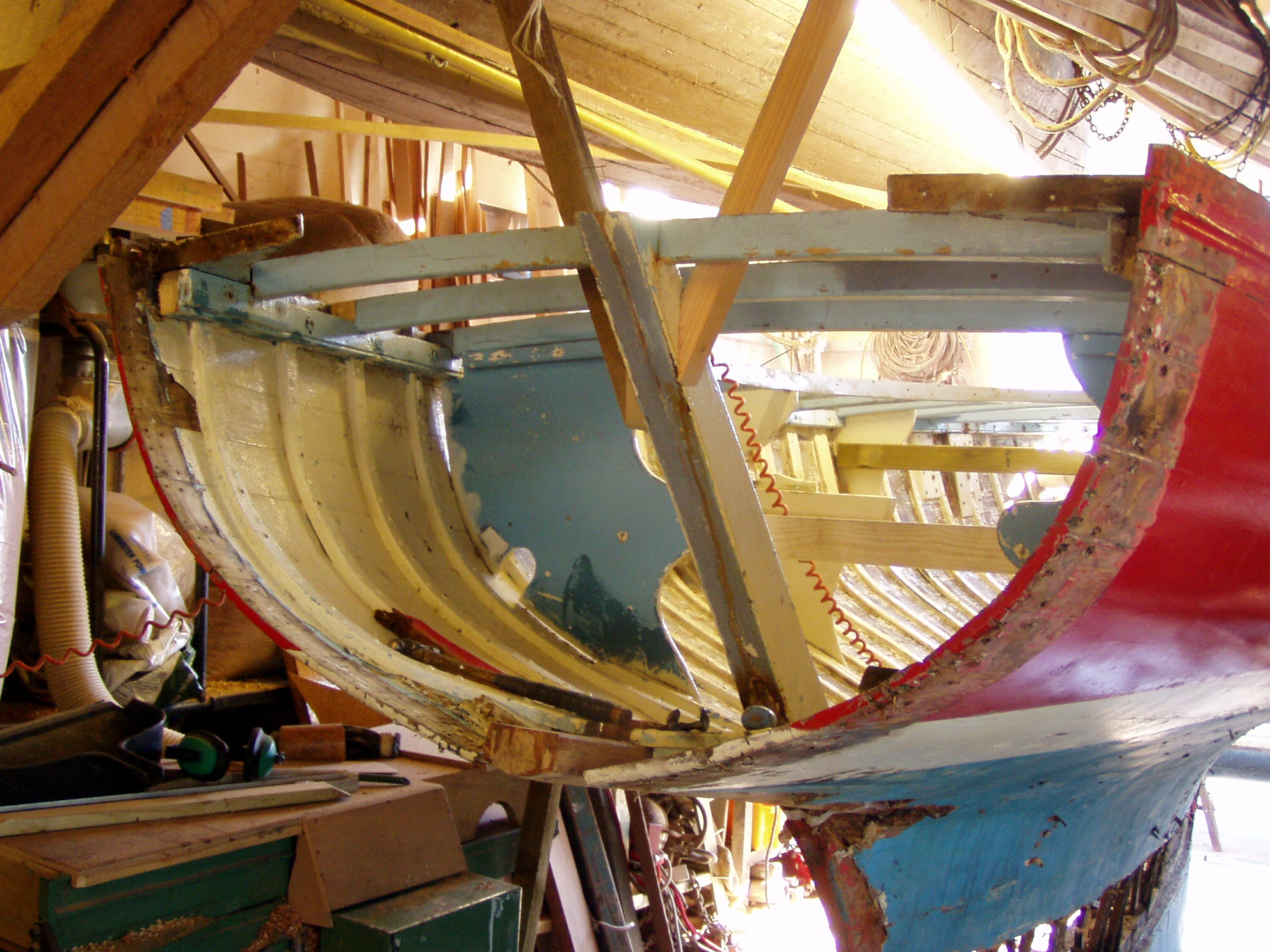
‘I have been busy building another Fowey River class dinghy, which is due for launching in a couple of weeks and I’m also part way through a serious restoration of Ruby, a  Troy class yacht built in 1930. She has needed 75 per cent of her planking replaced; lots of new parts including new horn timber, transom, transom knee, stem and stem knee, and gunwales, steamed oak timbers and keelbolts; and new  ply deck. Hopefully they will be enough to see her through the next 80 years!

‘I have attached some photos of a 1947 9ft rowing dinghy that is past repair. I am taking the lines off her in order to make some moulds and to make up plans that I intend to make available.

‘Also, have cleared out the internal bits of the Percy Mitchell-built tosher and will also be taking lines off her in the near future. If there are a couple of interested people who wanted to spend the weekend helping to take off the lines, and then have a copy themselves, I would be glad of the help – and it would galvanise me into getting it done!

‘Marcus’

Thanks Marcus. That dinghy is a nice shape – I will be delighted to help you promote the plans when you have them ready. I’d have thought there would be someone out there to help you take those lines, not least because it would be an opportunity to practice something we normally only read about in books.

If you’d like to help Marcus take the lines from the tosher in his yard, contact him at Fowey, Cornwall on tel 07973 420568, email marcus@fowey9.freeserve.co.uk . His website is at www.woodenboatbuilder.co.uk.

Start receiving the weekly intheboatshed.net newsletter: sign up here