Traditional boats of Ireland photographed by boatbuilder and weblogger Tiernan Roe

[ad name=”intheboatshed-post”]

Tiernan Roe 1

Heir Island lobster boat Rose and Galway hooker An Faoilean Tiernan Roe 2

Heir Island lobster boat Saoirse Muireann owned byhistorian and
author Cormac Levis

The two gaffers in the upper photo are Rose an Heir Island lobster boat on the left and An Faoilean a Galway hooker on the right. The Saoirse Muireann below is another Heir Island lobster boat, and is owned by historian Cormac Levis author of the well known and highly regarded book Towelsail Yawls describing the sailing lobsterboats of Heir Island and Roaringwater Bay.

The photos have been sent in by Tiernan Roe, boatbuilder and weblogger based at Ballydehob, West Cork.

From the 1870s to the 1950s, sailing boats dominated the lobster fishery of Ireland’s south coast, and the lobstermen lived a semi-nomadic lifestyle over a hundred hundred nautical mile stretch of coastline in the small open boats, yet it’s said that until Levis did his research and wrote Towelsail Yawls, their way of life had been in danger of passing unrecorded. I should add that although it was published as recently as 2002, the book already seems difficult to find – which seems to suggest that he did an excellent job.

As a bonus, here are three photos of a John Atkin Ninigret 22ft outboard boat that Tiernan’s currently building being turned over at his Ballydehob workshop. Follow his weblog Roeboats at http://roeboats.wordpress.com/.

rollover1 rollover2 rollover3

Subscribe to our free weekly email newsletter below:

What it’s really all about…

[ad name=”intheboatshed-post”]

Out to sea

Barge boat Barge boat 2 Red sails

Smack 3 Smack 2 Smack

Click on the images for much larger photos. The one at the top
makes a particularly fine background – click on the thumbnail,
then click on your right mouse button when the large image loads

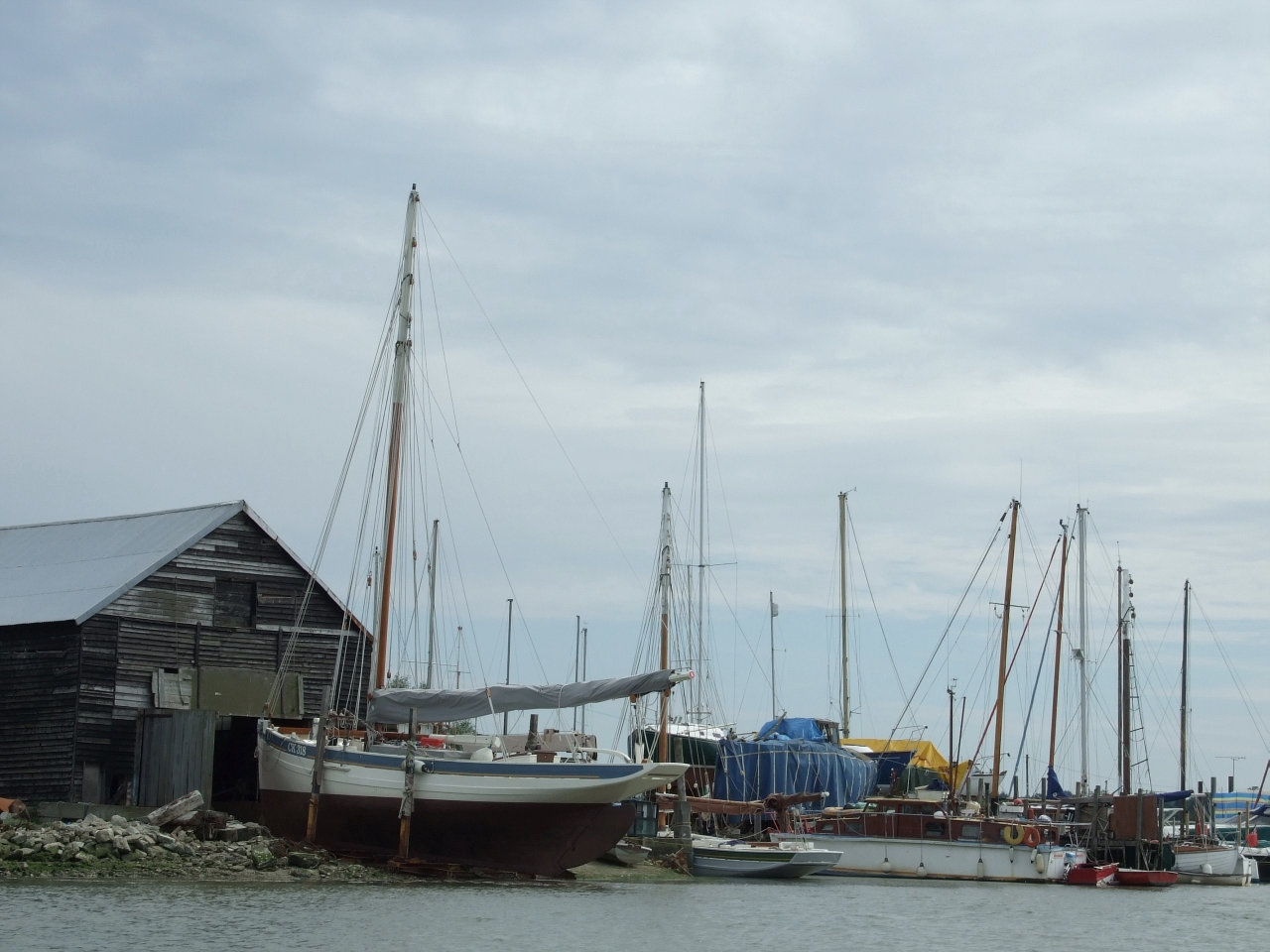
We’ve just got back from a blissful weekend’s sailing around the Swale in our little Ian Proctor-designed Prelude, and here are some photos to prove it. From the top: an unknown yacht making her way seaward at low tide in the morning light; two shots of a boat belonging to one of the local sailing barges (there are two shots because one reveals something about its hull form – for more more on barges, click here); an unknown yacht rides the afternoon tide; three shots taken by Julie of a smack at Tester’s yard at the mouth of Oare Creek.

Don’t miss something good. Subscribe to the free weekly intheboatshed.net email newsletter now!

Duncan Sclare pours 19ft Gartside cutter keel

[ad name=”intheboatshed-post”]

lead-keel-mould the-bath-burner molten-lead-in-the-bath

blow-torch-on-exit-pipe-as-mould-fills how-to-move-a-tonne-of-lead

mould-removed

Duncan Sclare pours the lead keel for his 19ft Paul Gartside-designed cutter. Click on the thumbnails for larger images

Duncan Sclare in County Mayo, Ireland has an advantage over many amateur boatbuilders: 30-odd years of experience as a furniture-maker, cabinet-maker, carpenter and joiner. See his website here to see what I mean.

Talented and practical man though he is, I still think the story of how he cast his own lead keel this week is quite something. Here’s what he says:

‘Hi Gavin. Your readers may be interested in my project to build Paul Gartsides cutter design 163. This build is going to take some time as it has to be fitted in around making wardrobes, kitchens and other stuff I do to make a crust. I have been working on it for almost a year now with little to show exept lofting, lists, stacks of timber and so on.

‘Last weekend however work for real started with the casting of the keel. The pictures show the mould made from MDF and softwood and buried it in sand. Just short of 1 tonne of scrap lead was then melted down in an old cast iron bath. This took about three hours, but then the plug was pulled and the molten lead allowed to run into the mould. There was some singeing of timber and my hair, but otherwise it seems to have been successful!

‘The keel now needs shaping up and we can start to add the oak timbers on top. It will be great to get into some woodwork after that messy job!

‘In the background of the picture of the mould shows larch boards (planking) air seasoning and my battered Orkney Strikeliner still used for day trips around our West Coast.

‘I will keep you posted on (slow) progress. BTW, I love the site – great work keep it up. Best wishes, Duncan.’

Wow Duncan. With so much danger and excitement going on, I’m astonished you found time to take the shots! The result looks excellent, by the way 😉

See Duncan’s striking photos of Inishkea in an earlier intheboatshed.net post.

Don’t miss something good. Subscribe to intheboatshed.net’s weekly email.