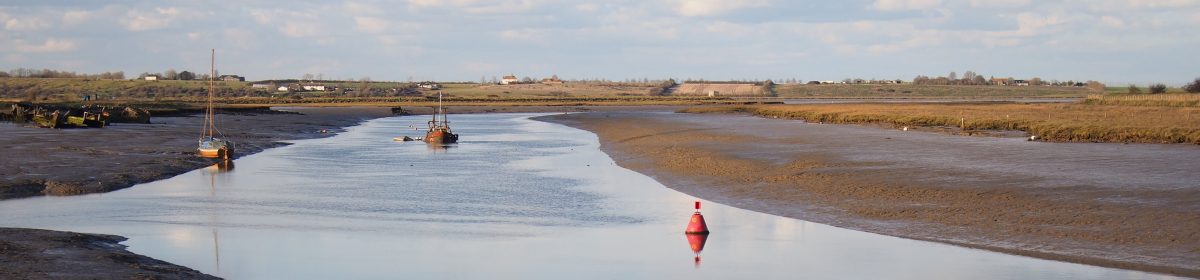
These days Stangate Creek on the south side of the Medway is a popular stop for cruising sailors and motorboaters – it’s sheltered, and visitors are surrounded by low-lying land and islands and saltings, and some impressive bird life.
But this peaceful spot has a heck of a past, and was frequently a less than happy place.
With the Naval dockyards at Chatham just a few miles away up the Medway, the Navy has at times used it intensively as a place to moor ships when necessary.
From 1712-1896 it was used for quarantining ships. For example, there’s a story that in 1832, the barque Katherine Stewart Forbes set out from Woolwich with a complement of male convicts for Australia but then anchored in Plymouth Sound after cholera broke out. She was sent back to Stangate Creek for many months – of 222 convicts aboard, 30 men developed cholera and 13 died.
There’s an account of how the quarantining started here.
During the Napoleonic era, French prisoners of war were coonfined in prison hulks on the River Medway, where they were subject to cholera, smallpox and typhoid, and many of those who died were buried on Deadmans Island on the eastern side of the Creek.
And of course it was close at hand in 1667 when the Dutch captured Sheerness, invaded the Medway and threatened Chatham. The Wikipedia has the story, including a wonderful painting.
In the early part of the 19th century Turner depicted it in one of his watercolours of English rivers, and much more recently, the extraordinary cruising film-maker Dylan Winter visited Stangate and seemed to fall in love with the place.
Most of the photos of Stangate Creek above including the Finesse class small yacht, the smack, Buccaneer and the barge yacht Whippet above are mainly Julie Atkin’s shots. Only the shots showing the flooded saltings are mine…