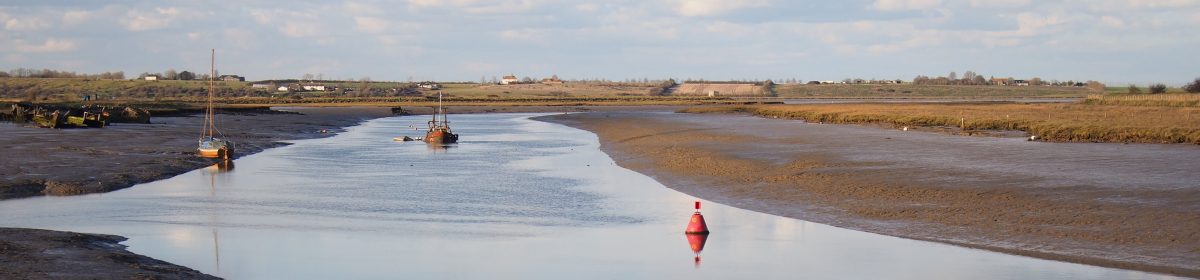
Boats of the Humber Estuary

[ad name=”intheboatshed-post”]

Humber dusters – click on the image for more

The Humber blobber – click on the image for more

The striking Paull shrimper – click on the image for more

Some intriguing gems this morning from Goole on the Web. I grew up on the southern side of the Humber Estuary, and I’m always interested in the bits of information about the area’s boats that occasionally come my way.

The Goole on the Web folks have put up a series of pages on each of several important boat types, including the Humber duster,  the blobber, the Paull shrimper and the Humber trawler, as well as the better known billyboy, Humber keel and Humber sloop.

I can’t begin to guess why some of them have such intriguingly unfamiliar names!

It seems the area also had crab boats borrowed from Cromer on the Norfolk coast, and of course its own packet boats.

If the Hull-type duster looks familiar, this might be the reason! I gather the maritime museum in Hull has an example of a duster, by the way, but can find no pictures on the web, which seems a shame – I think both the duster and blobber have potential as the basis of modern-day small cruising boats.

PS The musuem at Hull has interesting links to pages and pictures of the ancient Ferriby boats, the Hasholme boat, and the impressive and even older Brigg log boat.

PPS – I’ve just learned that the illustrations that Goole on the Web have put up are likely to be the work of George Holmes, which would make sense. I’ll add more later when I know more, but in the meantime here are some samples of his artistic work from the Albert Strange Association weblog.

[ad name=”link-unit-post-bottom”]

Hannu Vartiala’s website changes address

[ad name=”intheboatshed-post”]

Hannu’s coracle. His site offers plans for a range of
small boats derived from traditional types

Hannu Vartiala has just let me know that he has moved his website to a new address – so I’d like to take this opportunity to direct intheboatshed.net readers over there for a happy few minutes.

It’s true that Hannu’s chosen boatbuilding material isn’t mainstream for intheboatshed.net, but those of you who yearn to build a small boat and are happy to do so in plywood may well find his plans interesting, for as well as the coracle pictured above, he has included some interesting boatbuilding plans and material on flat-bottomed swamp boats, drawings for a useful-looking 12ft flat-bottomed skiff, various variants on the Auray punt theme including Chapman’s Ekstock boat, and a couple of light-weight plywood dories. Well worth a look, I’d say.

[ad name=”link-unit-post-bottom”]

17ft clinker-built launch Lisa gets framed-out

[ad name=”intheboatshed-post”]

Nick Smith’s latest build Lisa gets her ribs

While we were away, professional boatbuilder Nick Smith sent us this brief update on his current commission, a 17ft launch to be called Lisa. Here’s his note to me about it – I love the human touches, and the sense of a continuing tradition in what he says:

‘Hi Gavin,

‘For your interest here’s a photo of Lisa framed out.

‘It took two and a half hours (including a break for cold beer) from steam up. There were four of us, two outside driving the copper nails and two inside bending the timbers.

‘The first five seconds after taking the rib out of the steam box are crucial – that’s all the time we have to give the frame a quick ‘pre bend’ and then a final bend into place, ready to nail while the rib is still hot. No drilling of the rib is necessary.

‘I first did this task when I was 16 years old and it has remained unchanged for donkey’s years.

‘So the next job is to rivet all the nails, with one bloke outside (traditionally it’s the apprentices job, that is the ‘boy’) holding an iron (or dolly) on the nail head while I work inside the boat doing the rivetting (or clenching).

‘First I drive a ‘rove ‘ (or ‘roove’ or ‘ ruv’ onto the nail. The exact name depends on where you are in the country), but it’s basically a copper washer. For this we use a rove driver and a hammer, then cut off the point of the nail with a pair of ‘cut nippers’ then rivet ( or ‘peen’) over the rest of the nail with a rivetting hammer, which is just a ball peen hammer of an appropriate weight. Its a dull job and therefore traditionally done quickly from start to finish to get it over with!

‘Thats it for now Gavin some more photos when the engine is in.

‘Thanks, Nick’

And thanks to you Nick!

Nick Smith can be contacted at nick_smith_boatbuilder@yahoo.com.

[ad name=”link-unit-post-bottom”]