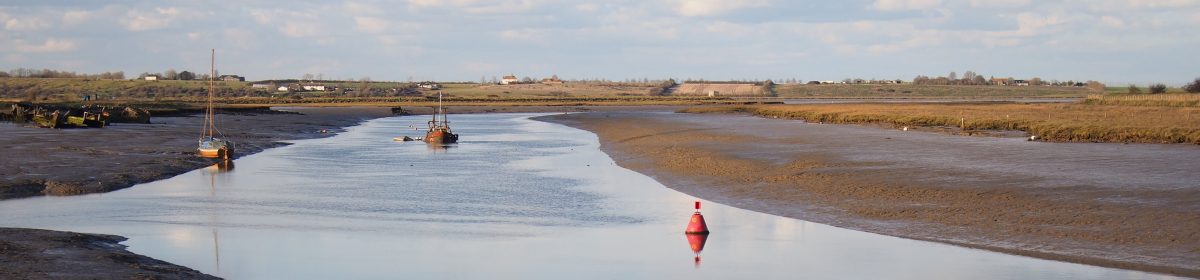
Nick Gates & Co, of Thornham Marina

[ad name=”intheboatshed-post”]

lady-may

scods2 scod

girouette

From top: Lady May;  SCODs ; and Girouette

Nick Gates & Co is a traditional workshop based at Thornham Marina, near Emsworth in Hampshire.

Set up in 1999 by boatbuilder Nick Gates, the company specialises in the repair and restoration of wooden boats and looks after a wide range of craft, from clinker dinghies, to classic racing yachts, steam launches and gentleman’s motor yachts.

Nick trained at the International Boatbuilding Training College in Lowestoft before joining the renowned Combes Boatyard in Bosham, where he worked until the yard closed in 1999.

Boats being worked on in the yard at the moment include Lady May, a 1930s Camper & Nicholson launch, which came to the yard for finishing and to have its interior put back in, and Girouette, a Hillyard-built boat that has been in the same family for nearly 50 years.

Partially restored by Combes in the early 1990s, she has since been laid up, and is now at Nick Gates & Co for a new deck, interior and engine.

Nick also specialises in the Nicholson-designed, 26ft South Coast One-Design (SCOD), and in recent years five of the local fleet have visited the workshop. The jobs carried out on these boats have included a total rebuild, new decks and coachroof, external varnishwork and mast repairs.

For more information see the company’s very nice website at http://www.nickgates.co.uk

This page from the site might be particularly interesting to anyone who has been interested in the progress of Gadfly II – note the strong resemblance.

YouTube clips of ice yachting in Holland

[ad name=”intheboatshed-post”]

youtube-ice-sailing-holland

Ice yachting in Holland

Dominic von Stösser has emailed to point out another intriguing YouTube clip, this time showing ice yachting in Holland:

‘Hi Gavin!

‘Seems USians aren’t the only ones sailing on ‘hard water’ — I found a YouTube clip of ice sailing in Holland:

http://www.youtube.com/watch?v=w3FM1gTTmws

I’t looks like they’ve just strapped their gaff-rigged ‘soft water’ skiffs onto runners!

‘I can’t help but wonder what a Bolger Light Schooner would be like on ice…

‘Cheers –

‘Dominic’

Many thanks Dominic! I doubt the boat-shaped ice yacht fuselages could possibly sail with those huge rigs, but it’s fun to imagine.

Dominic’s email piqued my interest in what else might be around on YouTube, and searching revealed this sequence, which includes graphic evidence of what happens when one of these ice yachts falls through the ice: http://www.youtube.com/watch?v=HvpNIkFtMEE

youtube-clip-holland-2

Accident on the ice

PS Jaap in Holland has made some interesting comments – see the comments link below – and included some splendid links. If you’ve interestede in ice sailing in particular, you definitely should not miss this one in particular: http://www.ijsschuiten.nl/ and http://www.icesailing.nl/robbenvloot.html – amazingly, they’ve got a ice yacht that goes back to the 1830s.

Now, I have a historical question: was it the Dutch who taught New Yorkers to sail on ice?

‘I had a beautiful yacht… ‘

[ad name=”intheboatshed-post”]

aerial1

mailgooglecom

Photos of Aerial by Phil Smith

Phil Smith has written to show us these photos, and to tell us about his airborne lifeboat Aerial, which he had in the 1980s in New Zealand.

‘In the early eighties I had a beautiful yacht called Aerial. She was 23 feet long, around six foot of beam, floated in ankle deep water, and went like the wind.

‘Her name derived from the fact that she was an airborne lifeboat designed for use in rescuing downed aircrew from the North Sea during World War II.

‘Built of double-diagonal mahogany on dozens of thin oak ribs with epoxy dynel sheathing, she was a strong but slippery boat and surprisingly seaworthy. Stability was provided by a heavy steel quadrant shaped centreplate and on either side of the centrecase were the tangs from which the parachute harness was attached.

‘The airborne lifeboats were designed by British naval architect and maritime legend Uffa Fox to fit under the hull of a medium bomber.Within the hull were numerous watertight lockers which, as well as providing buoyancy, contained food, water, first aid things and sailing equipment.

‘The boat was dropped by parachute to survivors in the sea who would rig the mast and rudder and sail to safety.

‘On my first day out I was apprehensive about going alone. It was 10 knots, gusting to15, and Aerial looked like she could be a bit of a handful.

‘A very experienced yachting friend, just returned from a solo voyage from Tahiti, came and officiated. To my horror and delight he sheeted her hard in and, with four bums on the gunwale and my friend grinning wickedly at the tiller, we took off up the harbour in a cloud of spray.

‘She tacked perfectly, sat nice and straight downwind, didn’t slam into chop and never looked like putting a spreader in the water though we tried hard!

‘Because of the strong tides and sometimes fluky winds in the area I fitted a 4hp Evinrude to a light transom bracket and she became unstoppable under power.

‘A relative of Uffa Fox’s Flying 15, Aerial was rigged like a small trailer-sailer, and while simple to launch she was a swine to retrieve due to her length and lack of any keel.’

Thanks Phil – that’s a super story. I wonder whether any of these conversions are sailing now?

Follow the link for more on airborne lifeboats at intheboatshed.net.

PS I’ve been sent these photos of an airborne lifeboat looking very like Phil’s being carried by a US Coastguard plane. My informant, a kind chap called Eric, has no idea where he found them, so if anyone feels I have infringed their copyright in putting these small images us, please contact me and I will take them down immediately. However I would be grateful to be able to leave them in place – the airborne lifeboat story is an important one and should be remembered. Thanks Eric!

pb1g_1

pb1g_8