What it’s really all about…

[ad name=”intheboatshed-post”]

Out to sea

Barge boat Barge boat 2 Red sails

Smack 3 Smack 2 Smack

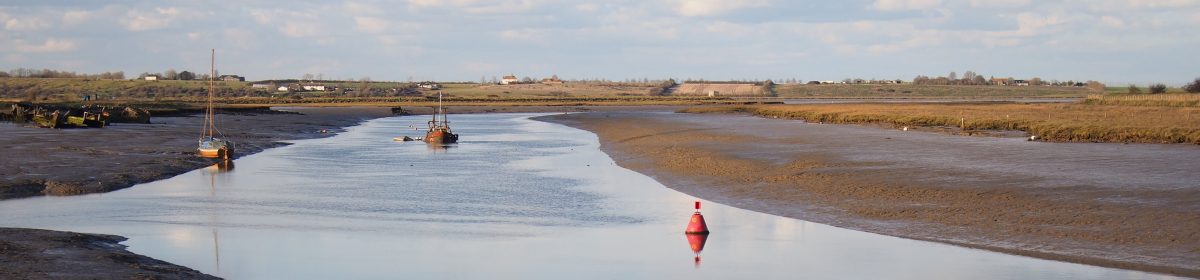
Click on the images for much larger photos. The one at the top
makes a particularly fine background – click on the thumbnail,
then click on your right mouse button when the large image loads

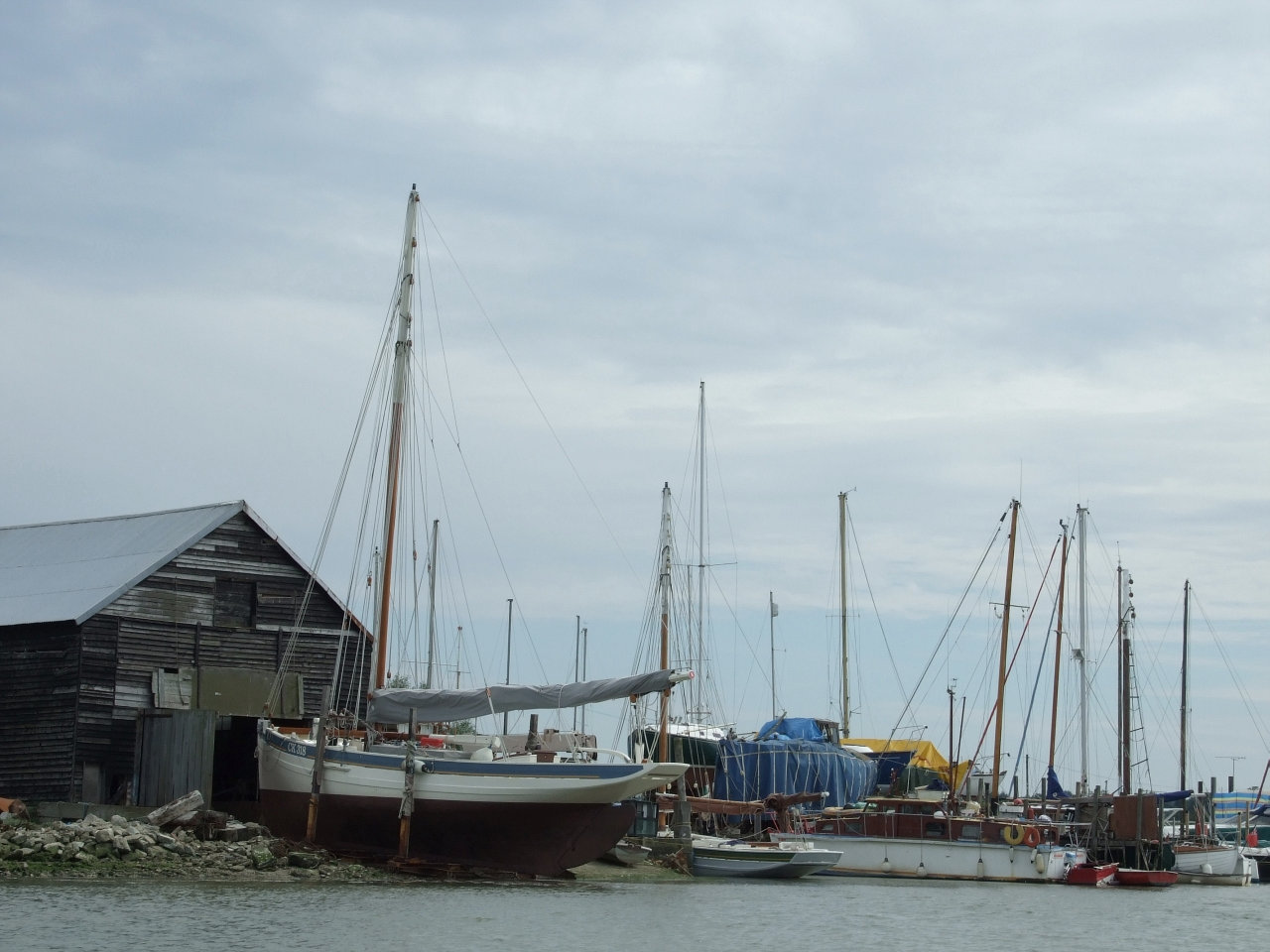
We’ve just got back from a blissful weekend’s sailing around the Swale in our little Ian Proctor-designed Prelude, and here are some photos to prove it. From the top: an unknown yacht making her way seaward at low tide in the morning light; two shots of a boat belonging to one of the local sailing barges (there are two shots because one reveals something about its hull form – for more more on barges, click here); an unknown yacht rides the afternoon tide; three shots taken by Julie of a smack at Tester’s yard at the mouth of Oare Creek.

Don’t miss something good. Subscribe to the free weekly intheboatshed.net email newsletter now!

Three score and ten – the greatest fishing disaster ballad

the_storm_engraving_by_william_miller_after_van_de_velde-470

The chilling engraving The Storm by William Miller after Van de Velde,
published in 1858, taken from the Wikimedia. They’re not English East Coast
fishing smacks, but sadly I haven’t been able to find a suitable engraving
from the correct era

‘As day after day passes and no tidings arrive of the missing Grimsby smacks, it is beginning to be realised that the gale of the 9th ult. will prove one of the most disastrous to the Grimsby fishing trade on record. altogether nearly a dozen fishing vessels, carrying between 60 and 70 hands, are missing.

‘Most of the vessels were provisioned for eight or nine days, and many of them have been out for over a month. Of the safety of seven of them all hope has now been abandoned.’

Report from: The Hull Times, 2nd March 1889

Most people of my generation with a long-standing interest in traditional music have probably sung this song at one time or another, particularly those who like me come from nearby one of the the East Coast major fishing ports.

It’s a big favourite with a magnificent, anthemic chorus, and a powerful theme, and it’s also a song that some of us connect with some remarks  made by old Sam Larner in relation to a storm he remembered from his childhood. Back in the 1950s, he told Peggy Seeger and Ewan MacColl that the big East Coast storm that people remembered was in 1884, and that there was a saying: ‘Oh dear, oh Lor – the dreadful fishing of 1884.’

Well, Jim Potter has been digging around and has discovered that the song actually refers to a storm in 1889, and that  some 70 hands from Grimsby – three score and ten – really did die that February night, as the newspaper quotation above shows.

This is February 2009, almost 120 years to the day since those brave and unfortunate fishermen met their deaths. As many sailed from Grimsby, we can assume that quite a few were orphans or had been abandoned by their parents and were often treated pretty badly by their employers and surrogate guardians, as Anson makes clear in his book British Sea Fishermen.

Anyway, you can read all about Jim’s research at Folk Leads, find the original fisherman’s poem from which the song developed and read about the Three Score and Ten fishermen’s gravestone that he has identified .

I haven’t been able to make the link to his recording of the song work, so if you want to hear how this one goes, you’ll have to make do with my recording of this great old song.

For more songs at intheboatshed.net, click here.



Sharpie schooner Sound Waters Eagle

[ad name=”intheboatshed-post”]

Sound Waters Eagle, schooner or a variety of ketch?

From America, Peter Vanderwaart writes:

‘I found the pictures of smack and barge racing very interesting. For some reason, I especially like the shots that show several boats. I gather you can join in the fun with a fiberglass gaff cutter, if you happen to have one.

‘I noticed windmills in the background of one shot. We don’t have these in our waters yet. If you take a good look at the attached shot which shows typical summer weather, you will probably see why I think windmill builders will go elsewhere first.

‘You might be interested in the vessel if you haven’t seen it before. It’s a steel sharpie about 65 feet long. I think it was built in the Chesapeake region in the ’50s or ’60s. Currently, she is called the Sound Waters Eagle, and is used to take school kids out on educational trips. Her rig is unusual: gaff rigged on three masts, with the middle mast being the tallest. I think this should be considered a variety of ketch.

Olin Stephens designed a vessel with fore, main, and mizzen masts bermuda rigged, and he called it a ketch. However, the word schooner” is deemed more romantic, and gets used.

‘Peter’

There are more photos of Sound Waters Eagle here: http://www.soundwaters.org/

Fibreglass gaff cutters are very popular here, even if many of them do have modern-style lines beneath the waterline. Some of them command astonishing high second-hand prices and, yes, you can race them along with the old gaffers.

Wind turbines may be generally less popular, but I still find the group off the Swale is an interesting and sometimes useful navigational feature,  though I may change my mind if they become very common.

There are some more photos here, and I’ve got some rather closer ones somewhere.

Schooner or ketch? I’d say the Eagle was a schooner at heart, if not in fact.

Thanks for the photo Peter!

Don’t miss something good: subscribe to intheboatshed.net!