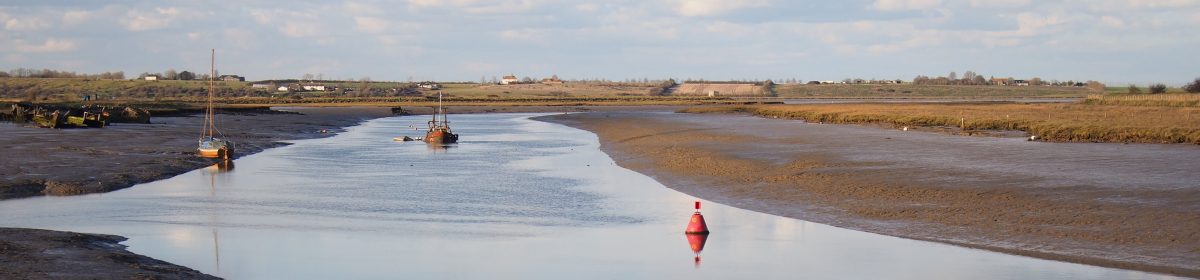
West country style motor launch Lisa is launched in Devon

lisa-launch-470

Lisa on the water for the first time opposite the Ship Inn at Noss Mayo,
Devon, 29th April 2009

2009_0429lisa-launchday0065 2009_0429lisa-launchday0084 2009_0429lisa-launchday0077

2009_0429lisa-launchday0063 2009_0429lisa-launchday0022 2009_0429lisa-launchday0032

West Country-style motor launch Lisa built by Nick Smith for the landlord of the Ship Inn was launched on the 29th April at Noss Mayo, in Devon.

Nick describes the event:

‘It was a low-key launch in the early morning with no splash and no champagne. We ran the trailer down at half tide at 6am and let the water flood around the boat. Lisa floated off quietly and made no water.

‘We started the motor and went for sea trials for an hour or so to make sure all was tickety boo. The ballast may need adjusting forward, as single-handed she floats a bit high, however with three people on board and under way the waterline was sweet. The steering was well balanced and even on tickover Lisa can turn in almost her own length. The sheer looked right from all angles, very pleasing to the eye.’

Thanks Nick!

If you don’t already know him, Nick comes from Devon and specialises in new builds in clinker and carvel for sail, motor and rowing power from 8ft to 28ft with a special emphasis on West Country style and design, and also takes on repairs and refits from 25ft to 50ft. These days he’s based in Hampshire, and can be contacted by email at nick_smith_boatbuilder@yahoo.com and by phone on phone on 07786 693370.

Don’t miss out on something good – subscribe to intheboatshed’s weekly newsletter now!

Troy number 28 Red Beryl built by Marcus Lewis is launched at Fowey

[ad name=”intheboatshed-post”]

t28launch4

t28launch3 t28launch t28-firstsail

t28firstsail3 t28-firstsail2

The launch of Troy number 28 at Fowey

Red Beryl is a new Troy class yacht, built at Fowey in Cornwall by Marcus Lewis for a customer on the other side of the river in Polruan.

Marcus has been boatbuilding in Fowey since he left school 25 years ago, and has been working in his own own workshop for six years, during which time he has built four Troys – hull numbers 23, 25, 27, and now number 28 has been named  Red Beryl.

The 18ft Troys are an important part of local sailing in Fowey, and this year they celebrate their 80th anniversary as a class. There’s a nice gallery of photos by Phil Egerton at the foweyphotos.com website, and also a history of the boats. It seems the first Troys were built for racing on Fowey Harbour in the very late 1920s and that most of the early boats are still kept in racing condition. I gather also that Troys can often be seen racing on Wednesday evenings and Saturday afternoons in the season.

The Troy name comes from Sir Arthur Quiller-Couch’s Troy Town series of novels, which are based on Fowey. Built using traditional carvel construction, they have 30ft masts supporting nearly 300sqft of sail intended to catch light winds on the estuary, which is surrounding by sheltering hills. They must to be built on the estuary in order to conform to class rules.

Marcus Lewis is based at Fowey and can be contacted on 07973 420 568.

Don’t miss something good – subscribe to intheboatshed.net!

Panels drawings and coordinates for the 12ft flat-bottomed Ella rowing skiff

[ad name=”intheboatshed-post”]

panels-plotting-1

Ella skiff, panel plotting, sheet 1

Tonight, I’ve finally managed to find some time to make a little more progress on the plans for the stitch and glue flat bottomed Ella rowing skiff. We now have four drawings to show where the panels that make up this stitch and glue-built boat fit on three 8 by 4ft sheets and one 4ft by 4ft sheet of ply; and we have four tables of coordinates to enable builders to markout and finally cut out their material, create the necessary taped or butt-strapped joints  before beginning assembly.

I won’t explain how stitch and glue works here as there’s a lot of material available on this both on the Internet and in books such as my Ultrasimple Boatbuilding – the only thing I’d say is please don’t try the process without reading about it properly first. That way lies sticky madness, strange-shaped boats and epoxy glop that won’t go off, as at least some people have found in the past. Just check the forums…

Here are the drawings files you’ll need: Ella skiff plans.

A few warnings are required here.

Prospective builders should be aware that I am not a qualified naval architect and that my plans are amateur and experimental. I accept no responsibility for any injury or loss arising from building or using this boat and I urge builders and users of this boat to do so with care.

This boat is not for use on the sea or in any hazardous conditions. It is a small boat suitable for rowing on small lakes and slow-flowing rivers. It may be rowed but should not be used with an outboard of any kind unless the stern is doubled and otherwise reinforced. Even if that were done, it would be dangerous to use an outboard of more than 1hp. This boat is not designed to hydroplane and should not be made to do so – far too many fatal accidents occur each year beause some bozo thought it was fun or safe to put a large engine on a boat for which it was not designed.

I would also ask builders that if any coordinate creates a line that does not appear as it does in the drawings to contact me immediately. You may have found an error, and will need corrected measurements to be able to go forward. Also, I will want to correct anything that is wrong for the sake of future builders. In general, if you build this boat, please contact me at gmatkin@gmail.com. Especially with the first few boats built, I will want to be in close touch in order to ensure the boats are successful and the plans cause no problems.

These plans aren’t entirely complete – for example, they don’t show where the oarlocks need to go, or specify the gunwales or inwales – and I haven’t written my usual short essay yet. All of that will come.

Finally, if after all this you are still interested in building this small, simple and perhaps elegant little boat, I would strongly suggest that you build a model first! Read all about making a model here and here. There is also more on the Ella skiff design including the preliminary drawings here.

PS – It’s become clear that depending on your build, some folks will find the thwart a little high – if that could be you, it will be a very simple job to make the seat lower if you do so at an early stage.

Complete plans will follow, so why not subscribe to intheboatshed.net?