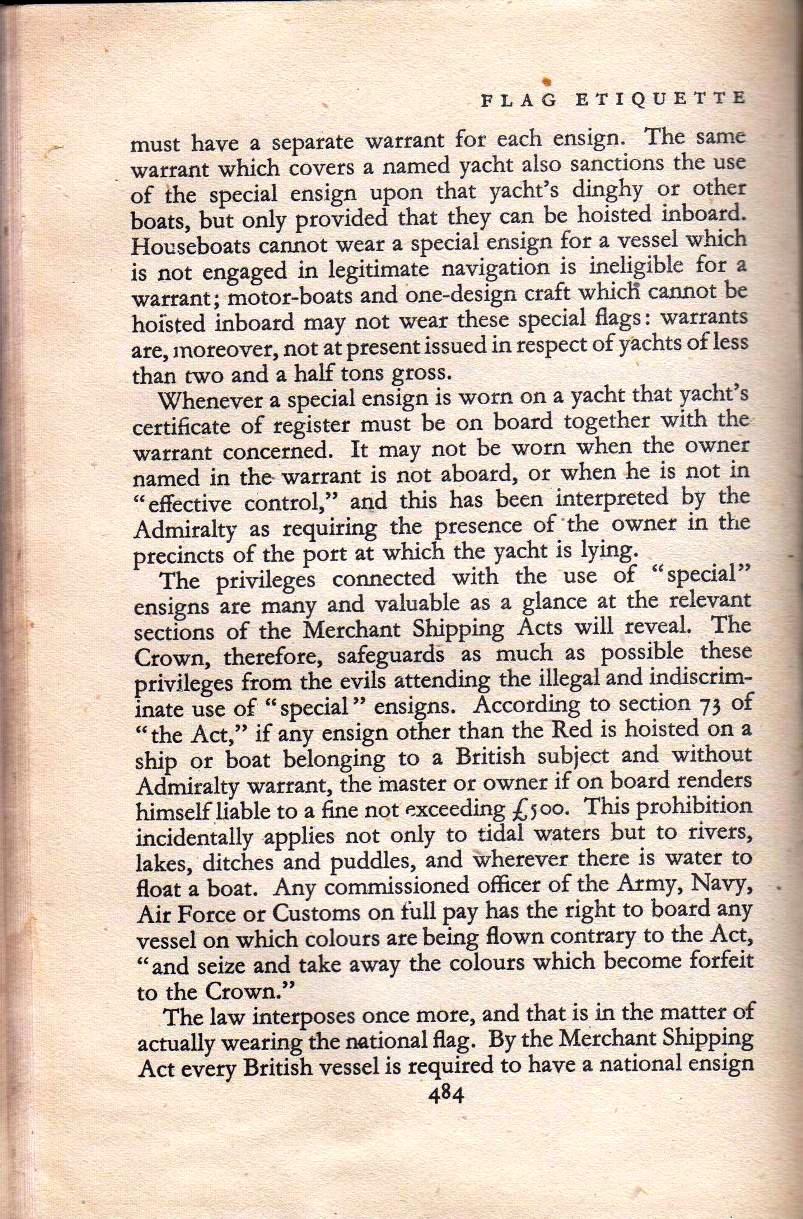
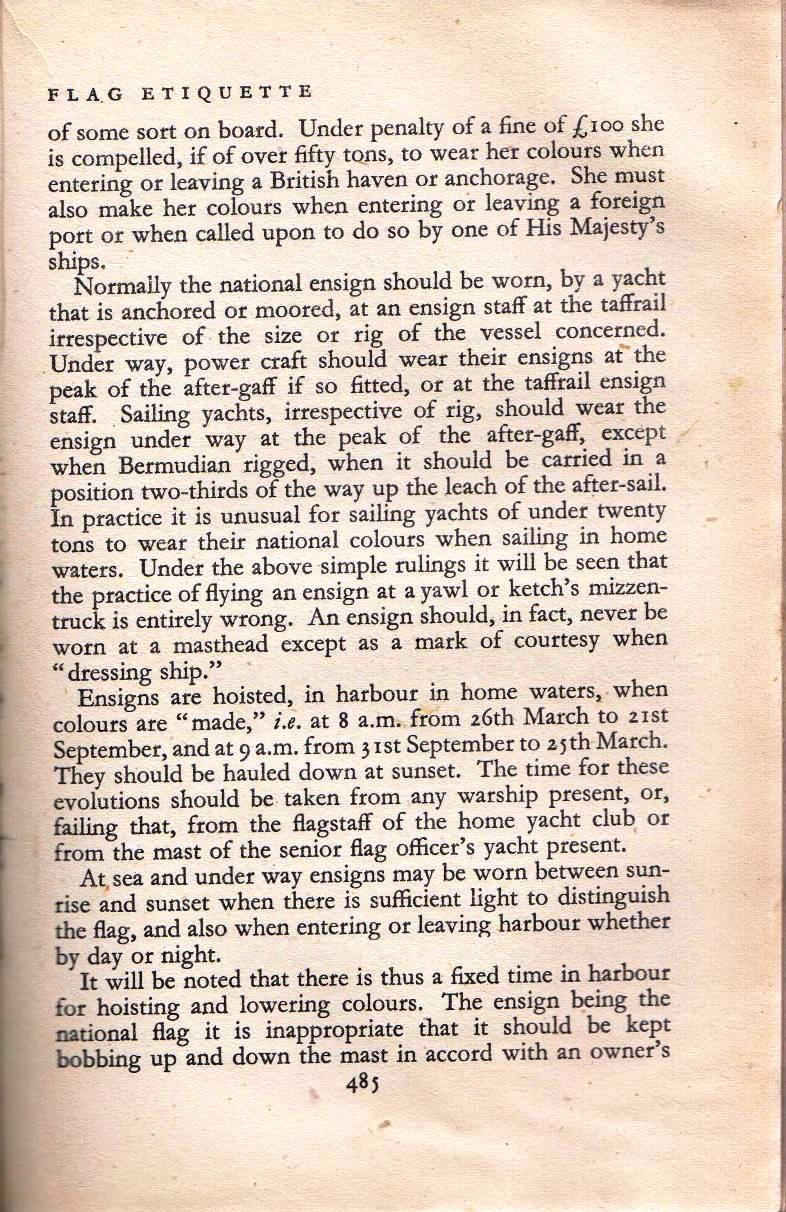
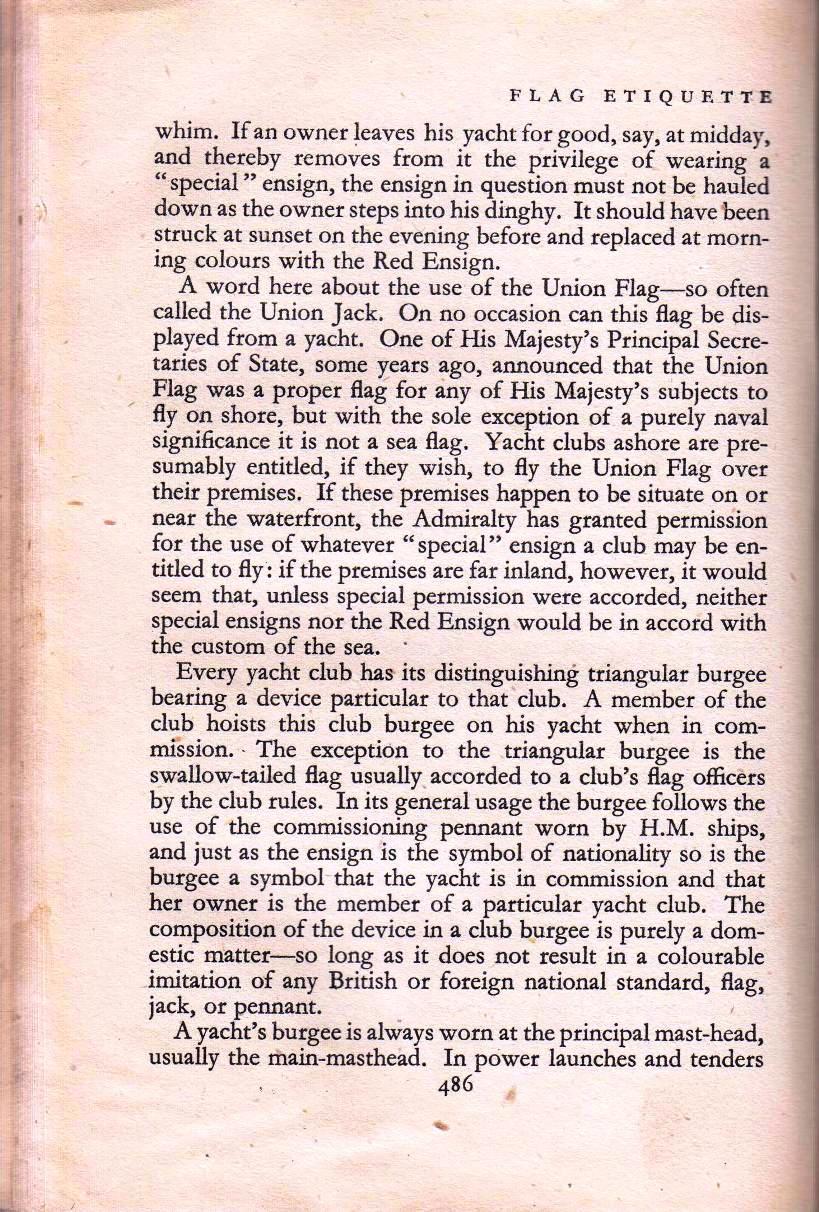
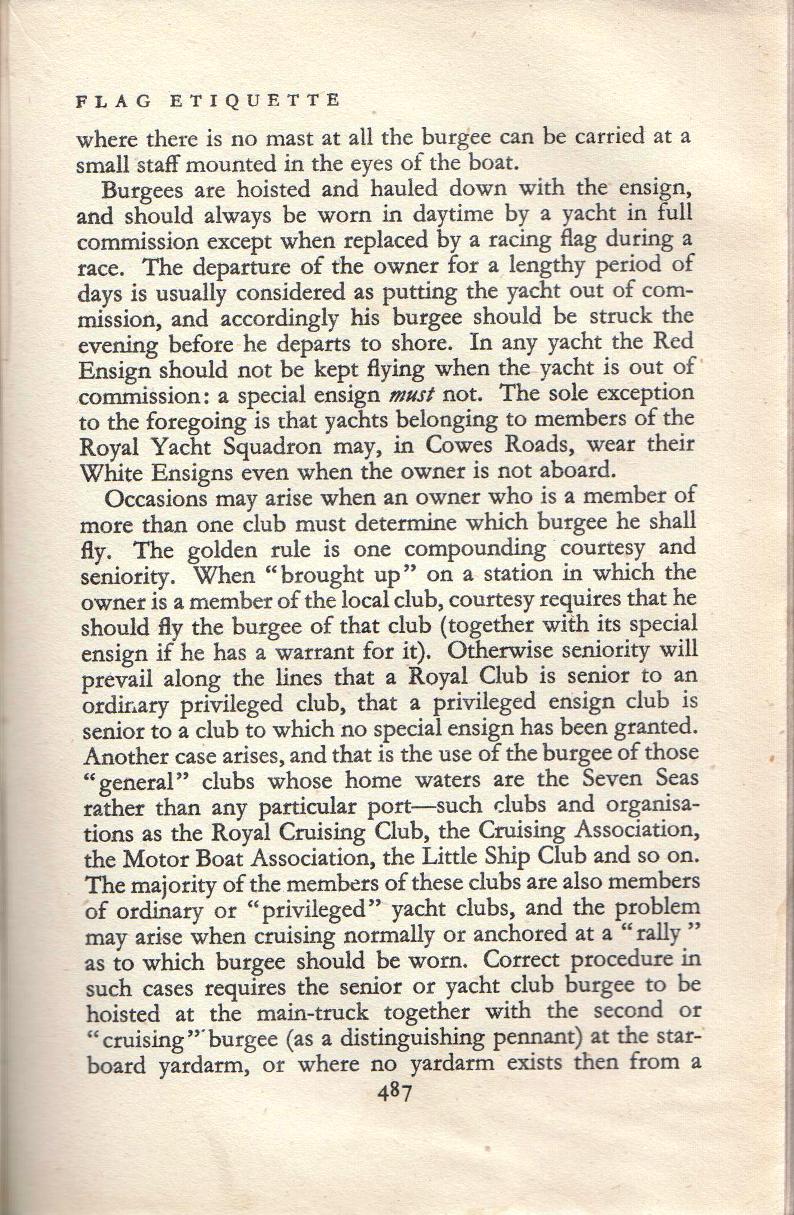
The mysteries of flag etiquette explained

Do you ever feel second-bested because you don’t understand the rules about flags where they apply to boats and yachts? Do you perhaps feel that its just another way that the world has found of finding fault, and judging you to be wrong in yet another way? Do you think that it’s an area that exists purely for the entertainment of certain fastidious personality types that can safely be ignored? Is it just quaint and fun? Or is it important – so important that others who get it wrong MUST BE TOLD FIRMLY and should SEE DEMONSTRATIONS IMMEDIATELY?

I guess all four points of view may apply at times, though for me the first three come more naturally to an egalitarian, liberal kind of mind, and the last can be either fun or just tiresome, depending.

For the benefit of those who don’t really ‘get’ flags but like to fly the Red Ensign every now and again, here is an explanation of what you’re supposed to know so that you need never again feel at a loss. And it comes complete with a nice story or two…


Spider T sails from Keadby Lock on Humber to Arbroath – the full story

Spider T returns to the Humber following the Arbroath Sea Fest

Mal Nicholson and the Spider T crew will have more to chew on than most when they consider their summer’s adventures, having sailed a 1920s Humber sloop from Keadby to Arbroath and back.

The purpose of the boat’s trip was to attend Arbroath Sea Fest, and join in the marking of the 200th anniversary of the building of the Bell Rock Lighthouse, by Robert Stephenson. (I’m pleased to note a connection here – in building the Bell Rock Light, Stephenson was assisted by John Rennie, whose son Sir John Rennie was responsible for the New River Ancholme Drainage Scheme, which created the river that provides Spider T’s home berth.)

As you’d expect, their trip was marked by a series of minor mishaps and fascinating encounters, unforgettable landfalls, great thundering dawns and glorious sunsets. A series of posts here at intheboatshed.net recorded the northward trip, but you can read about the whole thing on a special page on the Humber Keel and Sloop Preservation Society’s website.

A series of local newspapers covered the story of the Spider T’s visits to ports along the way, including this one recording the moment when the boat and crew called in at Hartlepool.

PS – Dig the great photo on the HKSPS homepage showing a keel skipper working his boat out of harbour using a sweep, with his rudder hard over and a tender in tow. Now there’s a challenge, yotties!

The first Bristol 27 motor cruiser is launched by Star Yachts

Star Yachts Bristol 27 Star Yachts Bristol 27

Star Yachts Bristol 27 Star Yachts Bristol 27 Star Yachts Bristol 27

Star Yachts Bristol 27 Star Yachts Bristol 27

This is Eskdale – the first example of a strip-built Bristol 27 motor cruiser built by Win Cnoops and colleagues at Star Yachts, and designed by Andrew Wolstenholme.

It has obviously been drawn and built with the intention of evoking a bygone age, but I think it’s a stylishly retro craft in any language.

As built she has port and starboard bunks, one of which converts to a double, lockers, a galley and separate heads, a small locker, aft of these is a small galley on one side, and a hanging locker on the other. Win is offering a variety of options for future boats, including a choice of 50hp engine offering a maximum of 12 knots and a 38hp offering 10 knots.