A pleasant trip to Whitstable and Faversham

[ad name=”intheboatshed-post”]

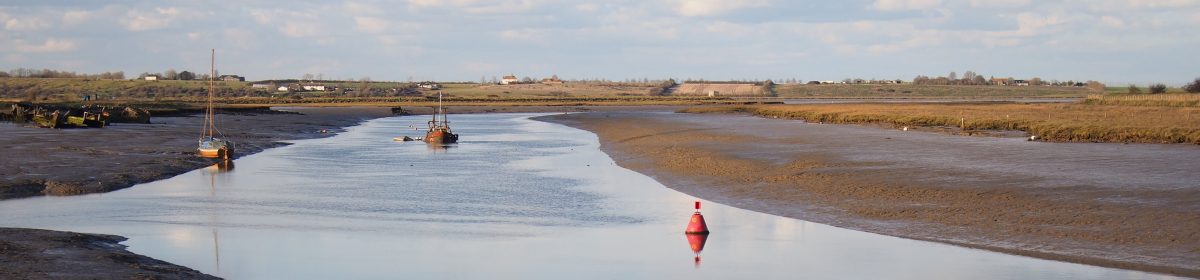
Smack, late afternoon at Hollowshore

A smack, in the late afternoon light at Hollowshore

We took ourselves to Whitstable and Oare Creek just outside Faversham today to see and meet some Morris dancing friends, to mooch around Whitstable and to check on our little boat. As usual, I couldn’t stay out of the second-hand bookshops, and among other things found a copy of The Last Stronghold of Sail by Hervey Benham – a book I’ve been hoping to find for a while. It’s splendid stuff!

We also stopped by at Macnade’s amazing Faversham delicatessen and foodstore, and vowed never to miss an opportunity to buy provisions there, particularly if we’re setting off for a trip.

To celebrate both a nice day out after some weeks of rather hard work, and buying Benham’s book about the bygone world of working smacks and barges , I thought I should post the photo above taken this afternoon – a typical shot of a smack apparently waiting to take its turn in the dry dock at Hollowshore.

British Sea-Fishermen by Anson Part IV- the West Coast, Wales and Scotland

[ad name=”intheboatshed-post”]

British Sea-Fishermen by Anson

Lowestoft sailing trawler, drawn by Rowland Hilder

‘… the life of the average fisherman of Britain – it is a never-ending “game of snakes and ladders,” and so accustomed is the fisherman to playing this game from the time he first goes to sea, that I am inclined to doubt that he would be happy if he was certain of always finding himself on a ladder.’

British Sea-Fishermen by Anson British Sea-Fishermen by Anson British Sea-Fishermen by Anson

British Sea-Fishermen by Anson

Ship decorations at the Paris Musée de la Marine

Charlemagne, from the Real de France

The head of Charlemagne, from the ship Réal de France, built in 1694. He
makes a noble, striking figure at something like 5 feet tall, and it’s difficult
to believe he’s over 300 years old

La Reale de France stern La Réale de France fighting figures La Réale de France naval officer

La Réale de France stern, fighting figures, and a naval officer

Amphitrite figurehead from the Amphitrie, 1810 Figurehead of Brennus, from a cuirassée of the same name 1899

Figureheads. Amphitrite, goddess of the sea, from the French ship Amphitrie built
in 1810 – she should have been a mermaid!. Gaul leader Brennus from 1899

Figurehead of Napoleon from the Iéna, 1846 Figurehead of Napoleon from the Iéna, 1846

Figurehead of Napoleon from the Iéna, 1846

More photos from the Musée de la Marine in Paris.

The pomp and circumstance surrounding fighting ships of the past is astonishing to behold. They’re ornaments as well as instruments of war – and what ornaments! What these shots don’t really show is the scale of these carvings – Napoleon, for example was massive – the distance from his waist to the top of his head must have been six feet or so.

It’s striking to us Brits that the disgraced autocratic ruler Napoleon should be so honoured decades after his death. Someday I must learn something about the mysteries of history of France!