
Francis B Cooke was one of the great yachting writers of the 20th century and more – a long-lived man, he was first published in 1883 and was still writing in the early 1970s, by which time he was in his early 100s .
He has been one of my favourite authors for many years, and so I’m delighted that Lodestar Books led by Dick Wynne have brought out a compendium of his writing.
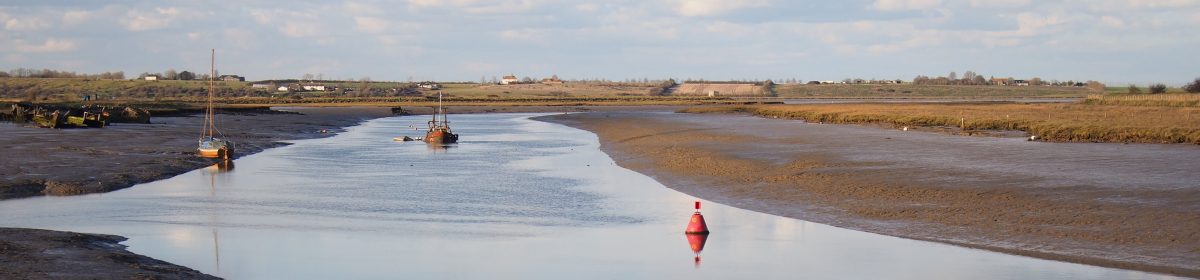
I think it’s high time Cooke was rediscovered – a very popular sailing author for many decades, his books are full of practical information and advice peppered with beautifully told stories about his experiences and descriptions of the East Coast areas of Essex, Kent and Suffolk. However they are now rare in the second-hand bookshops.
Cruising Hints: The Traditional Yachtsman’s Compendium is a big book of 686 pages including the index priced at £30 from the Lodestar website – or something around 5p/page. I will make a great Christmas present for many Intheboatshed.net readers. (That’s a hint, but the way!)
What you get is a very complete manual of old-fashioned small boat cruising, that’s still relevant for traditional boat owners and enthusiasts today, intermingled with pieces of writing that demonstrate a deep and abiding enthusiasm. For example, the section ‘The boat’ includes chapters with titles such as ‘Yachting with economy’, ‘Selecting a yacht’ and ‘Size for the single-hander’, but it also includes a chapter headed ‘A perfect love of a boat’ that turns out to have been drawn by Harrison Butler.
This quotation from ‘A perfect love of a boat’ encapsulates several of Cooke’s regular themes of economy and practicality, enthusiasm, adventurous single-handed sailing (in contrast to many of his 19th and early 20th century cruising contemporaries, who required the help of a hired man) and of course his beloved East Coast:
‘She is a perfect love of a boat, and when my ship comes home, I shall be tempted to have her built. That is of course if I still remain in the same frame of mind… The design I am in love with for the moment comes from the board of that enthusiastic yachtsman Dr T Harrison Butler, and was published in the Yachting Monthly of November 1915… an exceedingly pretty and comfortable little cruiser. The boat has a very nice sheer and a bow that reminds me of the excellent small cruisers designed by Mr J Pain Clark. The underwater lines suggest weatherliness, and with a good length of keel she should be very steady on her helm… Length over all, 18 feet 6 inches… Of course, the boat is very small but it is astonishing what a lot of fun one can have even in a ‘tabloid’ cruiser. She strikes me as being just the thing for knocking about on the estuaries and creeks of the East Coast at weekends, whilst a trip up to Lowestoft would be quite within her capabilities in any ordinary summer weather.’
The phrase ‘when my ship comes in’ is mildly amusing – Cooke was a successful merchant banker, so I’d be surprise if he was short of a bob or two.
The new book Cruising Hints includes chapters and sections describing the classic East Coast sailing area, a substantial collection of Cooke’s design commentaries often describing craft that are now considered classics, and an extraordinary number of beautiful lines and layout drawings – it’s a real feast of the draftsman’s art.
There are also sections on sailing cruiser equipment, the ‘Domestic economy’, ‘Maintenance’ and ‘Seamanship’, and ‘Desirable East Coast anchorages’ – just the stuff to read while waiting for the tide, or in peaceful moments at home, if there ever are any…
Have I persuaded you it’s a good buy yet? I hope so! If not, there’s more information at the Lodestar Books website including this pdf including samples from the book.
PS – I’m reminded that the wonderful compendium of George Holmes’ writing and drawing that Lodestar published in 2009 been reprinted. See a review here.


