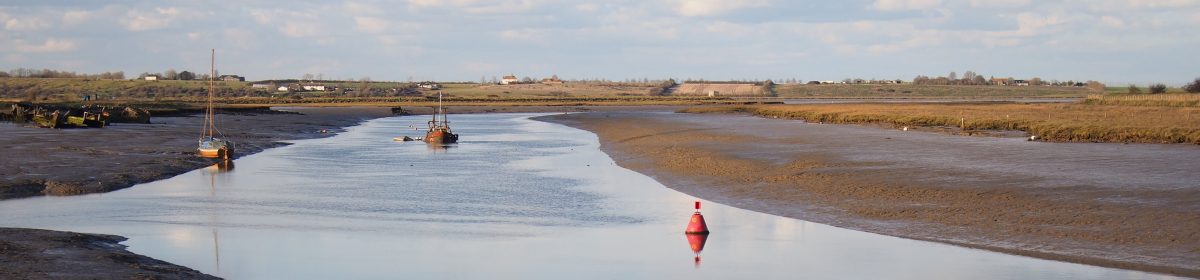
Marcus Lewis makes the Fowey River dinghy and Troy class keelboat racers ready for the season

Fowey boatbuilder Marcus Lewis has been in touch to tell us about the work he’s been doing – and here’s been a lot of maintenance, repair and painting work to do on the local Fowey River dinghy and Troy class keelboat racers, as you might expect during the run-up to the new sailing season.

Here’s what he says:

‘It’s fairly busy in my boat shed! We have finished all the woodwork on a new Fowey River sailing dinghy, and the owner has taken it away to do his own varnishing and painting.

‘We’ve also been getting on with the sanding and painting of several of the Troy Class keelboats – we currently look after or maintain about ten of these, and they all need to be back afloat ready to race by the first Saturday in May.

The photos (above) show Ruby (no. 6) and Aquamarine (no. 16) in my workshop, and then there is the yard at the Fowey Gallants Sailing Club, where we have the masts out for varnishing, and Troys nos 1,3,7,18,19 and 23 almost done.

Ruby is now afloat, (pictured on the water above) and we have 10 days of launching and rigging of these boats ahead right now, as well as some varnishing and antifouling on a few Fowey River dinghies.

‘Also, a couple weekends ago, I organised a lifejacket clinic at the sailing club, with service engineers from Ocean Safety in Plymouth. Folks could bring their lifejackets along for a once over, and hopefully learn a bit about them. The checks were free, but any spare parts fitted had to be paid for.

‘We had a huge attendance , with 248 lifejackets looked at over six hours.

‘Attached is a pic of a typical poorly treated jacket, left in the locker all winter to decay. the rusty cylinder can chafe through the bladder, and is not recommended. The RNLI sea safety team were also there to answer questions on EPIRBs, kill switches, mob devices, and any other safety queries.’

I must say running a lifejacket check sounds like a great way to get folks minds focused on safety at a time when they’re getting their boats ready, and setting out on their annual shakedown trips.

Thanks Marcus!

Broads holiday 1962

My thanks to Broadland Memories for this one.

Sailing and rowing the North West Passage in an open boat

Product-Shot-Blokes-768x1024

I’m dumbstruck. Richard Wynne of Lodestar Books got in touch this morning to tell me about his latest offering, Blokes Up North a book by two Royal Marines who sailed and rowed a Norseboat through the North West Passage. See a sample at the Lodestar website.

That’s the same elusive North West Passage between the empty wastes of the North American continent and the North Pole that claimed so many explorer’s lives and ships in the 18th and 19th centuries. Global warming has made it much more passable now, and modern navigation technology has made it infinitely easier to find… But sailing and rowing the North West Passage in an open boat still seems like madness, even if it is of a special kind.

Here’s what Richard has to say about it:

Blokes Up North

Through the Heart of the Northwest Passage by Sail and Oar
Kev Oliver and Tony Lancashire

In a post-exploration world, two relatively ordinary blokes, serving Royal Marines, decided they wanted an extraordinary 21st century adventure. In this refreshingly honest account they re-live the highs and lows of sailing and rowing a tiny open boat, completely unsupported, through one of the most iconic wilderness waterways on the planet—the Northwest Passage across the top of Canada.

They describe battling with an Arctic storm miles from land and being caught in the worst sea ice for more than a decade. At one point they are forced to drag Arctic Mariner, their seventeen-foot boat, across ten miles of broken pack ice to reach open water.

Their story is enriched by the Inuit people and the incredible wildlife they met along the way, including all-too-close encounters with both grizzly and polar bears. And they relate with honesty how the isolation and stresses of the high Arctic shaped the bond between their two very different personalities.

This is neither an exposé of global warming, nor a detailed study of Inuit culture. It is not particularly long on the historical quest for the Northwest Passage. It is quite simply the tale of two blokes, up north.

And here’s what Sir Robin Knox-Johnston has to say:

… this expedition was to try something extremely difficult, perhaps not possible, but if we always flinched from attempting the difficult things in life then humans would never have progressed … we are living in an increasingly risk-averse society, but risk is what makes the adrenalin flow, brings spice into our lives and shows others that risks are part of living. Far from being discouraged it should be supported.