Launch day approaches for Mat Gravener’s Norfolk Broads half-decker Jamesia II

Norfolk Broads half-decker Jamesia II Norfolk Broads half-decker Jamesia II Norfolk Broads half-decker Jamesia II

Norfolk Broads half-decker Jamesia II Norfolk Broads half-decker Jamesia II Norfolk Broads half-decker Jamesia II

Norfolk Broads half-decker Jamesia II Norfolk Broads half-decker Jamesia II Norfolk Broads half-decker Jamesia II


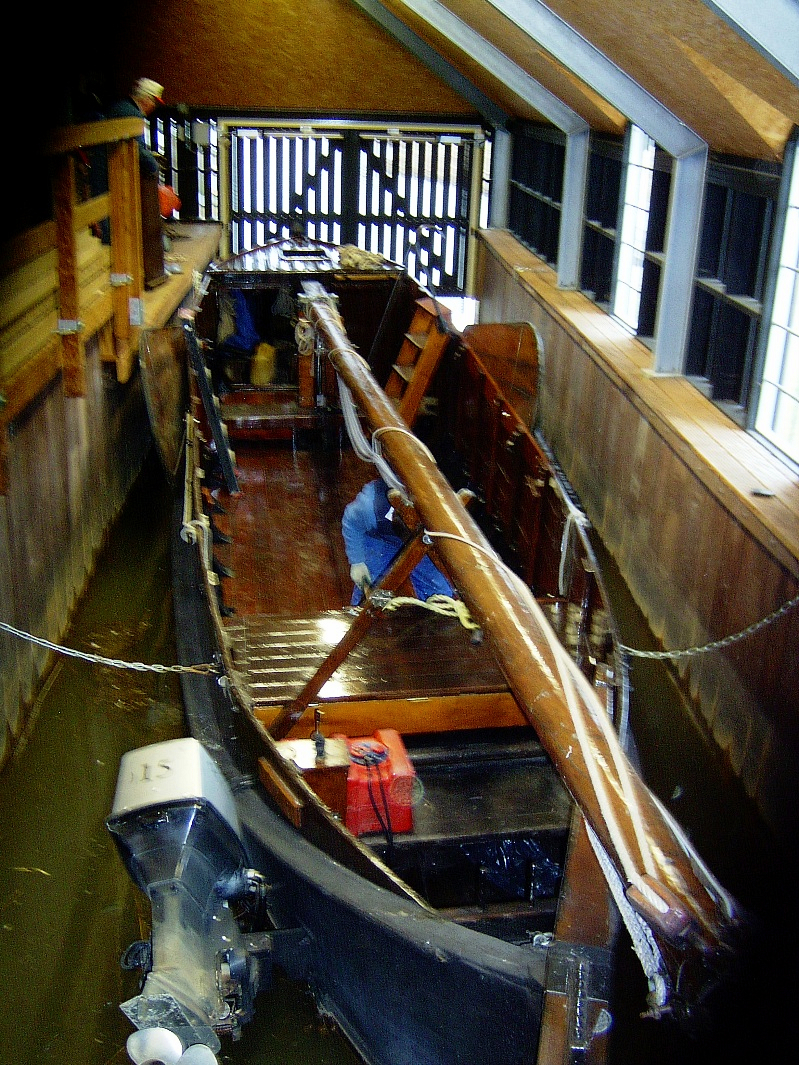
Joe Farrow has kindly sent in an update of the progress Mat Gravener has made in restoring and repairing the Norfolk Broads half-decker Jamesia II. As usual, click on the photos above for bigger images.

For an earlier post about this boat, click here, and for a post about Mat’s earlier restoration of a Broads sailing cruiser, click here.

I gather Jamesia will be afloat and sailing in a week or two from now, and Joe has promised to take some photos for us.

Here’s Joe’s explanation of each shot, starting from the top left:

  • port side planks epoxy splined – the photo shows them being glued (the impromptu clamps holding them in place are to be removed once glue has set)
  • this plank on the starboard side was constructed of a number of different lengths, and Mat decided in the end to go for one full length piece. This shot shows the plank removed ready for the new plank
  • et voila! One new plank!
  • plank all scarfed together, and fastened in place.
  • the hull filled and faired, and given three coats of undercoat.
  • next to receive attention is the interior; hirers used to sleeping on board under this cuddy
  • Mat re-created the old bench seating using mainly reclaimed mahogany from an old river cruiser
  • he has also added a new locker, and the photo gives a general view of how the lino deck has cleaned up beautifully, and how the insides of the planks have been painted to match
  • finally, the cuddy roof has had three coats of paint – it’s the traditional deck construction of painted canvas over tongue and  groove planking

Many thanks Joe!


‘Instant boats’ boat builder and author Dynamite Payson passes away

Dynamite Payson book on boat building

Dynamite Payson pictured on the front of his book about building the legendary Light Dory

It is with great sadness that we mark the sudden death of Maine lobster fisherman, boatbuilder and author Harold ‘Dynamite’ Payson.

His passing is the end of an era in home boatbuilding in which he and boat designer Phil Bolger inspired many thousands of home boat builders during a long and highly successful collaboration that began in the 1960s. Bolger died in 2009.

The Light Dory pictured above is one of the most important boats involved in this story, as the easily built light, fast and good looking rowing boat became the tender of choice for many US yachtsmen.

Where Bolger wrote intriguing and tantalising books about his designs and their possibilities, Payson wrote simply and clearly about how the boats were intended to be built, calling them ‘instant boats’.

As you might expect I read as many books from both authors as I could, gripped as I was by the idea that even a woodworking duffer like me could build a boat, launch it and be free of the drudgery of work, the demands of capricious and difficult bosses, and a difficult home life.

It was a heady mix. If what you need to improve your life are a few water-borned dreams capable of being achieved, Payson and Bolger are still among the authors you should read – although in one might use epoxy resin in place of Payson’s favoured polyester resin.

I was never lucky enough to meet Payson, but there are a number of obituaries available online that are far more informative than I could write. See The Bangor Daily News and Village Soup. (Thanks to reader Mike Goodwin for pointing these out, by the way.)

Payson’s impressive range of books describing how to build Bolger’s small boats, a variety of model boats and aspects of shop practice are available from Amazon.

A new yard building ‘zompen’ sailing barges at Enter, in Holland

Boatyard at Enter, Netherlands

Boatyard at Enter, Netherlands the first zomp Boatyard at Enter Boatyard at Enter

Boatyard at Enter Boatyard at Enter, Holland

Hans-Christian Rieck took a trip to a modern boatyard at Enter in Holland, which he rightly argues shows the value of maintaining historic boatyards. Take note Swale planners and Faversham councillors!

Here’s what Hans has to say.

‘From the 17th century river traffic in the east of the Netherlands and the north west of Germany was carried out mostly using a working craft known as a zomp. The little ships worked the rivers Berkel, Regge, Schipbeek, Dinkel and Vechte. They were about 12m long and could carry a load of about 10 tones.

‘From the 1850s onwards bigger canals were built and the rivers were made more easily navigable, and so larger hips with bigger payloads came into use. The zompen as a type came under pressure, and within one generation the disappeared almost completly. The last original zomp was kept in a museum in Arnheim in 1940, when it was hit by a grenade during Operation Market Garden and badly damaged.

‘But the Dutch are proud of their maritime heritage and the remains of the last zomp were preserved. In the 1980s Dr G-J Schutten made a reconstructed drawing of the lines of the old zomp and published them, which awakened a great deal of interest in the little village of Enter, which has a long history of involvement with the zomp trade.

‘During the 19th century, of 150 families in the village 120 were involved in shipping goods using zompen. By tradition, at Christmas every zomp skipper had to be at home to attend church, and it must have been an impressive picture, seeing 120 ships packed into such a small port!

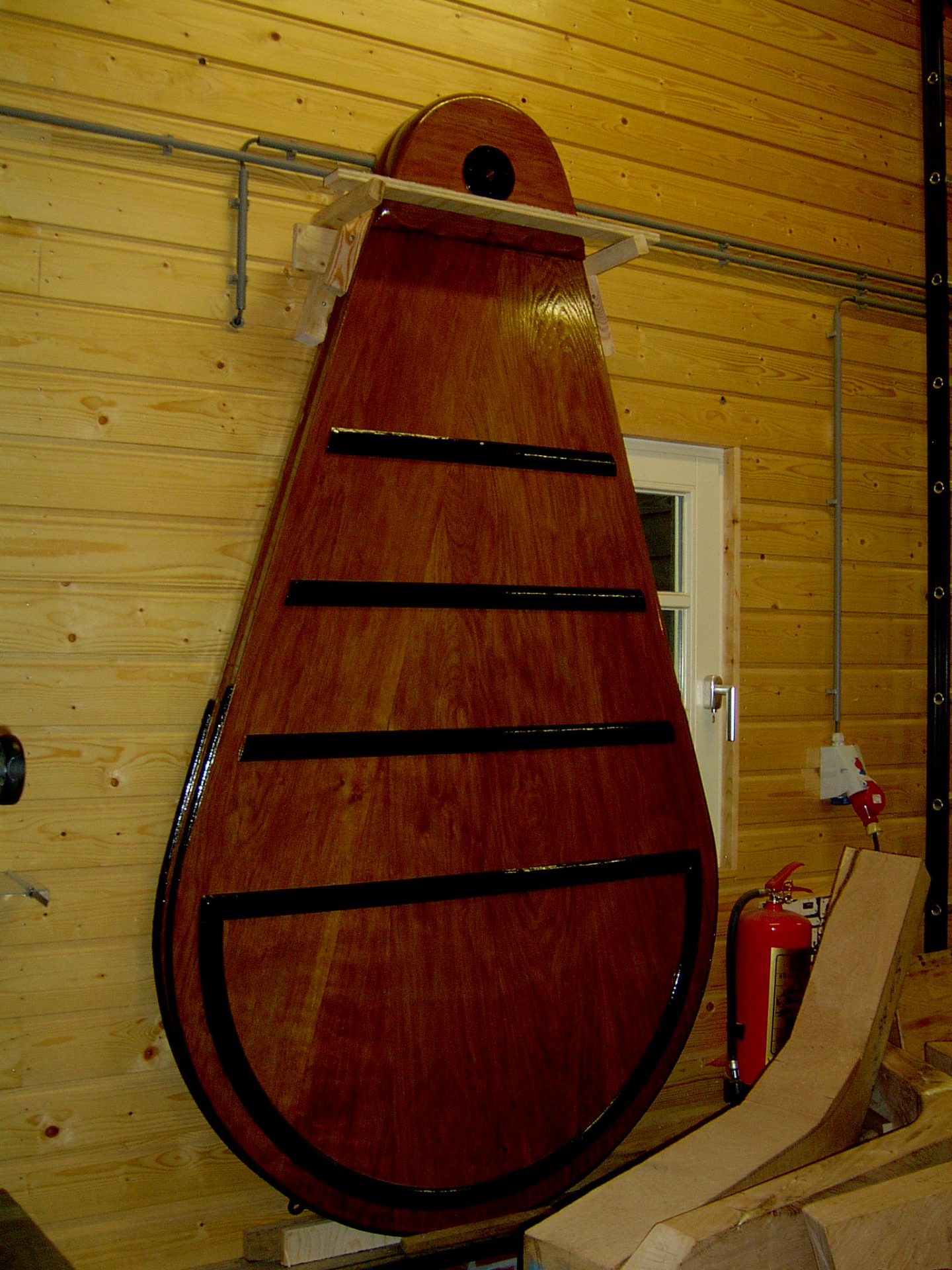
‘To keep the history alive, the inhabitants of Enter decided to reconstruct the old zomp and with the help of Dr Schutten in 1984 a wooden boatyard in Giethoorn built the first new zomp for over 100 years – it is now used for carrying tourists along the River Regge.

‘But the brave folks of Enter wanted more a shipyard of their own, where they could build their own zompen – and they were successful. In 2009 the Zomp Wharf in Enter opened its doors.

‘It is a paradise of wooden boatbuilding, with steamed planks an inch thick and frames of grown oak, and a team of old-time shipwrights keep up the tradition of woodworking. If ever you are around the Regio Twente in the Netherlands go to Enter and visit the wharf. It will be worth it, I promise you.’

Thanks Hans! See the project website: http://www.entersezomp.nl.