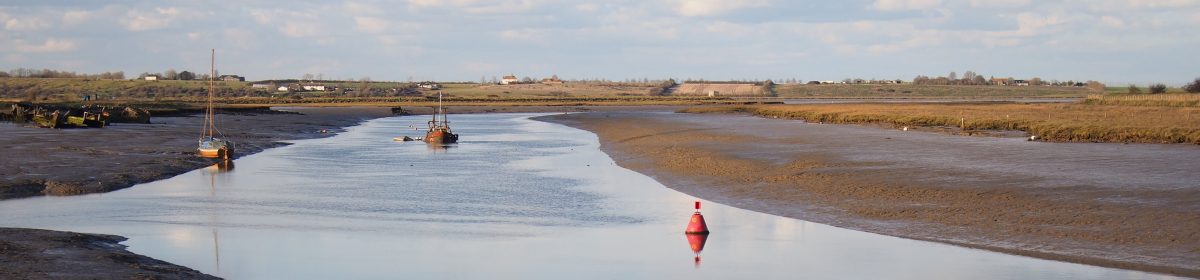
Hoymen and barges

[ad name=”intheboatshed-post”]

Sailing barges Pudge, Wivenhoe and Zylonite

Wivenhoe. I took both photos on the Blackwater,
while sailing with Yahoogroup Openboat
moderator and old friend Johnny Adams

This morning I have some fairly random bits of content about Thames sailing barges to share.

The first is this website about hoys, the occupation of hoymen and Thames sailing barges, written from the perspective of someone descended from a family of 17th century settlers, some of which were hoymen.

Yahoogroup Boatdesign moderator and developer of helpful calculators Peter Vanderwaart pointed out theĀ  striking photograph below showing three barges sailing briskly – they come from a Flickr photostream put up by the National Maritime Museum.

If you happen to be in the market for something marvellous, Kitty, an 1895 Harwich-built sailing barge launched in 1895, is for sale.


Sailing barges off Northfleet


Airborne lifeboat converted for racing

[ad name=”intheboatshed-post”]

‘With a fully battened mainsail, a total sail area of 20sq metres
and two sliding seats, Charles Currey’s converted airborne
lifeboat has an exciting performance. Photo: Charles Currey’

As usual, click on the thumbnail for a larger photo.

I’ve seen a converted airborne lifeboat sailing, but not for some years – so I was intrigued by this photo I found while reading a bound collection of old copies of The Yachtsman. Check the gaff rig, the battened sail and the planks for sitting out – clearly this is a very cool boat.

Are there any boats like this still sailing out there, I wonder?

For more posts on airborne lifeboats, click here.

Legendary 12 Metre racing yacht Flica restoration project now online

[ad name=”intheboatshed-post”]

Low-speed wind-tunnel testing during the development of
Flica (thanks to the Fairey Collection)

Cockpit view including Fairey and Nicholson (Fairey Collection),
Flica sailing in 1932 (Beken)

Flica with Hugh Goodson at the helm (Goodson collection)

Richard Smith, owner of Flica rang the other day to say that a web page devoted to the legendary 12 Metre is now on line.

Her story began in 1928, when aviation pioneer Sir Richard Fairey and yacht designer Charles Nicholson came together to develop a new 12 Metre, based on an extensive programme of research including tank and wind low-speed wind tunnel testing.

The engineering and scientific element of the project was very advanced for its time, and eventually produced a winning yacht – from 1932, I gather, Flica became the 12 Metre yacht to beat. During 1932 she won 39 flags in 35 races and in 1933 49 flags in 55 races.

The development work continued, Flica’s performance steadily improved and Fairey hoped to challenge for the America’s Cup – but the committee behind the Auld Mug decided the battle that year should be fought between J-Class yachts, not 12 Metres. That decision put paid to Flica’s chances of an America’s Cup win, and Fairey sold the boat to Hugh Goodson, who went on to have a distinguished sailing career racing in both the 12 Metre class and the America’s Cup.

There’s a lot more to know about the stories of Flica, Fairey and Goodson, and I recommend you check out the Flica Project pages at the Americas Cup Masters website. The Flica Project itself aims to re-commission the old boat, and I believe the Flica Project will chart it’s progress, so it should be well worth visiting repeatedly over time.