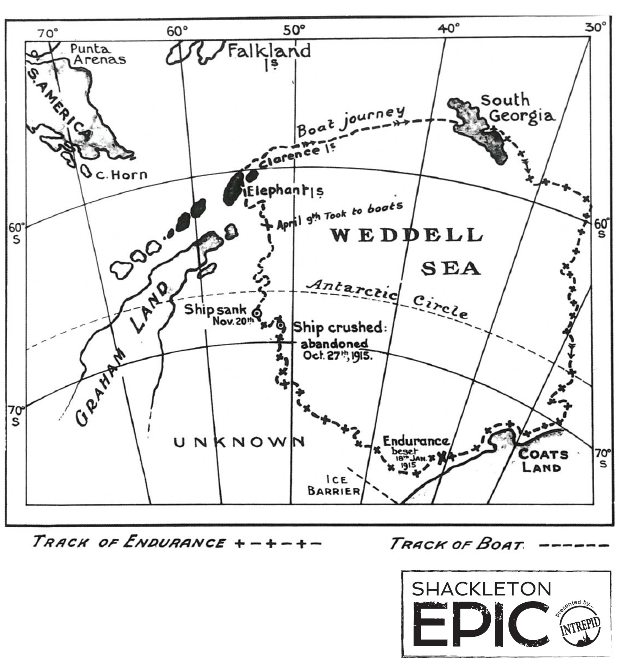
Explorer Tim Jarvis’s expedition to honour a remarkable 800-nautical mile small boat voyage across the Southern Ocean led by Sir Ernest Shackleton from Elephant Island to South Georgia, followed by crossing South Georgia’s mountainous interior, is scheduled to set out from Elephant Island on around the 17th January.
The expedition will culminate in a pilgrimage to Shackleton’s grave at Grytviken.
Read all about the new expedition here. Jarvis and his group of five British and Australian adventurers hope to become the first to re-enact the original voyage using authentic equipment, including an exact replica of the original ship’s boat, the 22ft James Caird.
The only concessions to the use of period equipment are to be modern emergency equipment and radios, and the presence of a support vessel. However, both are to be used only if the expedition.
Shackleton made his original gruelling journey to South Georgia in order to summon help to rescue the rest of his shipwrecked expedition, who he had left at Elephant Island. Against extreme odds, he and the James Caird’s small crew succeeded in their aim, and became heroes.
In more recent times, Shackleton himself has been singled out for his leadership qualities, which are frequently cited in seminars on business management, and the new expedition has played strongly on this dimension.
From reading about the original expedition, I have to say that Shackleton himself he seems to have been very much loved and respected by almost all of his crew, not least because he had a keen sense of responsibility for their welfare.
How this links with business and other organisations, however, I’m not too sure. Businesses in particular these days tend to regard staff below board level as expendable – employment is a market, after all, and everyone can be replaced as the management schools say. More, with some honoured exceptions, their leaders seem mostly to be utterly unlovable and frightening tyrants, as famous for their tempers as for their self-interest and convenient self-deceptions. Not that their lieutenants would be so foolish as to tell them so…
I’d say Shackleton was very different creature from many of today’s managers. My hope is that the right lessons are being learned from the emerging management legend of Shackleton as leader.
For more posts about Shackleton, the James Caird voyage and the building of the traditionally-built replica made for the new voyage by the IBTC at Lowestoft, click here and click back through older posts.
PS – Go to the comments link below to find a different take on Shackleton himself, and a splendid description of an earlier re-enactment of the South Georgia voyage. Apart from anything else, it makes clear the scale of the problems such a trip can encounter.