Fairey Marine boat owners have a new website

Owners of boats made by Fairey Marine have created a new website and forum at http://www.atalantaowners.org.uk.

The Atalanta light displacement drop-keel sailingl cruiser was conceived in 1955 by Alan Vines, a senior executive at Fairey. It was developed with the expertise of Uffa Fox, and made from hot moulded agba veneers

[ad name=”intheboatshed-post”]

trailer-470

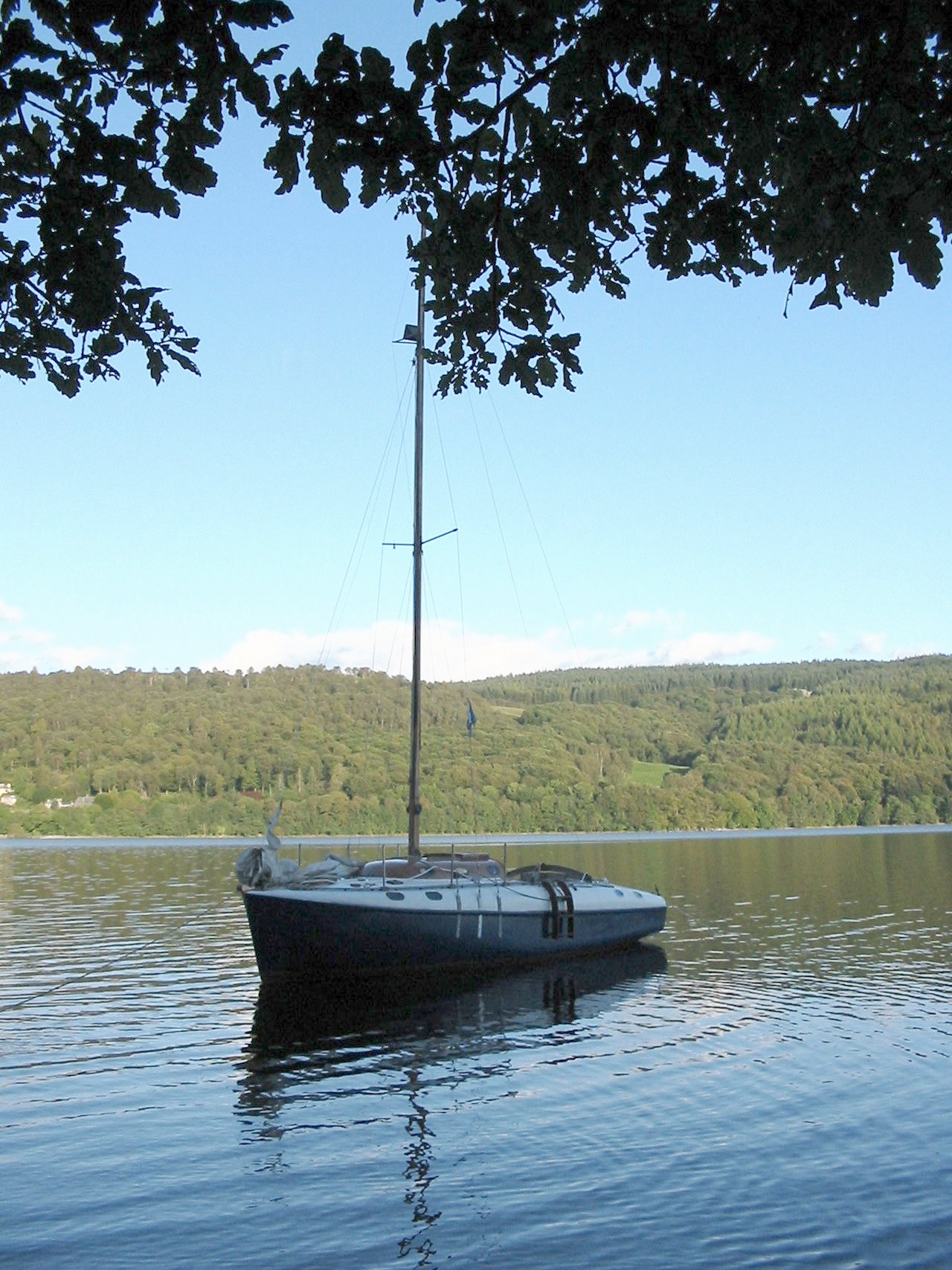
Atalanta owned by Dominic Dobson. As usual, click on the photo for a larger image

convar150 convar156

convar159

A white-hulled Atalanta and a teal blue-hulled Titania photographed at
the Beale Park Thames Boat show a couple of years ago

Owners of boats made by Fairey Marine have created a new website and forum at http://www.atalantaowners.org.uk.

The Atalanta light displacement drop-keel sailingl cruiser was conceived in 1955 by Alan Vines, a senior executive at Fairey. It was developed with the expertise of Uffa Fox, and made from hot moulded agba veneers using a technology originally developed for wooden aircraft during World War II.

Although the prototype was 24ft long – named Atalanta she is is still sailing the East Coast with the sail number A1 – but by the time the finalised boat went into production, the length had been increased to 26ft in order to improve her accommodation.

The company went on to produce other drop-keel sailing cruisers using the same methods, the Titania, the larger Atalanta 31 and the smaller Fulmar.

Although the hot-moulded agba veneer proved to be strong, light, durable and repairable, the designs eventually became uncompetitive compared with GRP boats, and production ceased in the early 1970s, after some 278 boats of all four types had been built. Today, over 130 continue to be owned by members of the Association.

For a post about some hot- moulded Fairey Marine-built dinghies, click here.

I gather that Atalanta Owners’ patron is ex Fairey director Charles Currey, whose airborne lifeboat converted for racing can be seen here.

coniston

Dominic’s Atalanta on Coniston Water shows the benefit of sailing a trailer-sailer

a26-179emma-duck-img_4727-large

Emma Duck, which I gather belongs to Association member Tom Lawton. Now, is she an Atalanta or a Titania? The teal-blue hull may be a clue – or not!


John Welsford on choosing a dream boat

[ad name=”intheboatshed-post”]

one-of-john-welsfords-rifleman-light-outboard-motor-boats-this-one-was-built-by-a-retired-professioanl-boatbuilder-and-is-the-best-example-the-designer-has-seen

An outstanding example of John Welsfords Rifleman light outboard motor
boat. This one was built by a retired professional boatbuilder and is the
best John has seen

for-leo-21 for-leo-3

One of John’s Navigator open cruising boats

Be rational, says legendary New Zealand small boat designer John Welsford. Think about the water you can get to, the people you have to sail with, the time you have available, the space you have to build in, and the size of your wallet.

He isn’t about to spare your feelings, but he might just save you a lot of money, time and heartache, so do please listen to what he has to say – unless, of course, you’re one of that rare breed of person who really is cut out to look after a special old boat. If that describes you, follow your dream and please send us some photos!

But back to John:

‘You will have some thoughts in your mind as to what would be a nice boat to have, and no doubt some ideas as to what you want to use it for. Some people will have seen something on the water or in print that they have fallen in love with and nothing else will do except one of ‘those’.’There will be those who have a lot of boating experience in one type of craft, and who don’t want to risk a change, and a few who are looking for something different. All of these already existing ideas have a bearing on what you might choose from the range of plans here in this on line catalogue of my work.

‘But here’s a warning: I’m going to lecture you a bit here, if you don’t like lectures, go and have a look at the boats, but otherwise, do please read on.’I have sold something in excess of 4500 sets of plans over the years and more than a few of the owners have ended up with a boat that, while it did what it was designed to do , what it was designed to do was not a good match for the owner’s environment, or was not suited to the usage, or could not be achieved with the time, building space or budget available.

‘There was nothing wrong with the boat, but it was just the wrong one for the place or the job.

‘So here are some suggestions.

‘Have a look at the area where you are going to use the boat: an ocean cruiser is not going to suit daysailing on a small lake, while a boat intended for running a river bar won’t be ideal for fly fishing the upper reaches of that same river. So have a realistic look at the water you have available to you and make some notes.

‘A small boat can be very seaworthy, but each person on board needs about 10 pounds a day of stores, and the trip to Europe from the US west coast needs six weeks worth of stores aboard. If your crew is four people, that’s getting up towards a ton of food and water plus the boat’s needs for the trip. If that’s your purpose, choose a boat that is designed to carry that load.

‘A boat that is intended to do that trip may be mostly cabin, and will have a tiny cockpit to accommodate one or two on watch but if you’re day cruising in a hot climate no one will want to be downstairs in a stuffy cabin so if you’re going to be sailing in  warm part of the world, you’ll need a much bigger cockpit.

‘Type is important too, rowing boats are as long and as narrow on the waterline as the designer thinks they can get away with, while a power boat intended to plane has very straight lines underneath – but these will make it a poor sailor. A sailboat is of a shape that resists the winds efforts to heel her over, and will travel at relatively slow speeds efficiently, but not fast.

‘A heavy motorboat won’t ever achieve planing speeds and the longer it is the faster it will run, ( a bit like the rowing boat) .

‘Meanwhile, a yacht tender is possibly the hardest boat to design of all, as it has to fit into a small space on deck, carry impossible loads, row well, tow at high speeds and be stable enough to allow its occupants to stand up and scramble into the parent vessel without going for an ignominious swim.

‘So think long about your dreamboat, consider where you are going to use it, be realistic about what you are going to do with her, and think over your likes and dislikes in a boat. Even the building space and budget will have a bearing on what is realistic.

‘If your choice is a good match with your dreams, the environment in which she will be used, and the skills and resources available to build her, then the project will be a successful one.’

John Welsford is a highly respected designer of small boats built from plywood, many of which include features from traditional boats. See his website at http://www.jwboatdesigns.co.nz

For more posts relating to John’s work, click here.

Lechlade Raid, the Beale Park Thames Boat Show, and this year’s Watercraft comp for amateur boatbuilders

[ad name=”intheboatshed-post”]

Home Built Boat Regatta - the sun can shine at an HBBR meeting

A rare moment of bright sunshine at an HBBR meeting

The Home Built Boat Regatta folks are planning what sounds like a jolly river trip. It starts at Lechlade on the 1st June with the aim of arriving at Beale Park, Pangbourne, on the evening before this year’s Beale Park Thames Boat Show.

In keeping with the HBBR’s traditions, the Lechlad Raid is not an organised event but a cruise of individuals in company who welcome all who wish to join them, but ask that all boats and crews are up to the trip. Each individual is responsible for ensuring their own liabilities are covered and for making their own arrangements for over-nighting during the journey. There will be no formal safety cover.

From what I understand, the start time on the 1st is unclear, but more information will doubtles emerge and will be posted at the HBBR website events page.

Some readers may be interested to hear that by chance the Trailer Section of the Old Gaffer Association is also having a meet at Lechlade on the weekend of the 30-31st May, and that it will be happy to see Lechlade Raiders who decide to arrive early to join them. The OGA folks have organised camping in a field behind the pub, and this is likely to cost about a tenner.

Another piece of news concerns the Water Craft magazine amateur boatbuilding competition, which is judged at the Beale Park Thames Boat Show each year. After some discussions with HBBR members, editor Pete Greenfield has decided to change the format in the light of complaints that the high standard of craftsmanship of some of the entries tends to discourage rather than encourage many amateur boatbuilders.

So this year there will be three equal prizes of £80-worth of Water Craft books for: The Home-Made Boat Which Offers Most Encouragement To Beginners, The Most Innovative Home-Made Boat and, because we don’t want to stop encouraging amateur craftsmen and craftswomen, The Most Professional- Looking Home-Made Boat.

Now it’s time to find some pictures of your home-built wooden boat, write a few words to describe her, add your contact details and send it no later than 17 April, either by email to: ed@watercraft- magazine. com or by post to: Amateur Boatbuilding Awards 2009, Water Craft, Bridge Shop, Gweek, Cornwall TR12 6UD. All entrants who bring their boats to the show will also receive £50-worth of vouchers. You don’t have to pre-register to participate in the Raid, though it would be kind to let the HBBR folks know you’re coming, but you must send entries for the competition to Water Craft by the the 17 April deadline in order to take part in the competition – for insurance reasons, you can’t just turn up on the day, by water or by road.

Be aware, also, that you must be a real amateur, and that boats built from pre-cut kits are not allowed to enter.

For previous intheboatshed.net posts featuring the HBBR, click here.

I won’t be able to join the HBBR folks once again dur to family reasons, but if anyone reading this fancies the trip and would like to build a simple and easily constructed rowing boat for the purpose, may I modestly suggest my Julie skiff plans? I will be pleased to help out with modification to make it more suitable for overnighting afloat.