The Smacksman

river_yare_from_haven_bridge

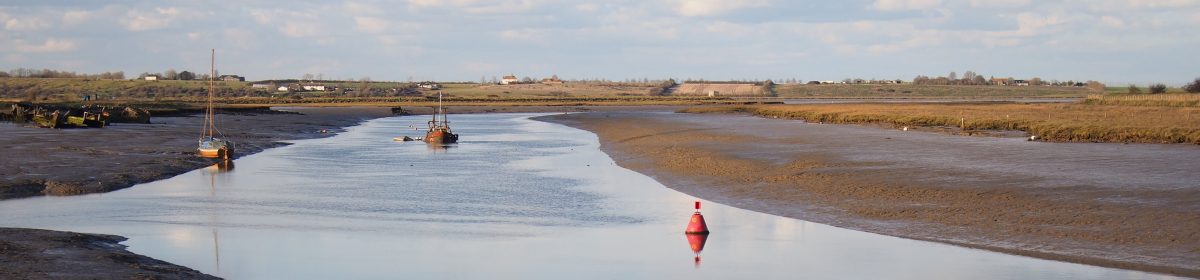
River Yare from Haven Bridge, Great Yarmouth. Photo
by Ranveig, taken from the Wikimedia

This is a song that has come down to many of us via Ewan MacColl, who collected it from the legendary Norfolk singer Sam Larner, though I think I first learned it from Terry L Kinsey’s book Songs of the Sea.

MacColl used a large amount of the material he collected from Larner as the basis for his one of the famous Radio Ballads, Shoals of Herring. If the name’s familiar, it might be because MacColl made a song by the same name for the radio drama-documentary production that subsequently became hugely popular around the folk scene.

It also seems to have been hugely popular with Larner himself, in his autobiography, MacColl reported that after he’d sung the song to Larner, the old gentleman had told him he was glad he’d learned it, saying that he’d known the new song all his life. One never really knows with autobiographies, but it makes a nice story – and that is just the kind of reaction that would make a political songwriter like MacColl rightly proud.

But let’s go back to Larner’s own song, The Smacksman!

The Smacksman

Once I was a schoolboy and stayed at home with ease.
Now I am a smacksman and I plough the raging seas.
I thought I’d like seafaring life but very soon I found
It was not all plain sailing, boys, when out on the fishing ground.

Chorus
Coil away the trawl warp, boys, let’s heave in the trawl.
When we get our fish on board we’ll have another haul.
Straightway to the capstan and merrily heave her round,
That’s the cry in the middle of the night: ‘Haul the trawl, boys, haul’

Every night in winter, as reg’lar as the clock
We put on our old sou’westers, likewise our oilskin frock,
And straightway to the capstan and merrily spin away,
That’s the cry in the middle of the night: ‘Haul the trawl,boys, haul’.

When we get our fish on board we have them all to gut
We have them all to clean and in the ice-locker put,
We gut them and we clean them, and we stow ’em all away,
We stow them just as nice as the oyster in his shell.

When eight long weeks are over, then down the tiller goes
And we’re racing back to Yarmouth Roads with the big jib on her nose
And when we get to Yarmouth Town, then all the girls will say
Here comes our jolly fisherlads, who’ve been so long away

The only way I can sing this thing without being too naughty with people’s recording rights and copyright is to sing it myself. Here’s my version: The Smacksman

Beyond the Quay, a CD of sea songs by Tom and Barbara Brown

Tom and Barbara Brown’s new album Beyond the Quay is
made up of sea songs

Tom and Barbara Brown are old friends, and I’m very pleased that they should should put out a CD of sea-songs. Songs connected with the sea  have been out of fashion around the folk scene’s clubs and festivals for far too long in this country.

Interestingly, even though I’ve recently heard the claim that sea shanties are the new Rock’n’Roll, there are none here. Instead, this CD is full of songs about ships, ports, sailors, and of course heroes and villains. Most are traditional and most belong to the West Country.

Tom and Barbara’s performances are marked by some very effective harmony singing, of which there are two excellent examples here: Young Susan and a version of The Death of Nelson to a tune learned by the couple from traditional source singer George Dunn of Staffordshire, with additional verses from the broadside ballad.

Another aspect of this disk that I particularly like is that it includes a very nice but less well known version of one of my favourites, The Bold Princess Royal. Tom’s version from Bristol is much harder to sing than the one I know from Sam Larner so much so that he gets extra points from me for making an excellent job of it. I gather it came originally from a singer called Albert Lightfoot.

In the interests of historical veracity I should explain that Tom’s version has the same problem as Larner’s – he has the British ship being chased to windward, which seems unlikely as the Moorish pirates’ xebecs were far better to windward than the British boats during the era being described.

And I should also add that Tom and Barbara have been lucky enough to be supported on this CD by our old friend Keith Kendrick and young musicians and singers Emily and Hazel Askew.

Copies of Beyond the Quay are available direct from Doug Bailey at WildGoose Studios and from folk music CD stockists generally. While you’re over at Doug’s emporium, do take a look at some of the other recordings he has on offer including Keith Kendrick’s recent CD Songs from the Derbyshire Coast.

Further information about Tom and Barbara Brown and a programme of their performances and general doings is available from their website http://www.umbermusic.co.uk .

Don’t miss any thing good – SUBSCRIBE to intheboatshed.net below:

The story of the Northfleet begins to be explained


Several decades ago, I learned the song The Wreck of the Northfleet from the singing of an elderly south-coast fisherman called Johnny Doughty.

In addition to hearing him singing in public on a few occasions I was also lucky enough to meet Johnny socially a few times, as he was a family friend of one of my close musical friends at the time. Johnny, I can report, was a charming, jolly man who enjoyed an old-fashioned bottle of Guinness and revelled in company, particularly that of women.

But this post is about the story of the song, which tells of an unexplained collision in which large foreign vessel collides with the Northfleet, while she lay at anchor in the English Channel waiting for a fair wind to carry her westward on the first leg of the long voyage to Australia. The song as Johnny had it recounted that she had 500 souls on board; the crew of the foreign vessel fail to stand by and assist the sinking vessel, and some details of what happens as the ship sinks, including a fatal shooting as the captain enforced the rule that women and children must be allowed to escape first. It ends with the captain’s wife insisting on going down with her ‘dear husband’ and his ship.

I should add that the whole dramatic performance is enhanced by the song’s stately, hymn-like tune and a chorus that calls on the Almighty to protect the women and children affected by the tragedy.

One of the delights of Elliott O’Donnell’s book Strange Sea Mysteries published in 1926 is that it includes the first written account I’ve seen of the Northfleet tragedy. Although the captain’s wife did survive, much of old Johnny’s details were correct, despite the ‘Chinese whispers effect’ inherent in the oral tradition.

But what it also reveals that this was a peculiarly nasty and needless disaster, which was no doubt the reason this particular wreck should have lodged in people’s minds and imaginations when hundreds of others have been forgotten. From O’Donnell’s account it seems the crew of the ‘big and foreign vessel’ were seen covering the ship’s name and figurehead before beating their hasty retreat, and also that the Northfleet was anchored among many other ships at the time – and that neither they nor the coastguard on duty at nearby Dungeness reported being aware of the unfolding tragedy, despite the Northfleet’s distress rockets and flares. The flares, it seems, were taken to be signals requesting a pilot.

Even in a time when life was cheap and death was commonplace, the tragedy of the Northfleet fired the public imagination; subscriptions were raised to aid those most affected, and Queen Victoria was moved to write a letter of condolence to the captain’s wife, Mrs Knowles.

Here’s my version of the song as it comes down from old Johnny. I don’t pretend it’s my most polished performance, but there’s more than enough here to learn the song yourself, if you should wish to do so.