Remembering the WWII seamen who braved Hellfire Corner bringing coal to the south

[ad name=”intheboatshed-post”]

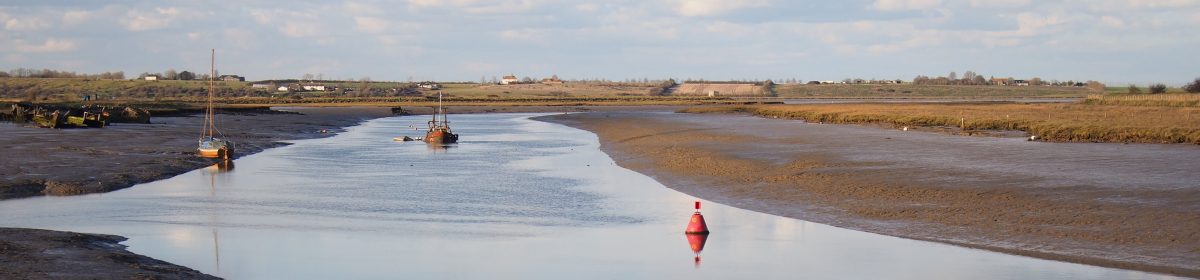
Pill box at Rye Harbour, where seamen risked their lives
and the British feared invasion

Boating enthusiasts in the South East of England are constantly reminded about the battles that have taken place or have been expected in this corner of the country. The wartime relics are so many that almost the only time we can’t see them is when they’re obscured by foul weather.

But last night, the evening before Remembrance Sunday, I was pleased to see a repeat of the BBC Coast series programme covering the Channel Islands and Dover.

It was well worth watching as usual, but this particular transmission included an interesting segment about the brave Navy and merchant seaman of the convoys carrying essential supplies such as coal through the Dover Straits during World War II.

As every British schoolchild knows, the sea separating Britain from Continental Europe is just 21 miles wide, and so the convoys could be hit by land-based guns based in occupied France, and were very vulnerable to attack by both fast German E-boats and aircraft while passing along the coasts of Kent and Sussex.

See the programme here on the BBCi player – though I gather readers in the USA aren’t able to see this material.

There’s also an interesting summary of the big guns used by both sides at the Wikipedia.

Heckstall-Smith and du Boulay on the origin of 19th century racing yachts


Wood engraving The Yacht Race – A Sketch from the Deck of a
Competing Yacht
, was published in Harper’s Weekly in  1872.
Taken from the Wikimedia Commons

Although Charles II was almost as enthusiastic about yachting as he was about his many mistresses, his collection of 16 yachts do not seem to have had much of an influence on later racers.

From their researches including studying Clark’s History of Yachting up to the year 1815, Heckstall-Smith and Du Boulay say later racing yachts derived their form largely from revenue cutters.

They write: ‘the fashionable type of cutter was about three and a quarter beams to her length, her midship section was so round it might have been drawn with a pair of compasses. She had a nearly vertical stem, and a  short counter high above the water. The greatest breadth was just abaft or close abreast of the mast. The bow was therefore bluff, and the run long and often not ungraceful.’

The type was known as ‘cod’s head and mackerel tail’ and had evolved  in competition with the craft used by smugglers. This seems to me to be a case of a rather imperfect form of evolution, if faster boats could have been achieved by moving the greatest beam aft, but there are some good stories about how the same boat builders worked for both smugglers and  the revenue men.

Living in Kent as I do, this one from Heckstall-Smith and du Boulay appeals to me particularly: ‘it has been recorded that Mr White of Broadstairs, whose descendants afterwards moved to Cowes, used to lay down two cutters side by side, very much as 19-metres and 15-metres are laid down today, and the Government officials used to puzzle their brains to puzzle out which would turn out the faster, knowing that whichever boat they bought, the other would be sold for smuggling.’

For more on revenue cutters at intheboatshed.net, click here.

Don’t miss something good – subscribe to intheboatshed.net

The boatbuilding bug bites another victim

[ad name=”intheboatshed-post”]

Ed’s 10ft Maine Skiff, built from plans and instructions
supplied by Duck Trap Woodworking

Ed Engarto in New York State is one of the many people who build a boat, only to discover that it can be a life-changing experience.

This seems to happen a lot. I know there’s a lot of satisfaction to be gained from building even the smallest boat and then using your creation on the water, but I think there’s more to this phenomenon: perhaps it’s the fact of slowly over time creating a tangible object, the quality of which the maker can judge and come to terms with as they proceed, perhaps it’s the discovery that, after all, one can learn new skills and complete a new category of projects, or maybe it’s the result of all those quiet hours the boatbuilder spends working alone in quiet contemplation.

Ed seems to me to be a typical convert to amatuer boatbuilding. I hope he enjoys his second project as much as he did his first.

He writes:

‘I built this little ten foot, lapstrake row boat over a period of three plus years, ending in July of 2008. The design comes from Duck Trap Woodworking and is known to those fine folks as their Maine Skiff. I started out journaling every working session and before the molds were even finished, the entries began to touch on life experiences, the trials of a large project, the virtue of commitment, and some thoughts about events that took place during the skiff’s construction. It actually became a mechanism through which I shared the most influential events in my life and therefore is much more than a sequence of construction steps explained. I learned so many boatbuilding skills and enjoyed the project so much, that I have become a lover of wood and water and am already looking towards my next boat.’

See the Duck Trap Woodworking website.

Don’t miss something good – subscribe to intheboatshed.net