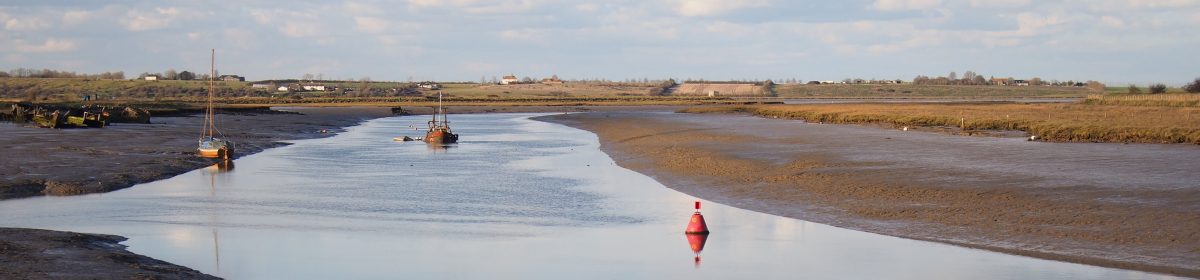
River Colne oyster smack repaired by Star Yachts


While we’re on the subject of the River Colne, Win Cnoops and his colleagues at Star Yachts have recently been working on a boat built in the area.

Win says Wanderer II was built as an oyster smack right beside the Colne at Rowhedge  1901. Originally called Maude (CK489), in 1950 she was sold to the Pearson family and has been in their possesion ever since, and has been kept at Milford Haven.

She doesn’t appear in the Smackdock website’s list of known fishing smacks, but I guess she might be added at some point.

Win reports:

Wanderer II was in a bit of a state when she arrived: we had to cut down what was left of the keel and then added to it using the durable West African timber ekki, and replaced the stem that was in 13 bigger and smaller pieces. To hide a little hogging we put in a fair wale, and painted the bulwarks in the same colour – which, contrary to the theory, makes her look much sleeker as well.

‘We also took the steel floors out and replaced them with grown oak, and replaced 11 stanchions and a range of other hobs. The sternpost was not fastened to anything and could be moved by hand once the rudder heel fitting was off!

‘The cabin top is not the prettiest, the frames need doing and the under-deck is starting to go but for financial reasons they will have to wait for another time – but at least she is back on a solid foundation.’

Richard Shilling’s pretty Avocet dinghy


This sweet little boat is the Avocet, a general-purpose traditionally-built dinghy designed and made by Richard Shilling, who completed his training at the International Boatbuilding Training College at Lowestoft in 2006, and has subsequently worked for boat builders in Devon and Cornwall.

Here’s what he says about the Avocet:

‘I have built quite a few traditional dinghies for other boat builders over the last few years, so I wanted to design and build a good looking clinker boat with the best features from these. The most important attributes were:

  • size as large as is easily manageable by one person on land, which I think is 12ft 6in
  • adaptable, simple to sail for beginners and children, but quick and exciting enough for experienced sailors, or as you progress from a beginner – the Avocet therefore has two mast positions, an aft for sailing with mainsail and jib, and forward for mainsail alone
  • easily rowed and able to take an outboard
  • a good sailing boat – like many modern sailing dinghies, under the water she is very fine forward yet wide and flat aft
  • a family boat, good for small children with a heavy centreboard (lifted with a 4:1 tackle) and definitely a dinghy you sit in, rather than on
  • simple to keep ashore, so she has a gunter rig with all the spars fitting inside the boat

‘This is a new design, with only one being built so far, so no one has yet bought the boat. I’m expecting that it will appeal to those with young children or grandchildren, but it is really suitable for anyone who wants to explore lakes, rivers and inshore waters.

‘I’ve only been out for a few test sails, mostly on the North Coast of Cornwall as I’m based near Liskeard on Bodmin Moor, but it was good to see that she was as quick as I thought compared to others in her class – she won the under 20ft class race at the Plymouth Classic Boat Rally, and got a lot of positive comments.’

I don’t know what the field in that race was like, but Avocet’s win seems remarkable for a boat of her size.

The Avocet dinghy is made from varnished mahogany on oak and fitted with modern sails, ropes and Selden blocks for ease of sailing. Read all about her at Richard’s website: http://avocetdinghy.co.uk.

Three-dimensional models of Irish traditional boats now online at Traditional Boats of Ireland

Scattery Island currach model

The Traditional Boats of Ireland website launched a few days ago has begun a programme of laser scanning traditional boats, and posting lines plans and rotatable 3D models.

Ballydehob, Ireland, boatbuilder Tiernan Roe was at the launch, which took place during the Glandore Classic Boat summer school. He reports that the material is impressive and particularly useful from the point of view of a boat builder or student of traditional boat types, as it is possible for the viewer to remove elements from the models to see how the boats were constructed.

Tiernan also reports that another Ballydehobian, Holger Lonze, is proposing a voyage in a Bronze Age boat from the copper-rich Mizen Peninsula in Cork to Cornwall.

Holger was previously involved in retracing St Columba’s voyage from Ireland to the Island of Iona. See Holger’s website here.

Tiernan also reminded me that the Atlantic Challenge takes place at Bantry from the 21st July.