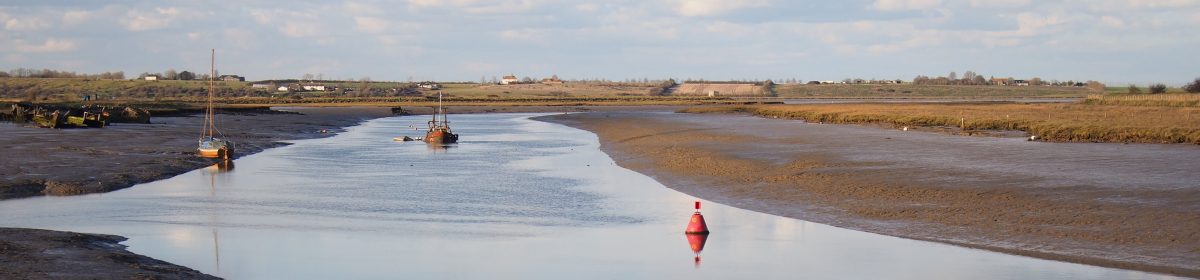
Legendary Bristol pilot cutter Kindly Light is back on the water

Restored pilot cutter Kindly Light


Photo supplied by the National Historic Ships Register 

Here’s a piece of great news among the gloom of economic disaster and the incompetence of corrupt governments: the legendarily fast Bristol Channel pilot cutter Kindly Light has completed here long restoration and is now back on the water.

Kindly Light’s story is told here and those of her designer and builder are here.

The restoration has returned her to her original state as a sailing pilot cutter, with no modern systems, engine or electric, and I think those who worked to achieve this great end deserve great credit for this, including  her owner Malcolm Mckeand and shipwright David Walkey at Gweek Quay Shipyard.

Here’s what the Historic Ships people had to say about a rededication ceremony at Falmouth this week:

‘Some 350 people were gathered at the National Maritime Museum Cornwall on Saturday 1st October for a private ceremony to mark the 100th birthday of pilot cutter Kindly Light – re-launched after a meticulous 18-year long restoration, funded and masterminded by owner Malcolm Mckeand.

Revered Chris Courtauld led the assembled crowd in a rededication of the vessel and a rendition of the hymn ‘Lead Kindly Light, amid th’encircling gloom’, following which Kindly Light was officially re-named by the daughter of boatbuilder David Walkey. In a remarkable turn of events, professional Barry seaman John Hart then produced the original coin from Kindly Light’s mast-step which he had removed for safekeeping following the vessel’s last sail when her mast was lifted on entry to Cardiff Museum. John presented the coin, dated 1854, to Kindly Light’s owner and it was later found that this was the birth date of the vessel’s designer, William Stoba.

‘All present at the ceremony were given the opportunity to go on board Kindly Light in groups and view the high level of authenticity which has been achieved with maximum care in the restoration. She has been returned as closely to her original specification as research would allow, complete with her build paint scheme (as depicted in a photo from her launch day), original accommodation layout, pilot cutter deck fittings and no engine installed. There was also an illustrated talk on her history and the restoration which was held in the lecture theatre.

‘All those invited to the ceremony had been keen supporters of the restoration, or had some connection to the vessel and her history. Amongst the guests was a descendant of Kindly Light’s pilot, Lewis Alexander, as well as members of the Ellis family – whose father, Chris Ellis, had founded the Ocean Youth Club with Kindly Light in 1960. Kindly Light will be kept on the River Fal this winter whilst the remainder of her rig is fitted.’

For more on pilot cutters, see the British Pilot Cutter Owners Association website.


The first volume of Rudder online

Rushton ad The Rudder magazine

The first year’s issues of the famous 19th century stateside boating magazine The Rudder placed online by Mystic Seaport is liberally sprinkled with strongly expressed views that seem deliberately calculated to offend someone or other.

Today, it all seems quaint but slightly crazy – yet many magazine editors will wish they could be so forthright today.

‘In a paper I saw the following wonderful what is it offered for sale : “A keel sloop, cutter rigged.” We shall soon hear of keel schooners, sloop-rigged and cutter-rigged catboats being bought and sold. How a yacht can be both sloop and cutter at one and the same time is something beyond me. The truth, sad to relate, is, very few if any of our large single-masted racing yachts are sloops; many of the best of them are cutters or that bastard rig which is so far nameless.’

I guess the writer means the rig with a single foresail on a jib. What is that called?

Again:

‘One thing strikes the buyer who reads the catalogue of J H Rushton: it is the perfect way in which everything is described. The most minute details of construction and finish of his craft are put down in plain English so that a purchaser knows just what he is going to get for his money. For that reason it is one of the best tracts for the suppression of profanity we have ever seen: he leaves the worst cranks no chance for a growl.’

And again:

‘The black-blight that invades and destroys the racing spirit in yacht clubs is the steam yacht. What quality of blood runs in the veins of a man who will willingly exchange the exciting and exhilarating pastime of sailing for the monotonous privilege of being driven around in a kettle? With obligations to the late Lord St Vincent, we remark that a yachtsman who descends to running a steam yacht is d——d for the sport!’

Thanks to The Good Old Boat Redwing weblog for the linking to these entertaining sets of scans.

Adrian Morgan builds an Oughtred Tammie Norrie

Iain Oughtred-designed Tammie Norrie built  by Adrian Morgan of Viking Boats Iain Oughtred-designed Tammie Norrie built  by Adrian Morgan of Viking Boats

Columnist and boat builder Adrian Morgan of Viking Boats has been putting together a handsome Iain Oughtred-designed Tammie Norrie that is destined for a Highland estate. In fact, it’s one of two lug-rigged dinghies ordered for use guests and family on a huge private loch.

The timber is old slow-grown Scots pine from Her Majesty the Queen’s estate at Balmoral and larch from the Oban area, with oak knees etc. He’s used larch too for the steamed timbers, as he believes it is longer lasting and more supple than oak, and also for the garboards.

Read all about it on Adrian’s engaging weblog The Trouble with Old Boats.