Talking of storms as most folks probably were last night, I happened to mention Captain Washington RN and his report to Parliament following the Moray Firth fishing disaster of 1848, in which 124 boats were lost, many while trying to enter harbour, and 100 fishermen lost their lives.
Captain Washington’s enquiry proposed improvements to both harbours and boats, which had largely been undecked up to that time. There was a certain amount of resistance to the idea of decking boats partly because the craft would not be able to carry as much fish, and partly, it was argued, because fishermen feared being washed off the decks.
However, what followed was that increasingly fishing boats tended to be decked, and larger so that large catches could still be carried – a trend that led to the development of the baldie and some say to the powerful Zulu. (Also see Kate in Suffolk.) There’s an entry on the Wikipedia that’s worth reading: Moray Firth fishing disaster.
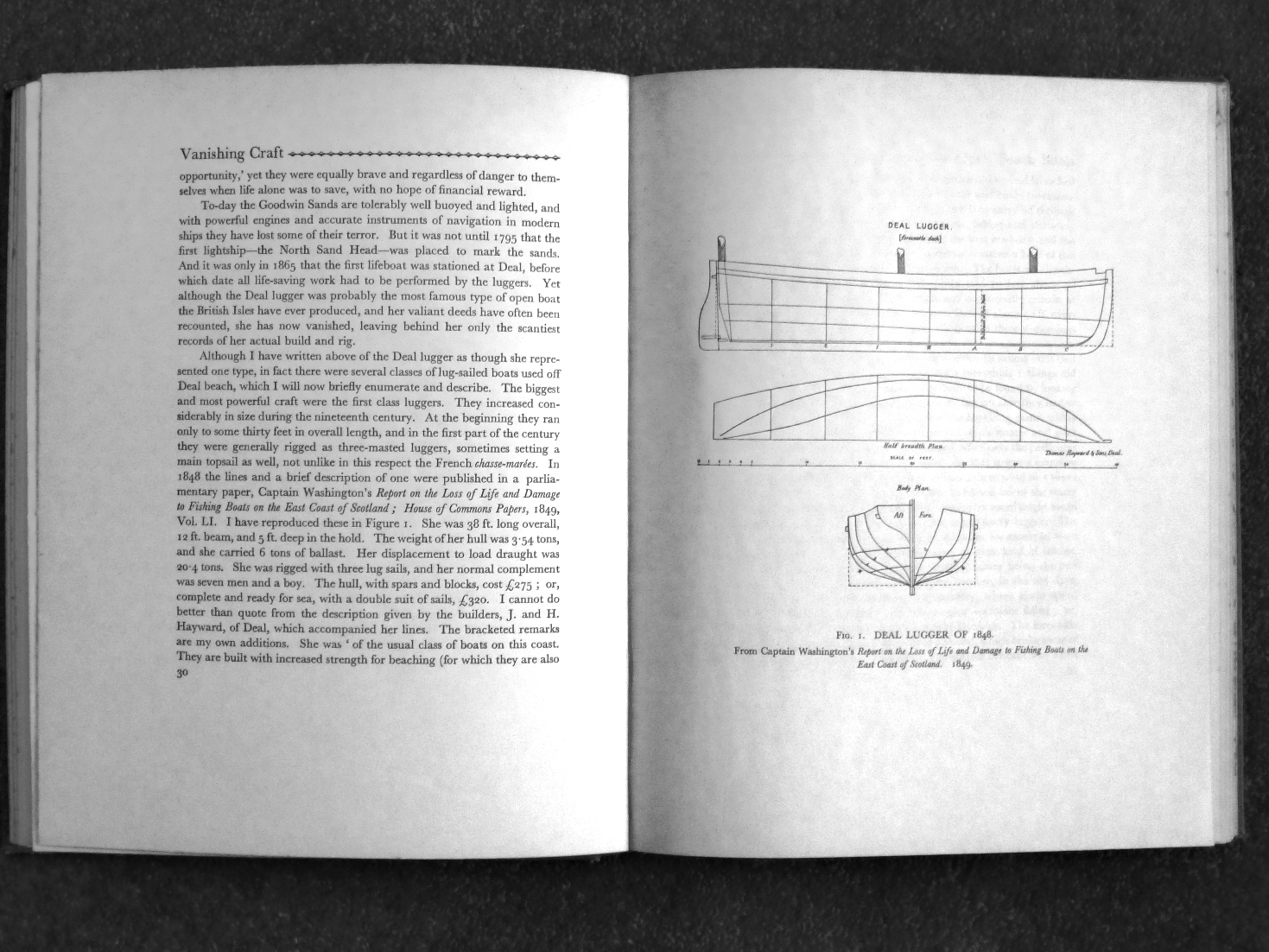
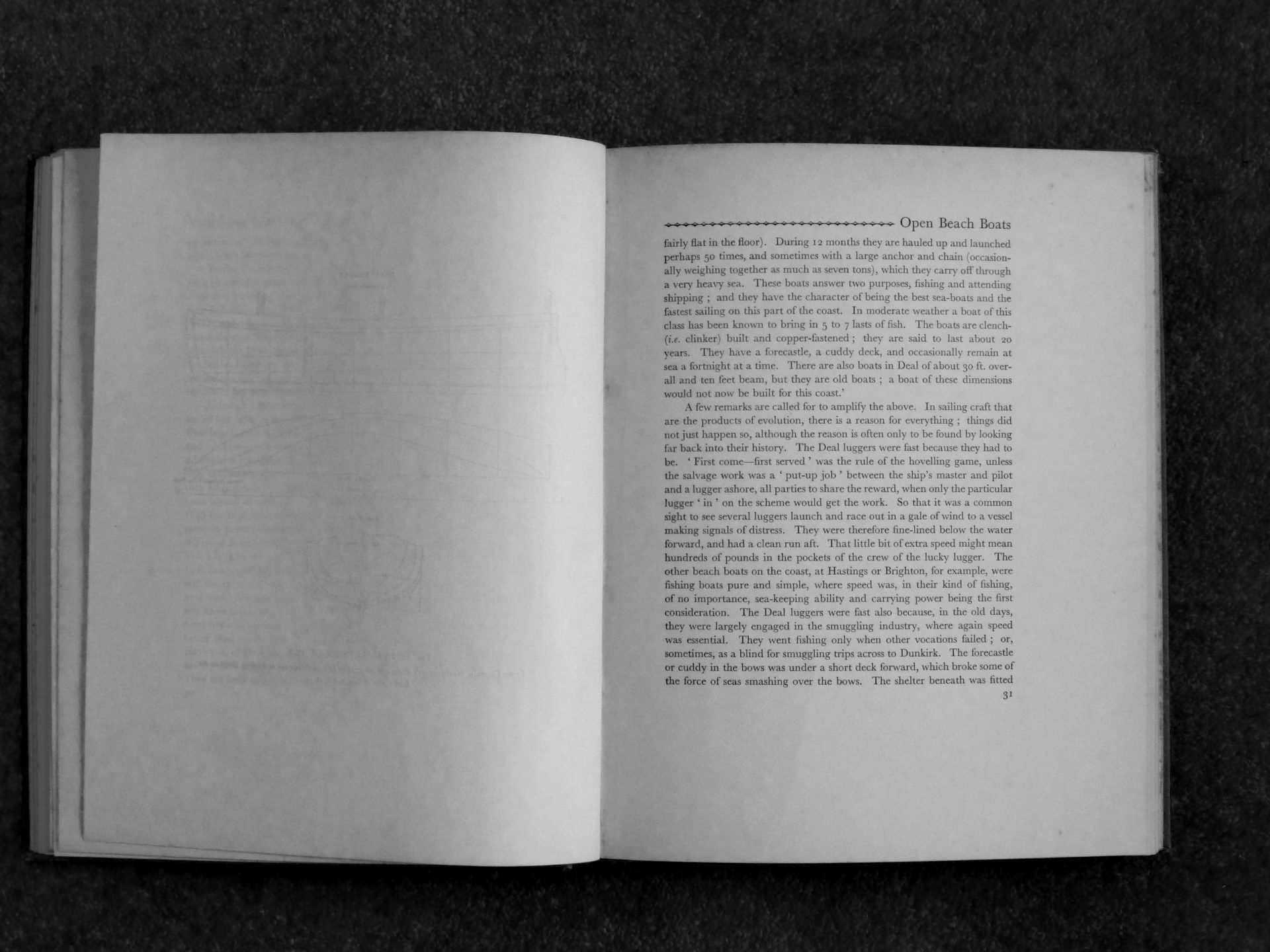
Captain Washington’s report is also important in another way – because he (and presumably his team) also surveyed boat types from around our coasts, including the Deal luggers (see below) and fishing boats at Hastings, and in the process recorded some boat types that would have known rather less about today. It’s a shame, however, that I can’t find a copy of Captain Washington’s report online. If anyone knows where there is one, please let me know in the link below, and I’ll link to it.