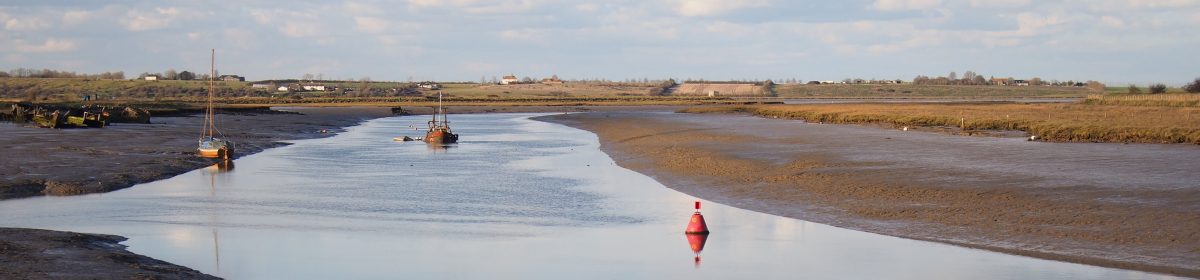
‘Shoalwater and Fairway – The casual explorations of a sailing man in the shoal seas and tidal waters of Essex and Kent, by H Alker Tripp illustrated by the author’
Shoalwater and Fairway by the extraordinary H Alker Tripp describes a series of engineless cruising expeditions to and from and along the Kent coast made in a time when the Thames Estuary still had light ships instead of buoys, and when sailing barges and fishing boats of one kind or another were everywhere.
It’s the first of a series of three classic post-World War I era sailing sailing books now available as a collection from Dick Wynne’s Lodestar Books.
To my mind, Tripp is notable for his relentless focus on creating a series of mood – the title and subtitle for this book is a clear example – and for his generally deft descriptions of people and scenes.
Consider that subtitle starting ‘The casual explorations… ‘ At a time when navigation was challenging and long before sailing cruisers were fitted with VHF sets, there surely was nothing ‘casual’ about his sailing – if there were it would have led to disaster. I’m quite sure he was meticulous about his sailing as he was about everything else in his very full and successful life.
Looking further on in that sentence, placing ‘shoal seas and tidal waters’ together is pretty well tautologous. But Tripp writes this way to create a particular mood, and he’ll do almost anything to achieve his aim – so much so that if the weather turns nasty on a sailing day trip he’s describing, he’ll happily switch to describing another similar journey when the weather was more conducive.
Taken together with Tripp’s delicious drawings, the overall effect is cinematic – you could make films out of this stuff. It’s also dreamy, as sailing often is if you’re not in a hurry and don’t have to hit the starting button on your engine.
To my mind, Tripp’s writing is compelling reading, for in his era the Thames Estuary in particular was a very different place, as an earlier intheboatshed post reveals.
Also, the men manning the numerous barges, coasters and smacks were great sources of local knowledge and gossip, and if you got into trouble, they were also the people most likely to be provide your rescue – though part of the price you paid would be in the stories that were later told about how you got yourself into trouble.
Despite his elevated station in life and sometimes patrician attitudes (consider what he says about the Mutiny on the Nore, for example!), Tripp seems to have got on well with working boat crews, and his pages are peppered with conversations and stories about them.
There are a few moments when Tripp might be accused of over-writing (or his editor of not being sufficiently critical) but this is great and sadly neglected stuff that’s well worth reading. I suggest you buy Shoalwater and its companion volumes The Solent and Southern Waters and Suffolk Sea Borders here today!