Boat builder Will Stirling’s hopes for Row to the Pole

Row to the Pole Filming from Devon Island Row to the Pole loose pack in Barrow StraightRow to the Pole six man ocean rowing boat Row to the Pole Preparing for departure Row to the Pole six man ocean rowing boat

Following our previous post about the Row to the Pole expedition to draw attention to the rapid loss of polar ice, boat builder and historian Will Stirling who has been skippering the BBC camera team boat has written in with the following heart-felt message.

Will’s an excellent photographer, and attached the shots above. Thanks Will!

‘I do hope that the rowers are able to highlight the extent of ice melt through their extreme endurance test.

‘Whilst there are geographical and climatic cycles that cause ice advance and retreat, the issue of our time is the speed of the melt. The melt is faster than a natural cycle, much faster. The Inuits have a good deal to say about it. The visual landscape has changed significantly within the last five years. There is no multi-year snow or ice on land. Previously permanent ice caves disappear in the summer. This year they have even noticed a few mosquitos up there.’

PS – See photos of one of a couple of Will’s latest small boat building projects here.

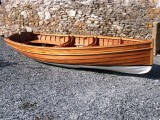
Thames rowing skiff built by Stirling & Son

Stirling & Son 12ft Thames rowing skiff Impulse Stirling & Son 12ft Thames rowing skiff Impulse Stirling & Son 12ft Thames rowing skiff Impulse

Thames rowing skiff by Stirling & Son

This very handsome little boat is a Thames rowing skiff built recently by Devon-based Stirling & Son. As usual, click on the images for much larger photos, including the lower-middle shot showing the boat’s gold leaf detail.

Will Stirling is a great historian, so I don’t doubt it’s an accurate example of the type, and I gather the new boat’s owners are keeping her on the Thames at Henley. I’ve a half-cooked plan to get over that way this week, so will look out for her from the water if I get the opportunity.

Also new from Stirling & Son is the 12ft pulling boat named Impulse – see the photos below.

Stirlings will be at the Southampton Boat Show, and plan to display a pulling boat and a 14ft sailing dinghy.

The 14ft dinghy is currently on the drawing board, but will be of mahogany on oak with copper and bronze fastenings, bronze fittings, spruce spars and clipper canvas sails with traditional ash blocks. However, boatbuilding will have to wait – as Will himself is in North West Passage skippering a BBC camera boat for an attempt by explorer Jock Wishart to row to the Magnetic North Pole to highlight the extent of ice depletion in the Arctic.

Stirling & Son offer traditional yacht building and wooden boat repair and are based in Tavistock. Contact Will via the website or call 01822 614259.

Stirling & Son 12ft Thames rowing skiff Impulse

Stirling & Son 12ft Thames rowing skiff Impulse Stirling & Son 12ft Thames rowing skiff Impulse Stirling & Son 12ft Thames rowing skiff Impulse 

12 ft pulling boat by Stirling & Son

Stirling & Son’s latest clinker dinghy

Stirling & Son 9ft clinker dinghy

Stirling & Son 9ft clinker dinghy Stirling & Son 9ft clinker dinghy Stirling & Son 9ft clinker dinghy


Boat builder and historian Will Stirling has sent in these shots of his latest beautiful 9ft clinker dinghy – Will has a great eye for a photograph and these shots are up to his usual standard, even if it was a miserable day.

These dinghies are a regular product line for Devon-based Stirling & Son and should be better known. This particular example is mahogany on oak with copper and bronze fastenings, spoon oars, with the name relief-cut with gold leaf.

Will also sent over a photo of half a whole mahogany butt sawn at 1/2in. ‘Dinghies in kit form’, he says wryly… There should be enough for seven to ten dinghies worth of timber in this part of the log – the rest arrived in a second delivery on the same trailer.

Will and his workmates had to cut hundreds of softwood sticks to place between the planks to allow the timber to season – softwood is chosen for the job because it does not stain. I gather teabreak at the Stirling & Son shed was dominated by question of how to calculate the optimum size of spacing stick to provide effective airflow and drying while using the least timber – and Will has asked whether any intheboatshed.net readers can advise?

By the way, Stirling & Son run twice-yearly courses during which students build their own 9ft traditional dinghy under the guidance of a skilled shipwright. The courses are part-time, running for three days a week for sixteen weeks, and cost £3,500 including materials.

For more posts relating to Stirling & Son boatbuilding projects and boat design work, click here.

Mahogany log for building clinker dinghy