Nigel Royall’s Broads gun punt

[ad name=”intheboatshed-post”]

broads, punt, gun punt, sailing boat, rowing boat, plywood, royall, boatyard, broadland, gun, gun punt, nigel royall

broads, punt, gun punt, sailing boat, rowing boat, plywood, royall, boatyard, broadland, gun, gun punt, nigel royall broads, punt, gun punt, sailing boat, rowing boat, plywood, royall, boatyard, broadland, gun, gun punt, nigel royall broads, punt, gun punt, sailing boat, rowing boat, plywood, royall, boatyard, broadland, gun, gun punt, nigel royall

broads, punt, gun punt, sailing boat, rowing boat, plywood, royall, boatyard, broadland, gun, gun punt, nigel royall

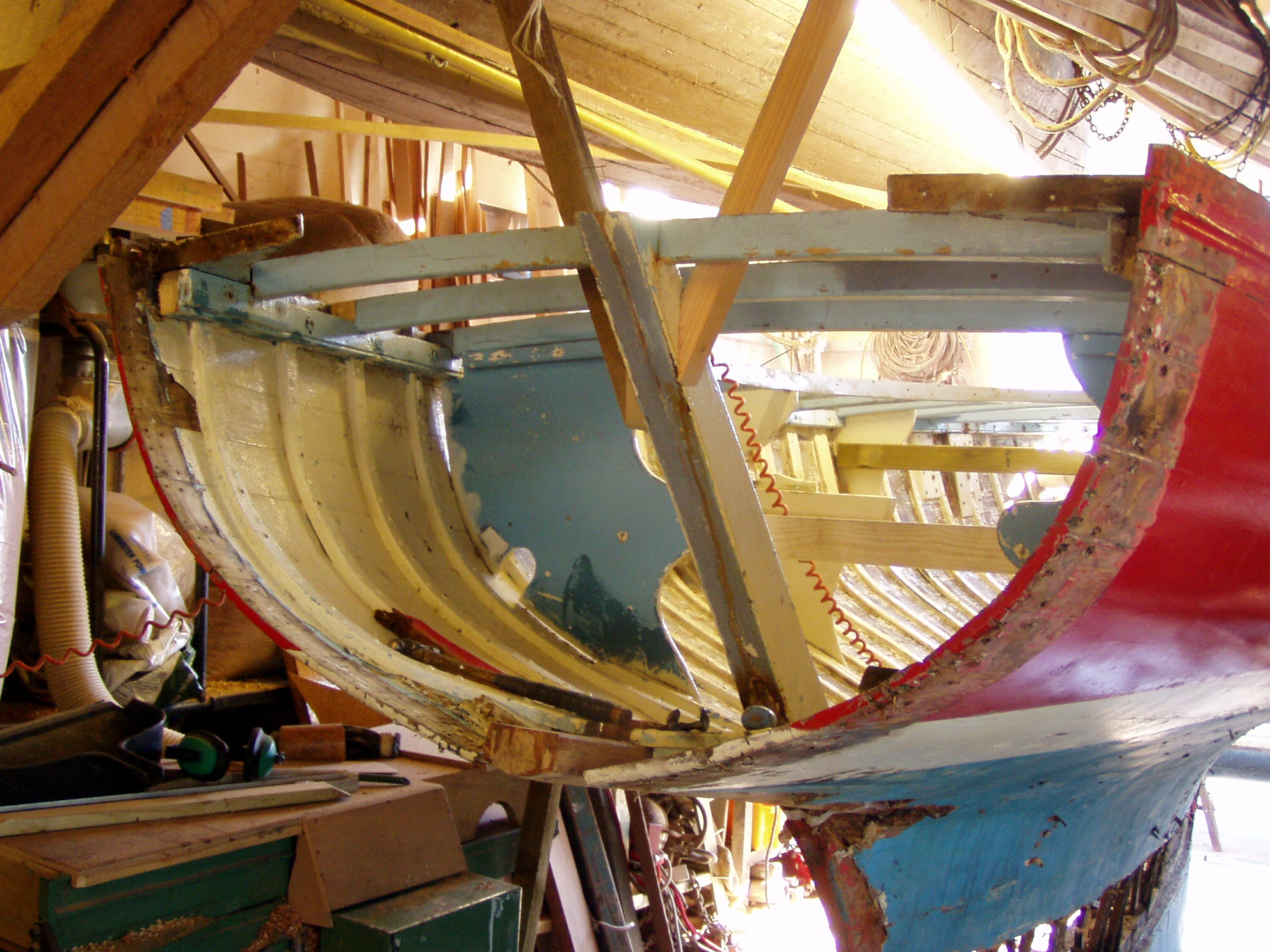
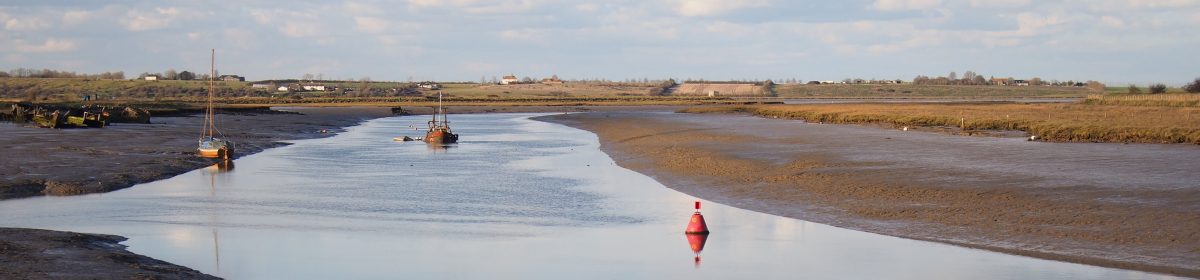
These shots are of a 18ft by 53in gun Norfolk punt named Shoveler made by Nigel Royall, of Royall’s Boatyard at Hoveton on the Norfolk Broads, and fitted with a rig from a Coypu. My thanks go to Nigel for his permission to use them.

As a boatyard operator hiring boats to holiday-makers, Nigel’s had a few dealings with gun punts over the years and finally decided to make his own; he’s put a long post about the project on the Royall’s Boatyard weblog.

As he points out, in the old days most Broadsmen could only afford one boat, so a gun punt was not just used for wild fowling in winter. For example, they it might be used for eel picking or transporting a marshman to or from the dykes where he was employed in dredging and clearing dykes – which is called dydling and fying in Norfolk.

Nigel also explains that gun punts were open until 1824 when a Colonel Hawker introduced his new half-decked design and that the punt has hardly changed since then. Slightly different types developed at Hickling and on the River Ant and Breydon Water, but they all tended to be around 18ft with a beam of between 3ft up to 4ft, with the larger beams on the tidal water of Breydon.

They all had a long foredeck, a short aft deck and narrow side decks with low combings and 9in high sides, and they drew about 1½in of water. Where they varied was in the details of the big punt guns, such as their bore, whether they were muzzle or breach loading, and how they were restrained.

Nigel tells me that he has recently recreated eel picking, and sculling and firing a punt gun from another gun punt for a local amateur film maker, and says he was intrigued to see how it handled with an eleven foot sculling oar and a large gun on board.

My hearfelt thanks go to HBBR member Ian Ruston for tipping me off about this story, and Nigel’s entertaining and interesting weblog.

PS Check out the Nigel’s post about  the Broads pleasure wherry Solace.

If you’d like to receive a weekly intheboatshed.net newsletter sign up here.


Marcus Lewis restores a Troy, and plans to make clinker dinghy drawings available

[ad name=”intheboatshed-post”]

marcus lewis, fowey, cornwall, carvel, clinker, rowing boat, troy, yacht, boatbuilding plans,  plans, restoration

marcus lewis, fowey, cornwall, carvel, clinker, rowing boat, troy, yacht, boatbuilding plans,  plans, restoration marcus lewis, fowey, cornwall, carvel, clinker, rowing boat, troy, yacht, boatbuilding plans,  plans, restoration

Troy class yacht Ruby restoration

marcus lewis, fowey, cornwall, carvel, clinker, rowing boat, troy, yacht, boatbuilding plans,  plans, restoration marcus lewis, fowey, cornwall, carvel, clinker, rowing boat, troy, yacht, boatbuilding plans,  plans, restoration

Taking the lines from a 1947 9ft dinghy

Down in Fowey in Cornwall, boatbuilder Marcus Lewis has been as busy as a bee, and a few days ago wrote to tell us what he’s been doing, and about some of his plans. Here’s what he has to say:

‘I have been busy building another Fowey River class dinghy, which is due for launching in a couple of weeks and I’m also part way through a serious restoration of Ruby, a  Troy class yacht built in 1930. She has needed 75 per cent of her planking replaced; lots of new parts including new horn timber, transom, transom knee, stem and stem knee, and gunwales, steamed oak timbers and keelbolts; and new  ply deck. Hopefully they will be enough to see her through the next 80 years!

‘I have attached some photos of a 1947 9ft rowing dinghy that is past repair. I am taking the lines off her in order to make some moulds and to make up plans that I intend to make available.

‘Also, have cleared out the internal bits of the Percy Mitchell-built tosher and will also be taking lines off her in the near future. If there are a couple of interested people who wanted to spend the weekend helping to take off the lines, and then have a copy themselves, I would be glad of the help – and it would galvanise me into getting it done!

‘Marcus’

Thanks Marcus. That dinghy is a nice shape – I will be delighted to help you promote the plans when you have them ready. I’d have thought there would be someone out there to help you take those lines, not least because it would be an opportunity to practice something we normally only read about in books.

If you’d like to help Marcus take the lines from the tosher in his yard, contact him at Fowey, Cornwall on tel 07973 420568, email marcus@fowey9.freeserve.co.uk . His website is at www.woodenboatbuilder.co.uk.

Start receiving the weekly intheboatshed.net newsletter: sign up here

The English Raid – a ‘raid’ rowing and sailing event on the Solent

[ad name=”intheboatshed-post”]

Photos from Raid Finland some years ago (photos from Richard Wynne); there’s a report on the latest Raid Finland at Duckworks

Henley Whalers group members George Trevelyan and Geoff Probert have organised a rowing and sailing ‘raid‘ event on the English South Coast for modern and wooden boats. It’s scheduled for the few days between 28th July and the 1st August 2010, starting from the Western end of the Solent.

A raid is an organised rowing and sailing passage in company in open boats, sometimes made of wood and traditional, sometimes more modern, powered by sail and oar, and supported by an organiser’s launch or rescue boat. In addition, arrangements are made to carry participants luggage from one overnight stopover to another!

Raids are generally non-competitive events, but often include fun prizes to recognise special qualities and achievements, and there are sometimes short sailing or rowing races.

I should explain that the word ‘raid’ here comes from the French organisers of the pioneer events and isn’t meant to imply anyone plans to attack homes and villages en route.

The idea of the raids first became popular in Portugal and Scotland in the 1990s and successful events have been held on the Douro River in Portugal, the Great Glen of Scotland, and in Sweden, Finland, Italy and Holland. To enter boats need to be equipped for sail and oar, and must be able to support their crew out of water after a capsize, and to be righted unaided to carry on sailing. They will be expected to cover around 15 miles daily.

One of the organisers’ objectives is to attract users who own traditional open sailing boats on the Solent, particularly scows and prams, along with the whalers, gigs, yawls and so on more frequently seen at raid-style events. The maximum number of entries for the new event is 20 boats, so I would expect the places to sell out quickly. It you’d like to be involved, contact English Raid via its website: http://www.raidengland.org