A great piece about the evolution of racing dinghy design

Post war dinghy development article

This article by David Henshal about post-War racing dinghy development is well worth reading, and can be seen on the Yachts and Yachting website.

‘One of the most notable changes that have taken place in the sport of dinghy racing in the last 40 or so years has been the impact of the spreadsheet and ‘business model’. Until then, much of the development within the sport had taken place within what could best be described as a ‘cottage industry’. Though this may have looked disorganised and unstructured, the old ways of working did have one key advantage over today’s production lines, as many of the great thinkers and ‘do-ers’ of the day all knew each other well. This friendship allowed for an unprecedented level of interaction and cross fertilisation of ideas that helped drive the ‘big-bang’ of expansion in the sport in the 1950s through to the end of the 1970s. This sharing of ideas can be seen very clearly in the lives of three of our great innovators, people who could almost be described as the ‘Three Wise Men’ of British dinghy sailing… ‘

 My thanks to Australian boat designer Mik Storer of Storer Boat Plans in Wood and Plywood for spotting this one.
 

Punt gunning – including an interesting description of the original double-ended Poole canoe

The original Poole canoe

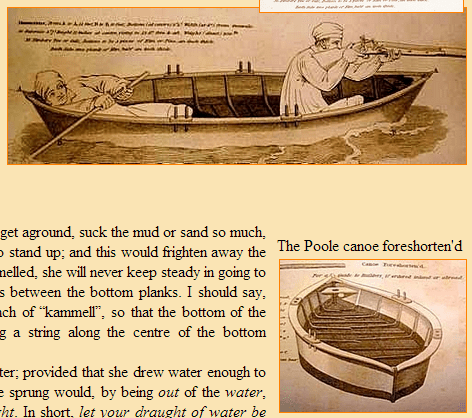
It turns out that Poole Harbour’s famous Pool canoes were not always flat-bottomed skiffs developed for use with a small outboard motor – in their earlier versions they were double ended rowing boats used for wildfowling.

There’s some interesting history about punt gunning here, including some stuff about the dangers of dealing with all that recoil when your boat is light and tiny, and the gunner is likely on their own, and some slightly disturbing stuff about ‘droppers’ and ‘cripples’ and ‘your man’ collecting the spoils.

PS – Retronaut has some good gun punt images here

PPS – And there’s a striking illustration of the power of these guns here. And no, it’s still not something I’d want to do.

Storms, and Captain Washington’s report following the 1848 storms

Washington_Boat_Map

Talking of storms as most folks probably were last night, I happened to mention Captain Washington RN and his report to Parliament following the Moray Firth fishing disaster of 1848, in which 124 boats were lost, many while trying to enter harbour, and 100 fishermen lost their lives.

Captain Washington’s enquiry proposed improvements to both harbours and boats, which had largely been undecked up to that time. There was a certain amount of resistance to the idea of decking boats partly because the craft would not be able to carry as much fish, and partly, it was argued, because fishermen feared being washed off the decks.

However, what followed was that increasingly fishing boats tended to be decked, and larger so that large catches could still be carried – a trend that led to the development of the baldie and some say to the powerful Zulu. (Also see Kate in Suffolk.) There’s an entry on the Wikipedia that’s worth reading: Moray Firth fishing disaster.

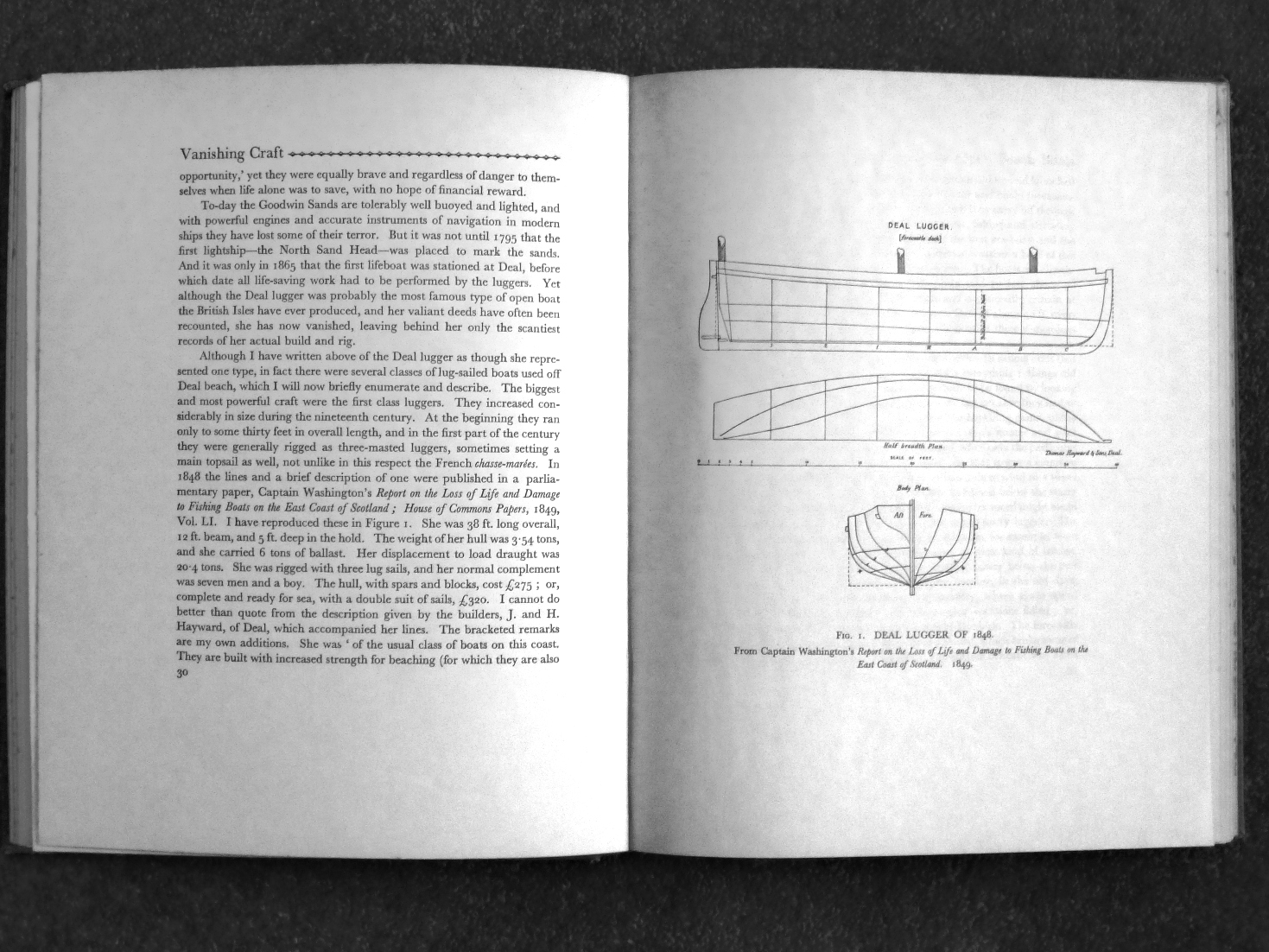
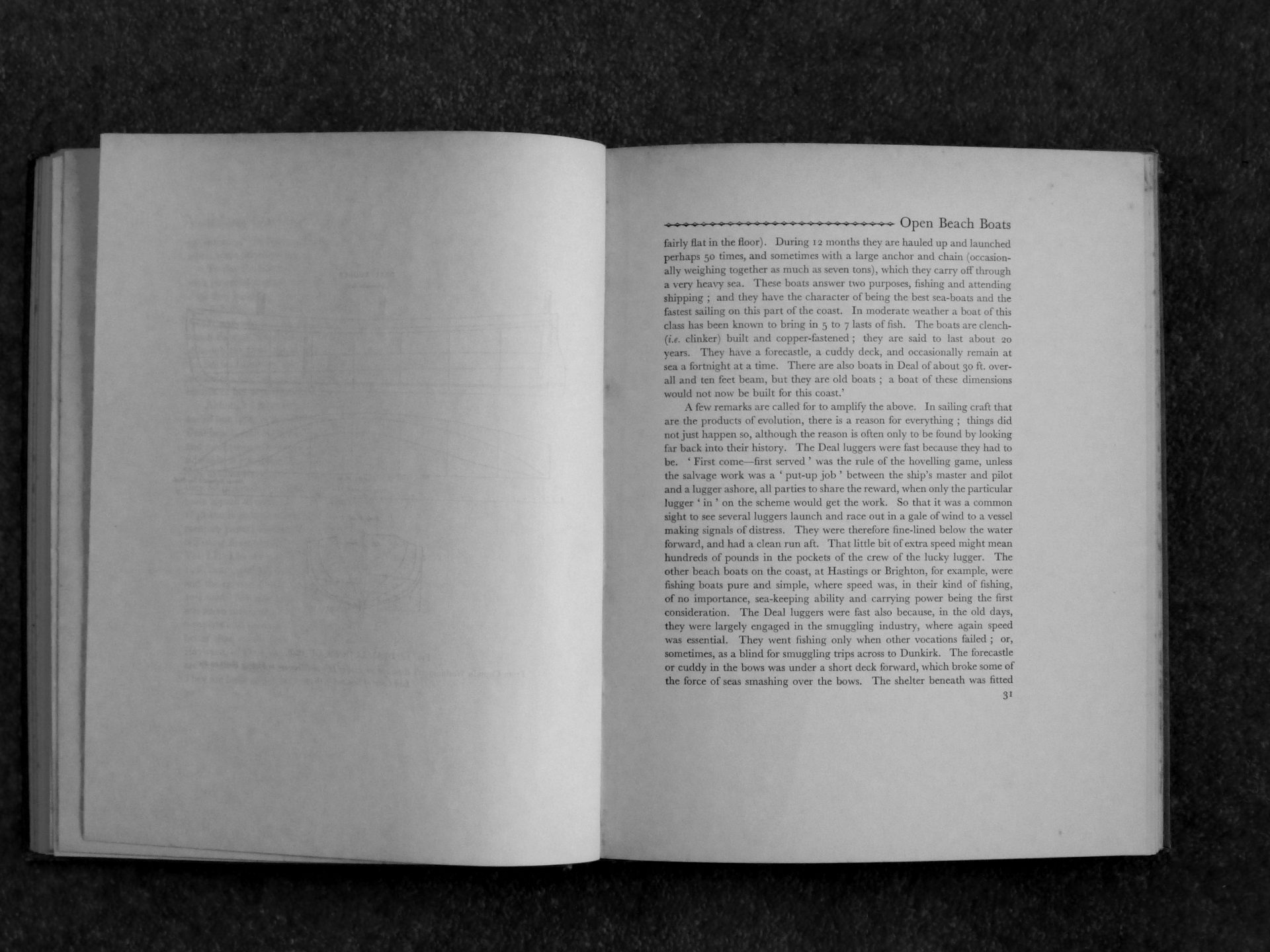
Captain Washington’s report is also important in another way – because he (and presumably his team) also surveyed boat types from around our coasts, including the Deal luggers (see below) and fishing boats at Hastings, and in the process recorded some boat types that would have known rather less about today. It’s a shame, however, that I can’t find a copy of Captain Washington’s report online. If anyone knows where there is one, please let me know in the link below, and I’ll link to it.

Captain Washington Deal lugger Captain Washington Deal lugger 2