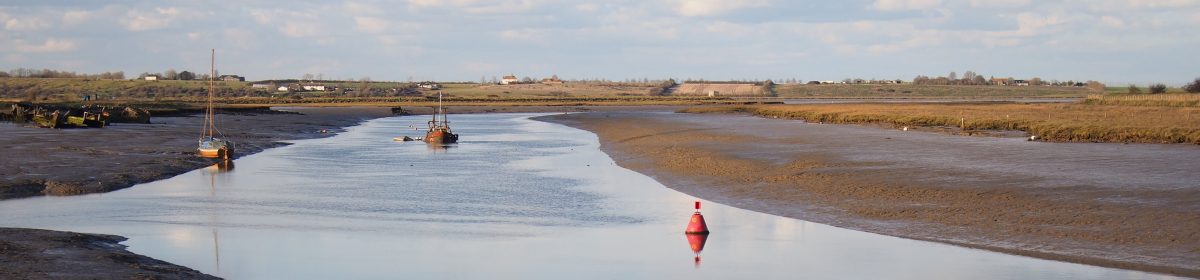
The Ancient Mariner at Watchet

[ad name=”intheboatshed-post”]

Rime of the Ancient Mariner monument at Watchet

The Ancient Mariner statue at Watchet harbour, photographed last weekend

The little harbour town of Watchet is hugely proud of its connection with the poet Samuel Taylor Coleridge, who, so Wordsworth said, wrote his epic poem The Rime of the Ancient Mariner following a walk through the Quantock Hills with his sister and Wordsworth in the spring of 1798. There’s some argument on the issue, however, for some say he was inspired to write the poem after visiting Watchet, and others that the Ancient Mariner set sail from Watchet’s harbour.

Which ever way it happened, the Rime of the Ancient Mariner is linked with the town, and in 2003 the town erected a sculpture Ancient Mariner with the famous albatross hung round his neck by the harbour wall.

Written in a powerful, arresting style, the poem begins in this way:

It is an ancient Mariner,
And he stoppeth one of three
`By thy long beard and glittering eye,
Now wherefore stopp’st thou me?

The Bridegroom’s doors are opened wide,
And I am next of kin ;
The guests are met, the feast is set :
May’st hear the merry din.’

He holds him with his skinny hand,
`There was a ship,’ quoth he.
`Hold off ! unhand me, grey-beard loon!’
Eftsoons his hand dropt he.

However, the quotation that seems to have found favour with the locals calls to mind the sense of a ship or boat sailing at her best speed. The couplet appears in various places around the town, and it’s one that would resonate with any sailor.

The fair breeze blew, the white foam flew,
The furrow followed free;

The next few lines, however, are unexpected and sinister:

We were the first that ever burst
Into that silent sea.

The ship hath been suddenly becalmed.

Down dropt the breeze, the sails dropt down,
‘Twas sad as sad could be;
And we did speak only to break
The silence of the sea !

All in a hot and copper sky,
The bloody Sun, at noon,
Right up above the mast did stand,
No bigger than the Moon.

Day after day, day after day,
We stuck, nor breath nor motion;
As idle as a painted ship
Upon a painted ocean.

And the Albatross begins to be avenged.

It seems Coleridge knew something about the intense, uncertain feeling of being becalmed at sea. I find it can be a little like looking into the night sky – I can feel suddenly very aware of how powerless and small we are.

But enough of my talk. Please read the poem and use the comment link below to tell use what you find in it.

The Rime of the Ancient Mariner

104 year-old Norfolk Broads racer Maidie gets a carbon mast

[ad name=”intheboatshed-post”]

Norfolk Broads racer Maidie gets a new carbon fibre mast

Maidie in action with her new mast

104 year-old Broads cruiser Maidie gets a new mast

Friends walk Maidie’s new mast across the marshes

Classic Norfolk Broads racing boat Maidie has been fitted with a new carbon fibre mast by her owner, Mike Barnes, managing director of the Norfolk Broads Yachting Company.

One of the unforgettable moments of a Broads hire boat holiday is when one of the area’s real racers flies past, and I don’t think any do it with more panache than the 104 year-old spoon-bowed beauty Maidie, which belongs to Mike Barnes, managing director of the Norfolk Broads Yachting Company.

Maidie lost her existing aluminium mast and rigging when she was hit by another vessel recently, and Barnes took the opportunity to replace it with a carbon fibre mast after a chance meeting with Mike Harris of Polar Composites, which is based at nearby Wymondham.

The raw material was shipped from Australia to Barnes’ workshop in Reedham where he constructed the mast himself. Polar Composites was brought in to make the joints for the spreaders and crane, as they needed to be strong enough to withstand the forces of the rigging.

From Polar Composites’ press release it seems, Barnes had no qualms about replacing Maidie’s aluminium rig with the even more modern material:

Maidie was built purely for racing, using the latest techniques and materials available 100 years ago. The original mast was made of wooden veneer rolled around a mandrel, very like the way a carbon fibre mast is made now. It was a new breakthrough at the time, valued for its strength and lightweight property, and was used on the Americas Cup boats of the day.

‘I think it is fitting to choose carbon fibre for the new mast today, as it will give Maidie the cutting edge material she deserves and I’m confident that, had her Edwardian builders had the material available back then, they would have been using it!’ he said.

It took 15 friends to manhandle the mast over the marsh at Reedham, carry it by hand to the water’s edge and manually lift it into place just in time for bank holiday weekend. Maidie’s first outing was at her home club on Wroxham Broad the next day and Mike was delighted with her performance.

‘It has been everything I hoped it would be. The black, shining mast looks fantastic fully rigged and Maidie is sailing well so we look forward to an exciting season,’ he said.

I’m planning to take my kids up to the Broads in a few days, and doubtless the boat we’ve hired will be safe and steady – so as usual I’m looking forward to seeing Maidie and her sisters fly by under their huge rigs adapted for inland sailing. You can be sure I’ll be taking my camera and will try to catch what I can!

For more intheboatshed.net posts about the Norfolk Broads, click here.

An oar in the Australian bush carpentry style

[ad name=”intheboatshed-post”]

Australian bush carpentry oar

Australian bush carpentry oar Australian bush carpentry oar Australian bush carpentry oar

An oar, and a fine example of Australian bush carpentry, says Jeff Cole

Jeff Cole sails an Iain Oughtred MacGregor canoe and occasionally sends us photos from his wonderful and growing collection of yachting photos from the 19th and early 20th centuries. What’s less obvious is that he also has an interesting line in collecting items of old Australian bush carpentry.

Here’s what he says about the oar in the photo above:

‘This is a vernacular creation, bush carpentry at its most basic, an oar that seems old but it’s hard to tell – but very collectible.

‘I found it on the woodheap at a Mallee (sandy desert without water) clearing sale. The closest water is an irrigation channel, next to the Murray river. It’s six feet long, and made of wood, with iron spikes, some cotton sash cord, a little rubberised canvas, nails and red paint.

‘The roughly shaped triangular “blades” of the oar fixed by iron rod roughly peened over and in some cases using triangular galvanised “roves”. It’s absolutely out of balance, but a prize for my collection nevertheless!

‘Jeff’

Thanks Jeff – now that’ll give all those home boatbuilders something to think about!

For more of Jeff’s contributions, click here.