A junk and some Ozzie sunsets from Jeff Cole

[ad name=”intheboatshed-post”]

Jeff Cole's junk painting

Jeff Cole’s been busy moving house, and turned up this splendid painting of a junk. Here’s what he said about it:

‘Hi Gavin, my house move(s) are going along, a very exhausting process mate! Here’s a pic that might interest the viewers of your site.

‘My maternal great grandfather was an officer in the British Merchant Marine and had learnt Japanese which he taught to my grandmother. In the early 1920s she taught english to Japanese naval officers training at Portsmouth and some embassy officials. One of those men, Takeo Fukuda, became Foreign Minister and Prime Minister in post war Japan. One day in the 1950s he turned up at my grandparents house in the Australian bush (they had migrated in 1928) with gifts including needlework from his mother and this painting of a junk. The artist’s signature symbol is under the mask. It’s one of the family heirlooms now.’

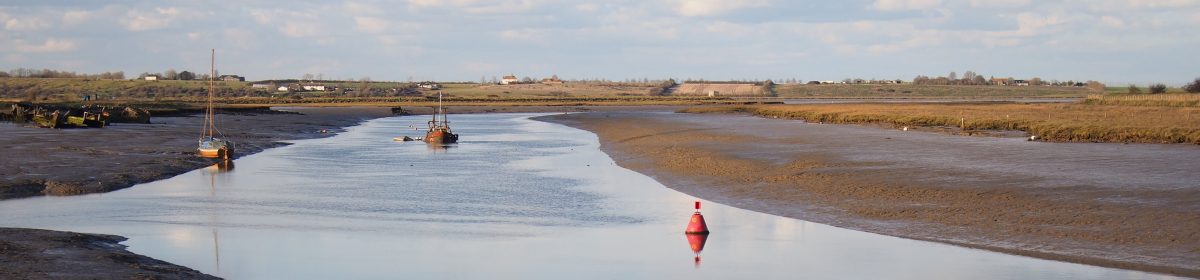
Inspired by some of my shots of the Swale recently, Jeff also sent over some photos of some local sunsets in his part of Australia.

Jeff Cole\'s sunset 1 Jeff Cole\'s sunset 1

Pete Goss launches his new lugger

[ad name=”intheboatshed-post”]
Pete Goss's new boat Spirit of Mystery

Pete Goss’s new boat, Spirit of Mystery. All photos by
Mark Lloyd of Lloyd Images

Solo ocean racer Pete Goss’s latest project is to build a lugger to follow in the wake of the Mystery, which sailed from Cornwall to Australia to join the goldrush in 1854.

The Mystery was an open Mounts Bay lugger built in Newlyn. Times were hard and the seven Cornishmen, all related by either blood or marriage and shareholders in the boat, made the decision to try their luck in the goldrush over a pint in Newlyn’s Star Inn. It was suggested that the Mystery be sold to cover the passage, but being in good spirits after a couple of drinks Captain Richard Nicholls made an announcement. ‘I’ll take you in the Mystery,’ he said – and so the story began.

The Mystery measured 37ft in length with a beam of 11 feet 6 inches, and weighed 16 tons. Skipper and crew beached the boat to sheath her hull with zinc, decked her fore and aft, and set off.

The new Spirit of Mystery was launched a few days ago at Millbrook, near Torpoint in south east Cornwall, and was built by local craftsmen under designer and shipwright Chris Rees.

Goss’s intention is to research the original voyage, draw attention to the achievements of the original Mystery’s crew of seven Cornishmen, and to provide a vehicle to support the educational charity Cornwall Playing for Success.

But Pete also makes it clear that he has always wanted to build a wooden boat. And what a boat he has built! I’m sure we all hope the voyage is successful – but also that she comes back to the UK and finds a useful long-term purpose, as it would be nice to see her sailing around our shores.

Pete Goss's Spirit of Mystery, photo by Mark Lloyd Pete Goss's Spirit of Mystery, photo by Mark Lloyd

Pete Goss's Spirit of Mystery, photo by Mark Lloyd Pete Goss's Spirit of Mystery, photo by Mark Lloyd Pete Goss\'s Spirit of Mystery, photo by Mark Lloyd

Alfred Wallis, artist and chandler of St Ives

[ad name=”intheboatshed-post”]

Examples of Alfred Wallis’s work. Click on each one
for a larger image

Like most other areas of human activity, the art establishment tends to favour its own – so no matter how bohemian they may be, most artists are cultured and educated, and quite often rather posh. But every now and again the art establishment finds an artist whose work it finds so interesting and charming that the usual rules no longer apply. Beryl Cook was one of these – and Alfred Wallis was another.

Wallis seems to have had many roles – he was first a basket-maker, then a hand on merchant seaman, then a deep-sea fisherman, and then ran a business as marine stores dealer in St Ives, buying scrap iron, sails, rope and other items until his business closed in 1912. He then went to work for a local antiques dealer, an experience that may provided some understanding of the world of objets d’art.

He seems to have begun painting in earnest after his wife died. Short of money as he was, he painted on whatever objects came to hand and his subjects were often seascapes painted from memories going back to the era before the steamships took over from sail.

Life changed for him in 1928 when a group of artists led by Christopher Wood and Ben Nicholson set up the well known artists’ colony in the little town, for their arrival led to Wallis’s discovery by the art world.

Recognition doesn’t seem to have brought riches, for he eventually died in the workhouse in Penzance, but  Wallises are now highly collectible, and the artist behind them has become a legend. I gather that examples of his work have even been minaturised and made into fridge magnets…

Read all about Alfred Wallis and see the galleries of his work at http://www.alfredwallis.org.uk.

Wallis meets Ben Nicholson in 1928,
photographed by Christopher Wood