Yorkshire boy Leo Walmsley runs away to see Liverpool docks

[ad name=”intheboatshed-post”]
ScanImage07

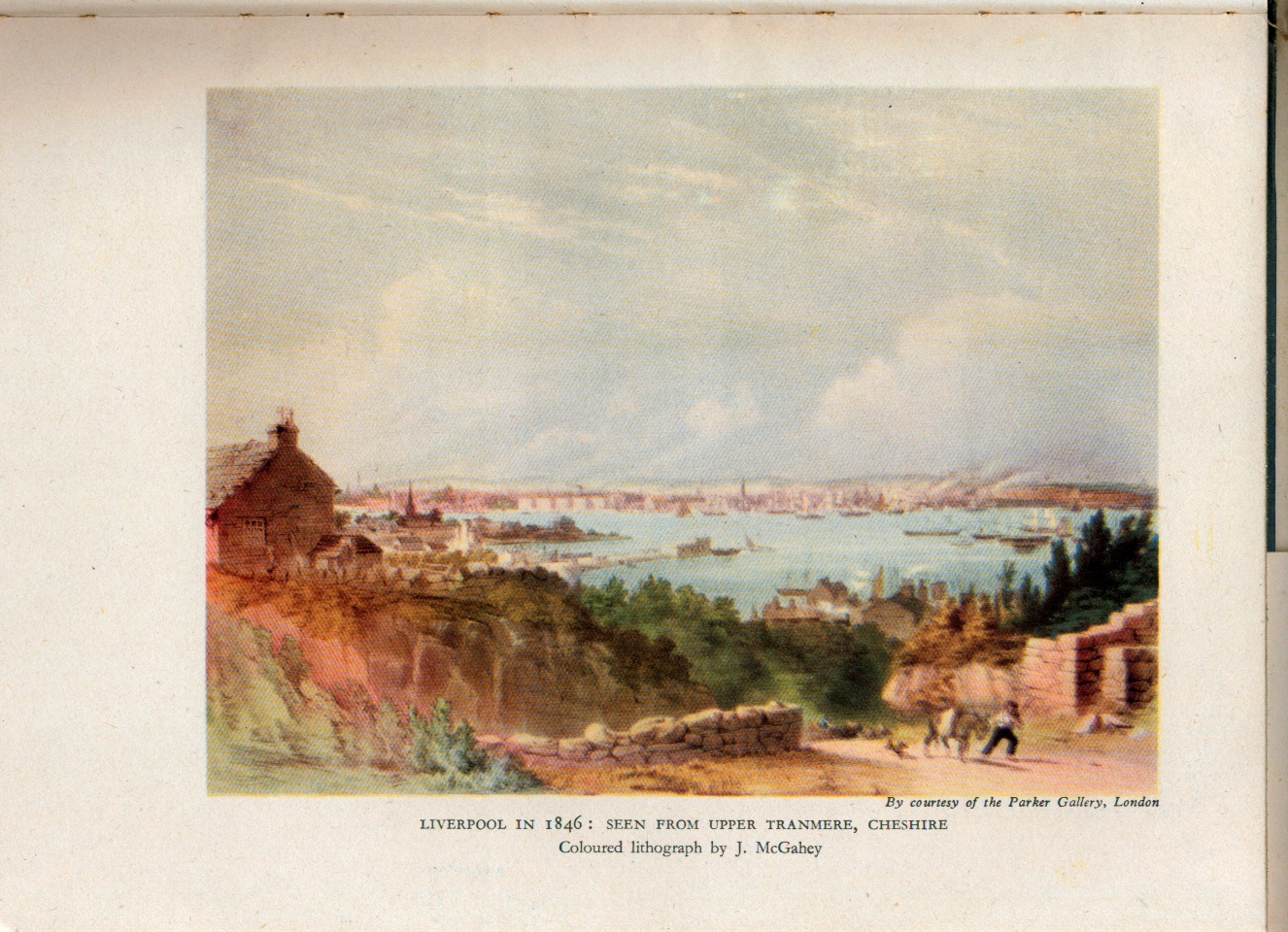
Liverpool in the mid-19th century

I’ve just been reading Leo Walmsley’s entertaining account of how as a child he ran away from his aunt and uncle for a day in order to explore Liverpool Docks.

The story is told in the first chapter of a short book called British Ports and Harbours in the Britain in Pictures series – but don’t be misled, for as usual with that series there’s plenty to read as well as some interesting images.

Leo was a spirited young fella who had been sent temporarily away from his home in a Yorkshire fishing village to stay with some particularly strict and dull relatives. The relatives happened to live just a few miles from the exciting city of Liverpool and its docks and it seems there was little likelihood of Leo allowing the opportunity to see the ships, sailors and stevedores at work to slip through his fingers.

So the youngster ran away for a few hours and had the time of his life: he saw all the exciting and exotic sights, sounds and even smells he was looking for, and to cap it all, met a ship’s captain who invited him for tea before escorting him back to his guardians.

His eyes must have been like saucers.

‘It was the start of a day of mounting excitements and unbelievable joy… I wanted to see the docks and ships, and see them I did, or as much of them as I could in the course of that swiftly passing day. I could tell where the docks were by the smell of them, without the sight of masts and funnels rising above the roofs of warehouses; a smell compounded of oil and smoke and tar and spices, a smell that lingers on a ship even when she is miles from land, and is accentuated rather than overcome by the briney vapours of the open sea. There were steamers, huge ones, so close to the dock wall that you could actually touch them. Some had English names. Others were foreign and they were flying foreign flags which I had never seen before… And the things that were coming out, or going into those ships! Great packages with foreign printing on them, casks, rolls of paper, timber, iron rails, bales of cotton and bundles of hides, machinery and even live cattle. Hundreds of men as well as the sailors themselves were helping in this work. Most of them were very big… ‘

Six decades later, the sights and smells of docks in London and elsewhere had a similar effect on me, though I doubt a container dock has the same magic.

But back to the early years of the last century, the moment that Walmsley is writing about. Of the captain, he says this:

‘He took me all over his ship, down into the holds and the engine room, explaining everything, but also asking me plenty of questions… he showed me a lot of curious that he had brought from foreign parts, including a wonderful model native canoe, which he said I could have. I was so excited I scarcely noticed a man in a white coat, who came into the cabin and laid the table, until he said “Tea is served, sir!”.’

I hadn’t heard about Leo Walmsley until I started reading British Ports and Harbours but it seems he’s quite well known and even has a society devoted to him.

A Southern Broads photo album

[ad name=”intheboatshed-post”]

Rockland Broad 470

Dusk at Rockland Broad. Click on this photo and the thumbnails below for much larger images

We’re just back from our honeymoon – a few days on the Southern Broads, an area of water neither of us had visited before. Even though we saw few sailing craft it’s clearly a great sailing area of largely empty rivers, often with nothing but reeds to interfere with the wind. Not that we were sailing this time, you understand – with my broken ankle, a motor cruiser from Oulton Broad turned out to be an ideal way to take a holiday.

Here are some of our snaps for your entertainment.

For more posts relating to The Broads, click here.

Yare scene Yare cows Surlingham Broad 2

Two scenes from the river Yare; the dyke leading to Surlingham Broad

Yare high water Waveney houseboat Yare mist

The Yare at high tide; a houseboat on the river Waveney; early morning on the Waveney

Rockland Broad 2 Yare windmill 2 Approaching Reedham on the Haddiscoe New Cut

Rockland Broad; windmill on the Yare; approaching Reedham on the Haddiscoe New Cut

Yare sailing Yare wherry

Sailing on the Yare; wherrry on the Yare

Don’t miss something good – subscribe to the free weekly intheboatshed email newsletter today!


Geoffrey Robertshaw’s stunning photos from the last days of sailing ships

[ad name=”intheboatshed-post”]

GeoffreyRobertshaw 320

Geoffrey Robertshaw 5 Geoffrey Robertshaw Geoffrey Robertshaw 4

Geoffrey Robertshaw 2 Geoffrey Robertshaw 3

Geoffrey Robertshaw’s photos of ships’ crews in the the final days of cargo-carrying sailing ships. Click on any of the images for much larger photos

Over 70 years ago Geoffrey Robertshaw kept a personal log and took many remarkable photos of life on-board cargo-carrying sailing ships travelling between Australia and Falmouth.

The photographs were taken on a Kodak No. 2 Box Brownie camera but their quality is remarkable; they were issued by the National Maritime Museum Cornwall to promote a lunchtime talk given by Elvin Carter a little earlier this month at the NMMC in connection with the Farewell to Sails exhibition. However, life caught up with me a little and I apologise for failing to post them in time to publicise the event. Hopefully we’ll still be able to draw attention to the exhibition itself!

Some of Robertshaw’s diary entries are as striking as the photos. One reads:

‘Day 127, Friday June 29th 1934. At 4am this morning we are dead opposite the Lizard Point. I can plainly pick out the villages of Cadgwith, and Coverack and the dangerous Manacle rocks.

‘It may have been hell at times, we have been short of food, fresh water and cigarettes, we have had fights, we have been wet through and hungry and thoroughly worn out with continuous work. But it has been worth it.

‘I love the sea and what is more I love the old sailing ships and without doubt Cape Horn will call me back again, and I shall not refuse.’

Don’t miss something good. Subscribe to intheboatshed.net’s free weekly email newsletter now!