The Semaine du Golfe at Morbihan 2011

[ad name=”intheboatshed-post”]
gulf, morbihan, golfe, morbihan, semaine, boat, festival, maritime gulf, morbihan, golfe, morbihan, semaine, boat, festival, maritime gulf, morbihan, golfe, morbihan, semaine, boat, festival, maritime

gulf, morbihan, golfe, morbihan, semaine, boat, festival, maritime

Semaine du Golfe press photos – the top photo was taken by Quivillac, the following three by Lamour, and the final shot by Boisdron

Another day, another excuse to put up some atmospheric photos! These shots are from the Semaine du Golfe, which takes place every other year in the wonderful Gulf of Morbihan, on the coast of France. Next year it runs from the 30th of May to the 5th of June.

There’s the usual busy programme of sailing, racing and partying, and this year the attendees include a special flotilla from Wales and a delegation from the southern Basque Country.

For more information, see the impressive press pack.

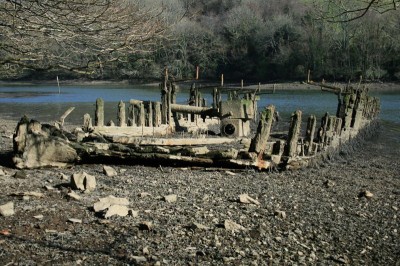
The wreck of the George Murray – was she a Thames barge?

[ad name=”intheboatshed-post”]

lynher, thames barge, scoter, jan carpenter, cornwall, wreck

lynher, thames barge, scoter, jan carpenter, cornwall, wreck

Jan Carpenter has written in to ask for information about this local wreck. Does anyone have any answers for him please?

‘Hi all, looking for any info about what’s said to be a Thames barge named the George Murray, which is now a wreck lying in Forder Lake just off the River Lynher in Cornwall. However, I’m thinking that it may not be a Thames barge.

‘There have been several hypothesis for this wreck and several different names have suggested, but the locals seem to remember her as the George Murray. However I suspect she wasn’t a Thames barge because I cannot find any trace of a barge called George Murray anywhere! I was hoping your website may jog a few memories or direct me to somewhere I can find lists of vessels I have not yet come across…’

‘Kind regards, Jan

‘PS I have had three 40ft larch logs delivered for the planking of Scoter and a fine selection of oak knees!’

I should explain that Jan is the new owner of the important Maurice Griffiths-designed Scoter, and that his postscript is great news for anyone interested in seeing her afloat once again.

As for the George Murray – from the look of her she certainly could be a Thames barge, and given the thousands that used to work in the Thames, I’d guess there could easily have been some about which there’s little documentary evidence left today. Would the PLA’s archives include some information, I wonder?

For more on Scoter, click here and scroll down!

Port of London Authority archives to be catalogued and made available

[ad name=”intheboatshed-post”]

port of london, london, archive, pla, museum of london, london, museum, photographs, police, lifejacket, dock, diver, crane, warehouse, docker


port of london, london, archive, pla, museum of london, london, museum, photographs, police, lifejacket, dock, diver, crane, warehouse, docker port of london, london, archive, pla, museum of london, london, museum, photographs, police, lifejacket, dock, diver, crane, warehouse, docker

Access to the Port of London Authority archive – said to be one of the most significant in London – is set to be unlocked in a three-year cataloguing programme.

The archive covering 250 years of London’s water-borne history is to be catalogued by Museum of London Docklands staff. The work is expected to take at least three years and will give historians, river lovers and members of the public easy access to the archive.

The PLA was created through an Act of Parliament overseen by Lloyd George and Winston Churchill to bring order to the chaos of the busy and congested port of the early 1900s. It came into existence on 31 March 1909.

The archive includes 30 boxes of documents relating to the 19th century dock companies; 120 boxes of documents relating to the early years of the PLA; 140 boxes of documents relating to post-war PLA activities; 50 boxes of post-war PLA personnel documents; architectural drawings relating to all aspects of the docks; and a range of PLA river charts. It adds up to a lot of material.l

An entertaining historical presentation telling the story of the PLA is already available can be found on the organisation’s website at www.pla.co.uk.