Remembering the WWII seamen who braved Hellfire Corner bringing coal to the south

[ad name=”intheboatshed-post”]

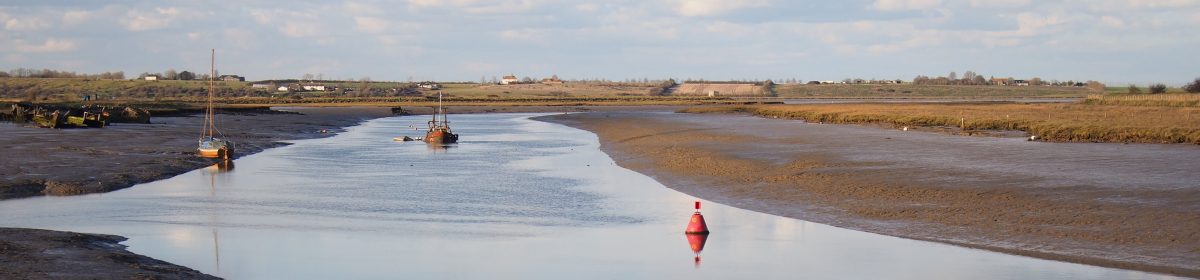
Pill box at Rye Harbour, where seamen risked their lives
and the British feared invasion

Boating enthusiasts in the South East of England are constantly reminded about the battles that have taken place or have been expected in this corner of the country. The wartime relics are so many that almost the only time we can’t see them is when they’re obscured by foul weather.

But last night, the evening before Remembrance Sunday, I was pleased to see a repeat of the BBC Coast series programme covering the Channel Islands and Dover.

It was well worth watching as usual, but this particular transmission included an interesting segment about the brave Navy and merchant seaman of the convoys carrying essential supplies such as coal through the Dover Straits during World War II.

As every British schoolchild knows, the sea separating Britain from Continental Europe is just 21 miles wide, and so the convoys could be hit by land-based guns based in occupied France, and were very vulnerable to attack by both fast German E-boats and aircraft while passing along the coasts of Kent and Sussex.

See the programme here on the BBCi player – though I gather readers in the USA aren’t able to see this material.

There’s also an interesting summary of the big guns used by both sides at the Wikipedia.

The proper proportion of salt in his veins that a British boy ought to have

[ad name=”intheboatshed-post”]

The sort of dinghy we’re told a boy should have. Now
that part seems fair enough!

Have you got the proper proportion of salt in your veins?

These days they say too much salt in your veins causes osmotic pressure leading to raised blood pressure, which leads ultimately to end-organ damage. But it wasn’t always like this, and certainly not when they were busy bringing up the breed that led men into the dreadful battles of World War 1.

I’ve been reading The Complete Yachtsman by B Heckstall-Smith and E Du Boulay, first published in 1912. Much of what it has to say is sensible and reasonable. For example, there’s a great section on the draftsmanship involved in yacht designing. All in all, I’m pleased I invested in a copy.

Nevertheless, there are some bits that bear all the hallmarks of 1912. Take this priceless paragraph on teaching a boy to row, for example:

‘If a boy is of the right sort, with the proper proportion of salt in his veins that a British boy ought to have, he will soon get to love his little craft and a steady development in his character and improvement in his health will be visible to all who know and watch him; for there is no sport in the world that brings out all that is best in a man like that of learning to use the sea for his playground; judgement, courage, and especially self-reliance, are learned there as they can be nowhere else. In all other branches of sport, when a lad or a man feels he has had enough of it he can generally retire. Not so at sea; if he should be caught out in a squall he must fight his way back himself, using his brain to set one force of nature against another to his advantage, and not until the fight is over, and the boat is safe in some shelteredwater, can he rest or retire. This is why the sea so often makes men of boys, and heroes of men.’

Can’t you just smell the tanned leather, liniment and pipe-smoke in that voice? Pass the port Heckstall-Smith, and damn and blast the foreigners.

Copies of The Complete Yachtsman may be obtainable via ABE Books – I’ve been told there are lots around in second-hand bookshops, but the one I have is the first I can recall having seen.

Don’t miss something good – subscribe to intheboatshed.net

Byron on a Falmouth packet

[ad name=”intheboatshed-post”]

Byron, from the Wikimedia Commons

He may have been an extraordinary character and famously ‘mad, bad and dangerous to know’ but the Romantic poet and Greek war hero Byron seems to have rather enjoyed the sea and boating, and even had a favourite dog called Boatswain.

An epitaph for the dog has become a favourite poem and can be found at the Wikipedia entry for Byron above.

Clearly Byron was a pretty wild character, but I’d guess that these two themes – the sea and dogs – are things many of us more modest folk can identify with without too much difficulty.

While wandering around the National Maritime Museum Cornwall an exhibit drew my attention to a jolly if rather nauseous poem of Byron’s that I hadn’t heard before, and I thought I should include it here. It comes from Ambleside Online, and I hope none of you suffer a bout of sympathetic emesis…

Lines to Mr. Hodgson Written On Board the Lisbon Packet

Huzza! Hodgson, we are going,
Our embargo’s off at last;
Favourable breezes blowing
Bend the canvass o’er the mast.
From aloft the signal’s streaming,
Hark! the farewell gun is fir’d;
Women screeching, tars blaspheming,
Tell us that our time’s expir’d.
Here’s a rascal
Come to task all,
Prying from the custom-house;
Trunks unpacking
Cases cracking,
Not a corner for a mouse
‘Scapes unsearch’d amid the racket,
Ere we sail on board the Packet.

Now our boatmen quit their mooring,
And all hands must ply the oar;
Baggage from the quay is lowering,
We’re impatient–push from shore.
“Have a care! that case holds liquor–
Stop the boat–I’m sick–oh Lord!”
“Sick, ma’am, damme, you’ll be sicker,
Ere you’ve been an hour on board.”
Thus are screaming
Men and women,
Gemmen, ladies, servants, Jacks;
Here entangling,
All are wrangling,
Stuck together close as wax.–
Such the genial noise and racket,
Ere we reach the Lisbon Packet.

Now we’ve reach’d her, lo! the captain,
Gallant Kidd, commands the crew;
Passengers their berths are clapt in,
Some to grumble, some to spew.
“Hey day! call you that a cabin?
Why ‘t is hardly three feet square;
Not enough to stow Queen Mab in–
Who the deuce can harbour there?”
“Here’s a stanza
On Braganza–
Help!”–“A couplet?”–“No, a cup
Of warm water–“
“What’s the matter?”
“Zounds! my liver’s coming up;
I shall not survive the racket
Of this brutal Lisbon Packet.”

Now at length we’re off for Turkey,
Lord knows when we shall come back!
Breezes foul and tempests murky
May unship us in a crack.
But, since life at most a jest is,
As philosophers allow,
Still to laugh by far the best is,
Then laugh on–as I do now.
Laugh at all things,
Great and small things,
Sick or well, at sea or shore;
While we’re quaffing,
Let’s have laughing–
Who the devil cares for more?–
Some good wine! and who would lack it,
Ev’n on board the Lisbon Packet?