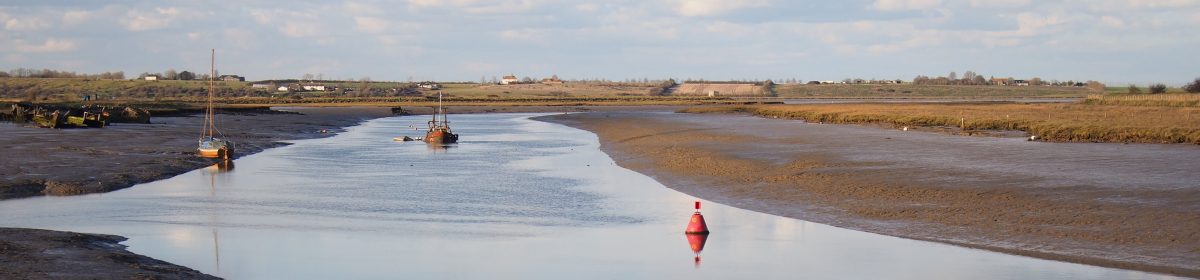
Blakeney folks build the UK’s southern-most St Ayles skiff

IMG_8150 IMG_7702

Photos by Ian Duffill

A rowing club set up under the aegis of Blakeney Sailing Club is well on the way to completing the UK’s most southerly St Ayles rowing skiff for racing under oars. Read about the smart-looking build here.

The Scottish Coastal Rowing movement imagined and then realised by kit manufacturer and boat builder Alec Jordan and Iain Oughtred, who designed the seaworthy four-oared plus cox, fixed-seat boat St Ayles skiff, continues to amaze with its success. For one thing, it has been remarkably popular – the number of kits sold for these good-sized community-built racing skiffs this month topped 100.

We’ve seen these boats built in other countries – there are now St Ayles skiff kit suppliers in the Netherlands, the Antipodes, and North America – but there’s something a bit special and unexpected about the movement extending itself to Norfolk.

The story of how it happened begins in 2012, when Dr Victoria Holliday, an avid and competitive sculler persuaded Blakeney Sailing Club to run an early morning race for a collection of sculling boats kept in the club’s boat park. It was evidently a success – more races were held, and, encouraged by the club led by Commodore Joe Carr,  CraBlakeney (Coastal Rowing Association Blakeney) has been formed under the sailing club’s umbrella.

The question of what the local coastal rowing history and traditions of  North Norfolk, but few answers were forthcoming, and the idea of building a St Ayles skiff and taking part in the Scottish Coastal Rowing movement came to the fore.

Dinghy sailor and would-be rower Ian Duffill joined forces with Victoria Holliday to sponsor a kit from Alec Jordan, and this has taken shape over the past five months in Ian’s workshop, where an enthusiastic group of 20 or so volunteers, mainly drawn from the sailing club are aiming to launch the boat on the 25th May, to exhibit her at the Beale Park Boat Show near Reading in June, and to take part in the Skiff World Championships at Ullapool in July.

The skiff has been named Hoi Larntan, a Norfolk dialect phrase used by seafarers to indicate a boat or skipper of superior quality. It’s also an example of the local taste for punning names – it also means ‘high lantern’ or ‘high learned one’.

After the skiffies’ world championship at Ullapool she will back at at Blakeney to be used for exercise and recreation.

IanR_2013-03-12_11-30-42b IanR_2013-03-12_11-32-08b

Photos by Ian Ruston

Boat Building Academy students build an Iain Oughtred Humble Bee dinghy

Humble Bee clinker built dinghy photo by Emma Brice 1


Humble Bee clinker built dinghy photo by Emma Brice 2 Humble Bee clinker built dinghy photo by Rebecca Joseph

Photos by Emma Brice and Rebecca Joseph

Boat Building Academy students Kyle Paternoster and Rob Hounslow made a traditionally-built clinker pram dinghy to plans by Iain Oughtred and sailed it for the first time on their course’s student launch day.

The 7ft 9in dinghy made to Oughtred’s Humble Bee design is planked in sweet chestnut with a Dorset-grown oak centreline and fore and aft transoms, and green oak ribs.

Her name, Rubee, is a play on words based on Kyle’s grandmother’s name, Ruby, and Humble Bee. The red sails were made by students on a weekend sail-making workshop at the academy run by Jeremy White, managing director of Elvstrom Sails.

Kyle started work as an engineer on one of the biggest yachts in the world the week after leaving the Academy – the role is based on three-month rotations, and will allow Kyle to work as a boat builder in the months he is at home, building and selling his own boats.

He’s a qualified dinghy instructor and in his spare time plans to teach members of his family to sail in Rubee.

Rob, who worked with Kyle on the build, grew up around water on his father’s fish farm on the River Kennet. Rob had done almost every job there is around a fish farm, including making jetties and bridges and working with green oak, but he wanted to master a craft and so decided to join the Academy to learn boat building.

Rob will be using his newly acquired skills at Cockwells Modern and Classic Building at Falmouth, where he will be working alongside fellow BBA graduate Jack Livesey, who graduated in June 2012.

The BBA website has a photographic diary of Rubee’s construction.


Boat Building Academy students launch an adapted Iain Oughtred Fulmar

Oughtred Fulmar Florence in the water - Photo by Emma Brice


Oughtred Fulmar Florence launching - Photo by Rebecca Joseph Oughtred Fulmar Florence is off- Photo by Andy Blundy Oughtred Fulmar Florence getting ready to launch - Photo by Rebecca Joseph

As the champagne flowed at the 30th Boat Building Academy celebrated 38-week ‘long course’ student launch, this 16ft 8in Iain Oughtred-designed Fulmar was the first boat to hit the water.

Here’s what the academy’s Emma Brice has to say:

The owner of the boat is student Scott Russell, who was helped closely by Jade Randell. Students on the long course build a range of boats, which are then owned by students who pay for the materials at cost.

The Fulmar was named Florence after Jade’s new-born daughter, who was expected on launch day but arrived a week early.

The floating Florence is plan 43 in the Iain Oughtred catalogue, hence the sail number. Built from glued clinker ply construction with a sapele fit-out, the boat has been modified slightly with a small tumblehome to the after sections of the boat, and a deck. Scott and Jade also made a carbon-fibre centreboard and rudder.

Scott chose the Fulmar for its elegant lines and wanted a boat he could take his family (wife, three children and little dog) out on boat trips, picnicking and night-camping expeditions.

The boat will be kept at Portsmouth Harbour, and he hopes sailing it will provide opportunities to meet old and new academy friends.

Elvstrom Sails managing director Jeremy White, who is also the academy’s sailmaking instructor, said he initially thought the usual tan or cream Dacron sails would been the obvious choice for the boat. However, when he saw the light-weight centreboard and rudder he realised the boat would be quite tender, and so recommended black Technora Film sails, which are be a third the weight of Dacron and produce less heeling moment.

Another modern feature is the sail shape. ‘Because Scott will be sailing mainly with his young family, in order to maximise performance, I built the mainsail with a square top,’ said Jeremy.

‘To my knowledge this is the first ever square-topped gunter rig’.

Jeremy was on board Florence during her maiden voyage: ‘We were hit by a huge gust, but the boat behaved impeccably and we bore off onto the plane – she’s a modern classic’.

Scott had served 23 years as a chief artificer in the Royal Navy stationed at Gosport before joining the course at the BBA. He is one of many who have used the forces’ enhanced learning credits (ELC) system to fund part of the course. The aim of the ELC is to help leaving service men to return to civilian life.

Scott’s determination and often infectious craziness promises great things. He is currently looking into designing and building innovative wooden festival sleeping ‘pods’ with fellow course student Will Hide.

Jade joined the academy looking for a new challenge after 20 years working in the construction industry. Jade loves the sea and wanted to learn a skill that would allow him to live and work by the coast, and spend time surfing.

With his new daughter, Jade is taking time to rest before the New Year, and hopes to become a self-employed boat builder, perhaps finding work in traditional boat yards in the southwest to start. He will also help his wife with home interiors work, combining his joinery skills with her leather works business.

There were mixed feelings when we spoke to students days before the launch. For Jade the course had provided a refreshing break from the routine and monotony of daily life and was sad that the student group were not to be working together any longer.

Scott was elated to have built such a complex project but saddened to be leaving what he called ‘the wonderful environment’ of the BBA.