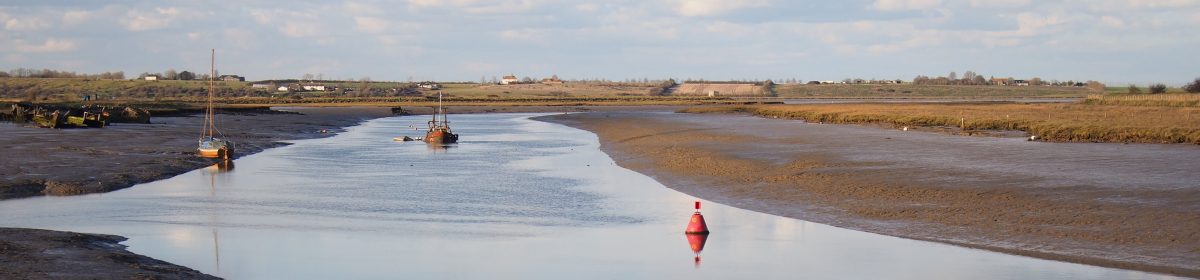
Dylan sails his Duck Punt for the first time – and loves it

Keep Turning Left sailor and film-maker Dylan Winter has launched and successfully sailed his new Duck Punt for the first time.

He’s absolutely delighted with the little sailing canoe, which slips along as nicely as those made by earlier Duck Punters on the Essex coast. And there is the added bonus that he seems to be able to sail and film at the same time without falling in – which I’m pretty sure is what would happen to me if I tried the same trick.

Here on the upper floors of Intheboatshed.net Towers, we’re cheering for several reasons.

It’s always great when someone successfully builds a little boat and enjoys it on the water, and the news seems even better when the builder is in the UK. Round here, amateur boatbuilding projects are nothing like so frequent as they should be, given how much water we have to play with.

I’m pleased, too, that the little Duck Punt shows clearly how effective narrow, flat-bottomed boats can be. The British tend to believe all boats must be round bottomed to be any good, and that therefore building a boat is just too complicated to be worth considering. Dylan’s little punt gives the lie to that myth, just as did all the other duck punts that came before it.

Still more than all this, the project is a tremendous example of cheap and simple sailing.

Here’s Dylan’s page linking to his Duck Punt film; links to John Milgate’s original plans are also available on his website.

PS – Fans of Dylan’s adventures should bag a copy of the latest issue of PBO magazine, which includes an excellent feature-length article by the man himself.

Mud pattens – a tempting idea

Charles Stock and Dylan Winter are famous for being slow-sailing exponents of the Wellington boot – that is, cruising in small shoal draft boats without a tender but with a handy pair of wellies for getting ashore or just looking around. There are well known photos of both their boats with accompanying wellies.

It’s an appealing idea – but I don’t fancy its attendant dangers. Where the ground’s sandy there’s usually little problem, so long as the wellies you’re using are long enough and you’ve got your tides right.

But where there is mud, it can be a very different story. I think this is particularly so if you sail along the coast of North Kent. The Medway and the Swale especially have the gloopiest, glueyest brown stuff I’ve seen, and there are many places where even the finest Wellingtons in the land would not tempt me out of my boat. So depending on the circs I’m inclined to stay aboard, tie up to a quay, or bite the bullet and make sure I take a tender with me.

Could tieing flat pieces of wood to your wellies as demonstrated in this wildfowler’s video be the answer?

It will surely help in some places, but I fear it could be damned dangerous in others: for example, I swear it wouldn’t work at all inĀ Faversham or Conyer Creeks, where the mud is much worse than the relatively friendly stuff shown in the video.

Also, walking on these things might not be as easy as it looks, and will need a lot of concentration. This is likely to be a particular issue after a good lunch or dinner – and isn’t that often part of the point of going ashore? For the lone sailor going back to his boat in the dark, I fear using mud pattens in the wrong situation could lead to a very bad outcome at worst and likely a boat full of mud in the event of even just a minor mishap.

The video includes the following ringing warning:

‘Remember that you’ve got them on. The one thing that you’ve got to avoid doing is stepping one patten on top of the other. That results in an immediate collision of your face with the surface of the mud.’

Ugh!

PS – Here’s some of our local mud. As usual, click on the small image to appreciate the full glory of it.

PPS – For a great mud-related story about canoe yawl and Albert Strange Association enthusiast Dick Wynne, click here.

Dylan Winter gets to work on his Duck Punt

Dylan Winter builds John Milgate's Duck Punt

Click on the image to see Dylan’s video

I do like to see a man working. This is Keep Turning Left small boat sailor and film maker Dylan Winter building one of John Milgate’s Duck Punts

These little boats are derived from small traditional boats originally used for wildfowling, but are now raced and cruised by a bunch of enthusiasts on the East Coast.

The film shows how progress Dylan managed in a single weekend – and didn’t he do well? Very well indeed, I think, given that he had to make a frame first.

I hadn’t realised quite how far and fast enthusiasm for the Duck Punt design had spread when I posted about them more than a week ago. But this week I was tickled to learn that Wooden Boat forumite and regular boat plan tinkerer and computer modellerĀ Flo-Mo has worked out a way of constructing one of these craft from two sheets of ply, and having made a paper model is about to make a birch-ply model prototype.

It’s fascinating to see people on the serious ‘proper’ wood-built boat forum getting interested in little plywood boxes like these; they’ve doubtless been helped along by the great photos and videos of these boats that can be found around the Internet.

Regular intheboatshed.net reader and contributor Brian Pearson is particularly interested in this development, and says the Duck Punt sailors are happy for folks to publish simplicated versions of the standard Duck Punt plans.

However, I’m still considering the question. In my mind there’s no doubt Flo-Mo’s clever cross-wise bottom panel layout will work, but my thinking is that given that ply is stiffer one way than the other and ply joints require materials and take time, I’m inclined to think I’d prefer to construct a bottom with length-ways running outer plies, and only one butt joint.

I also wonder how much the weight of the materials involved in John Milgate’s construction method as shown in Dylan’s video contributes to making these little boats practical sailors – only those experienced with these little craft would know, but I wonder whether a very lightly made all-1/4in ply stitch and glueĀ Duck Punt might not be a little light and tiddly? Weight-wise it could be that the best approach to a frameless stitch and glue build for one of these boats might be to laminate a doubled bottom, or it might be that the whole thing is fine made from 3/8ths inch ply.

And then there’s the little matter of built-in buoyancy. I doubt the Duck Punt community will see eye-to-eye with me on this, but I really think some built-in flotation is essential – it could so easily save a lone sailor’s life one day, and then we’ll all be grateful.

This darn thing has got me going now. I must try to restrain myself.

PS – See the comments below for a link to more on Flo-Mo’s progress with this project.

Duck punt paper model

Paper model Duck PuntĀ made from Flo-Mo’s ply layout