
Yorkshire boy Leo Walmsley runs away to see Liverpool docks

[ad name=”intheboatshed-post”]
ScanImage07

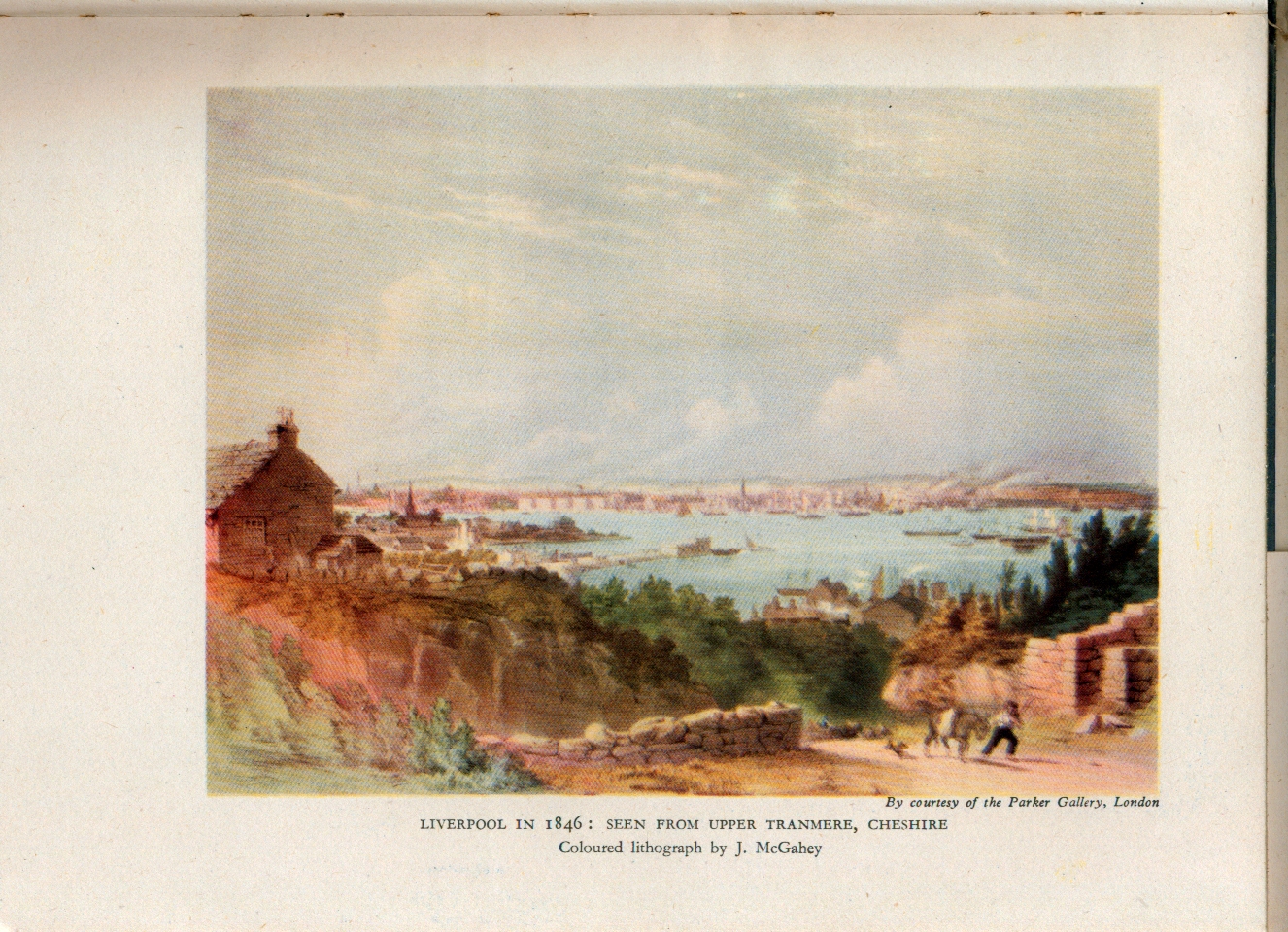
Liverpool in the mid-19th century

I’ve just been reading Leo Walmsley’s entertaining account of how as a child he ran away from his aunt and uncle for a day in order to explore Liverpool Docks.

The story is told in the first chapter of a short book called British Ports and Harbours in the Britain in Pictures series – but don’t be misled, for as usual with that series there’s plenty to read as well as some interesting images.

Leo was a spirited young fella who had been sent temporarily away from his home in a Yorkshire fishing village to stay with some particularly strict and dull relatives. The relatives happened to live just a few miles from the exciting city of Liverpool and its docks and it seems there was little likelihood of Leo allowing the opportunity to see the ships, sailors and stevedores at work to slip through his fingers.

So the youngster ran away for a few hours and had the time of his life: he saw all the exciting and exotic sights, sounds and even smells he was looking for, and to cap it all, met a ship’s captain who invited him for tea before escorting him back to his guardians.

His eyes must have been like saucers.

‘It was the start of a day of mounting excitements and unbelievable joy… I wanted to see the docks and ships, and see them I did, or as much of them as I could in the course of that swiftly passing day. I could tell where the docks were by the smell of them, without the sight of masts and funnels rising above the roofs of warehouses; a smell compounded of oil and smoke and tar and spices, a smell that lingers on a ship even when she is miles from land, and is accentuated rather than overcome by the briney vapours of the open sea. There were steamers, huge ones, so close to the dock wall that you could actually touch them. Some had English names. Others were foreign and they were flying foreign flags which I had never seen before… And the things that were coming out, or going into those ships! Great packages with foreign printing on them, casks, rolls of paper, timber, iron rails, bales of cotton and bundles of hides, machinery and even live cattle. Hundreds of men as well as the sailors themselves were helping in this work. Most of them were very big… ‘

Six decades later, the sights and smells of docks in London and elsewhere had a similar effect on me, though I doubt a container dock has the same magic.

But back to the early years of the last century, the moment that Walmsley is writing about. Of the captain, he says this:

‘He took me all over his ship, down into the holds and the engine room, explaining everything, but also asking me plenty of questions… he showed me a lot of curious that he had brought from foreign parts, including a wonderful model native canoe, which he said I could have. I was so excited I scarcely noticed a man in a white coat, who came into the cabin and laid the table, until he said “Tea is served, sir!”.’

I hadn’t heard about Leo Walmsley until I started reading British Ports and Harbours but it seems he’s quite well known and even has a society devoted to him.

How an Irish village erected a monument depicting an 1886 America’s Cup challenger

Galatea sculpture 2009

The Galatea monument, Ballynacally

I’ve just heard from a descendant of the skipper of the Galatea that the people of the Irish village of Ballynacally have recently celebrated the unveiling of a monument depicting the 1886 America’s Cup racing yacht.

The great-granddaughter of Galatea skipper Daniel Bradford, Mrs Barbara Caveney (nee Bradford) reports that the sculpture was unveiled in a village playground by Brigadier Frank Henn, a relation of William Henn, who with his wife owned the Galatea from 1885. The village was also presented with a print depicting the Galatea racing against the American challenger the Mayflower.

Mrs Caveney was very surprised but absolutely delighted when someone in the village sent her information and photos of the event after reading about the Galatea at intheboatshed.net – the post included an appeal from her for information about the her great grandfather, the racing yacht and the family who owned her.

See the original post including and the photos from Jeff Cole’s collection here. I should explain that the Galatea didn’t win the America’s Cup, but the Henns became famous hosts aboard their yacht, which surprisingly wasn’t in fact designed to be an out-and-out racer.

But what was the connection between the little Irish village and the America’s Cup yacht? Mrs Caveney explains:

‘Ballynacally on the West Coast of Ireland is the place where Lft William Henn RN of Galatea fame was born, and is buried in the family graveyard of Paradise House.

In 1885 his wife Susan Henn commissioned J Beavor-Webb to design the Galatea to be built.

There is a lot of information in the archives of the New York Times archives on the lead up to the famous America Cup race in 1886 where Galatea was beaten by Mayflower. My great-grandfather’s name appears quite frequently in the write-ups. He lived in Devon.

The Henns lived on board the Galatea, which was not built to be a racing yacht. There are great pictures of the inside of the yacht in a book by Ian Dear.

Lft Henn unfortunately became ill and died at the young age of 44 in 1894.
From what I can ascertain from the internet, Mrs Susan Henn continued to live on Galatea after her husband`s death.

Skipper Bradford helped her look after the yacht until he dropped dead on board the yacht in Dartmouth Harbour in April 1902 at the age of 52 years.

Mrs Henn I believe continued to live on board the yacht until her death in 1911. The following year the yacht was broken up in Plymouth.

Going back to Ballynacally, apparently the Henn family were very helpful to the people of the village, and this is why the Balnacally Development Association decided to erect the plinth showing the Galatea out of respect to the kindness of the family.

I will add I found most of this information from the Internet in recent years – when I started researching my family history all I knew was that I had a great grandfather who was the skipper on a famous yacht called the Galatea.

Hope this has been helpful.

Regards Barbara C’

That’s very helpful indeed – thank you Mrs Caveney!

If anyone else has information relating to the Galatea, Daniel Bradford or the Henns, I’d sure Mrs Caveney would be very pleased to hear from them. Her email address is in the comments at the end of the original intheboatshed.net post linked above.

Print of Mayflower & Galatea presented to Ballynacally Aug 09

The start of the first race for the America’s Cup, September 7th 1886, painted by Admiral Richard Brydges Beechey, RN

Don’t miss something good – start receiving the free weekly inthboatshed.net newsletter.

Tiernan Roe completes a Ninigret

[ad name=”intheboatshed-post”]

Ninigret built by Duncan Sclare

It’s well worth taking a look at boatbuilder Tiernan Roe’s weblog to learn more about the John Atkin (no relation) Ninigret he has just built and sold.

The Ninigret is an easily-driven 22ft design originally intended for fishing in the rough waters of Block Island.

See an earlier Intheboatshed.net post about this project.

I think the builder and the new owner deserve our congratulations on a very nice looking boat, but I think there’s more to this story – for along with quite a few others I think boats that go reasonably fast on relatively low power and while consuming sensible quantities of fuel must be the way of the future.

John Atkin wasn’t a lover of big engines on fishing boats, and said the Ninigret would do 18knots with a 30hp outboard. Tiernan himself says that the fuel costs of this boat will be perhaps a tenth of what a RIB would soak up, and is planning to offer a range of low-power boats in the future.

Don’t miss something good – start receiving the free weekly intheboatshed.net newsletter.