Paddle steamer Medway Queen’s restoration in doubt again

[ad name=”intheboatshed-post”]

Paddle steamer Medway Queen’s restoration in doubt again

The paddle steamer Medway Queen’s future is now in doubt because of the way she was built in 1924. Click on the  image for a larger and clearer view

This worrying notice has appeared on the Medway Queen Preservation Society’s website: it seems the society and their gracious old ship may be in some trouble. If anyone out there thinks they can influence events, please do!

20th September 2007
On Monday 17th September Chairman, Vice Chairman and Treasurer of the Society, together with our Technical adviser Wyn Davies and Jonathan Shaw MP met with senior officers of the Heritage Lottery Fund (HLF). At the meeting HLF re-confirmed that they were committed to providing £1.861 million towards re-building ‘Medway Queen’s hull’ and that the reason for the delay in starting was to ensure the conservation issues had been addressed properly before contracts were signed.

As reported at the AGM, HLF’s technical advisers had asked MQPS to go back to the drawing board and seek quotations for a fully riveted hull to the original specifications. 11 shipyards were approached and four – three in the UK, one in Norway, were prepared to tender for the work. We also approached the UK Maritime and Coastguard Agency (MCA) and two classification Societies (Det Norske Veritas and Lloyds) to find out whether it would be possible for a ship built to 1924 standards of construction to eventually obtain a passenger certificate. We were able to report that, rather against initial expectations, it might well be possible to obtain a passenger certificate for a ship build to the 1924 standards, but further investigation revealed that even in 1924 ‘Medway Queen’ did not match the standards. A ship built to the dimensions of ‘Medway Queen’ and to the 1924 Lloyds standards would be around 20% heavier than ‘Medway Queen’ was and, given the very limited deadweight capacity of ‘Medway Queen’ as built, such a ship would be unable to carry passengers. So the only practicable solution to building a hull to match the Lloyds requirements will be to use modern welded construction.

HLF felt that to use modern construction for the hull, with limited use of rivets where they would have been visible on the old hull (generally, in machinery spaces not usually visible to the public) was a sufficiently large departure from our stated intention to re-build the ship using traditional methods wherever practicable, to require their Trustees approval before proceeding further. The relevant Trustees’ meeting is on 5th December, and our next task is to prepare the case for the Trustees approval and to have contracts ready for starting work early in the New Year.

In the process of reviewing the case for riveted construction we have learned much about the pros and cons of traditional steel shipbuilding methods – as indeed have the HLF. ‘Medway Queen’ continues to pioneer new territory in maritime preservation!

The Society are very grateful to Jonathan Shaw MP for taking time out from his ministerial duties to participate in this riveting discussions with the HLF.
Speaking of sweet little cruising yachts, take a long look at the Dallimore sloop Roach

[ad name=”intheboatshed-post”]

Speaking of sweet little cruising yachts… Take a long look at the Dallimore sloop Roach

Speaking of sweet little cruising yachts… Take a long look at the Dallimore sloop Roach Speaking of sweet little cruising yachts… Take a long look at the Dallimore sloop Roach
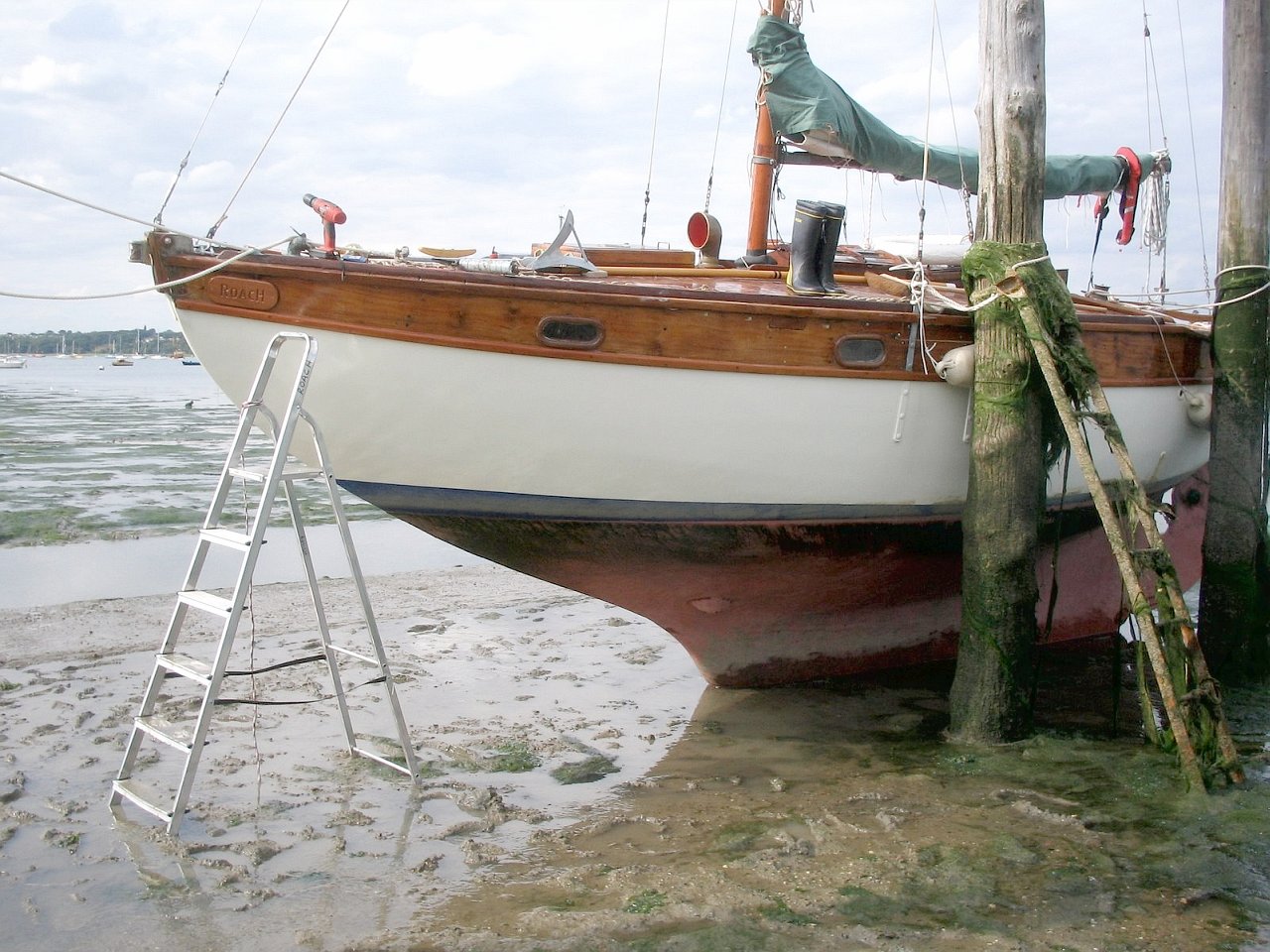
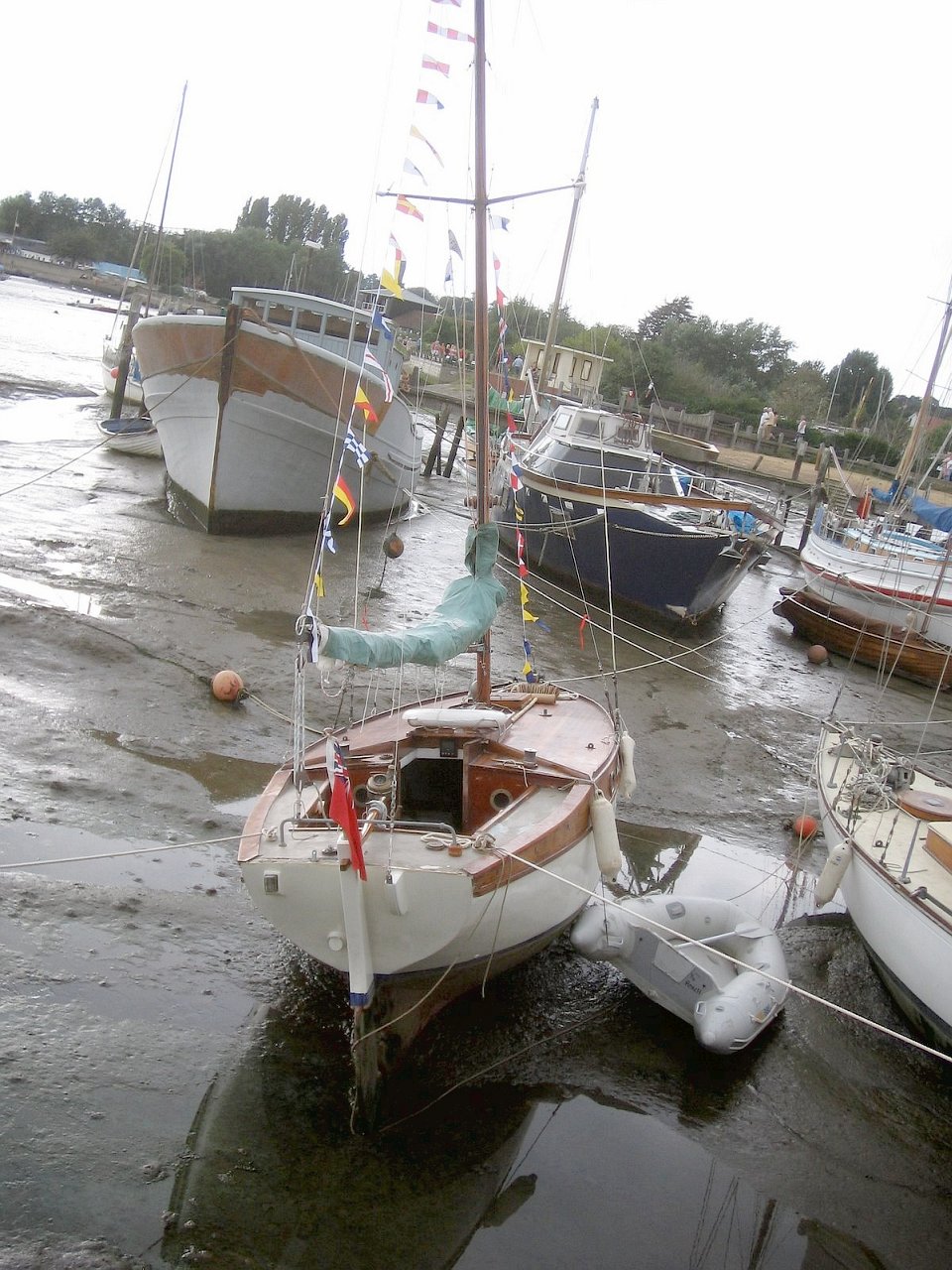
Roach dried out for some work; dressed all over with flags; and her roomy interior
Today, I’d like to draw your attention to the weblog Roach’s Adventures, which is listed in the blogroll in the right-hand column of intheboatshed.net. Roach is a delightful little boat and her owner’s weblog is an entertaining personal collection of photos, anecdotes, information about the boat and, in recent weeks, early sailing adventures following the main part of her recent refit.

As always with this things, I can’t help being impressed by her owner’s willingness to take on a project that’s inevitably going to be difficult, expensive and time consuming, but I have no difficulty in understanding the satisfaction he must feel.

Weblogs can sometimes be a little difficult to navigate around so here are some entries that might interest many intheboatshed readers. The key to finding your way around this one, by the way, seems to be to click on items listed in monthly archive of entries in the right-hand column.

This archive entry includes a review of the Burnham sloop design:

http://roach1948.blogspot.com/2006_09_01_archive.html

This entry looks at the design again:

http://roach1948.blogspot.com/2007_01_01_archive.html

Work on her timbers, and some material about Roach’s sisters:

http://roach1948.blogspot.com/2007_04_01_archive.html

The launch!

http://roach1948.blogspot.com/2007_06_01_archive.html

Shakedown trip:

http://roach1948.blogspot.com/2007_07_01_archive.html

Unending woodwork:

http://roach1948.blogspot.com/2007_08_01_archive.html

First real trip:

http://roach1948.blogspot.com/2007_09_01_archive.html

Hillyard 4-tonner Patsy Rye prepares for sea

[ad name=”intheboatshed-post”]

Nigel Davidson’s Hillyard 4-tonner Patsy Rye prepares for sea

Nigel Davidson’s Hillyard 4-tonner Patsy Rye prepares for sea Nigel Davidson’s Hillyard 4-tonner Patsy Rye prepares for sea Nigel Davidson’s Hillyard 4-tonner Patsy Rye prepares for sea

Nigel Davidson’s Hillyard 4-tonner Patsy Rye prepares for sea Nigel Davidson’s Hillyard 4-tonner Patsy Rye prepares for sea Nigel Davidson’s Hillyard 4-tonner Patsy Rye prepares for sea

Nigel Davidson’s Hillyard 4-tonner Patsy Rye prepares for sea Nigel Davidson’s Hillyard 4-tonner Patsy Rye prepares for sea Nigel Davidson’s Hillyard 4-tonner Patsy Rye prepares for sea

Nigel Davidson’s Hillyard 4-tonner Patsy Rye prepares for sea Nigel Davidson’s Hillyard 4-tonner Patsy Rye prepares for sea Nigel Davidson’s Hillyard 4-tonner Patsy Rye prepares for sea

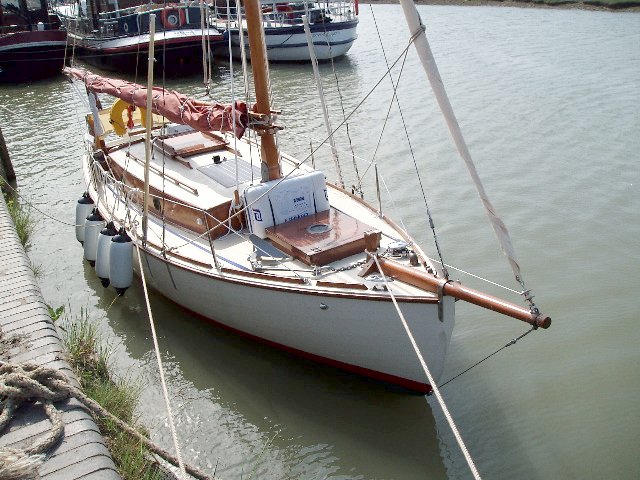
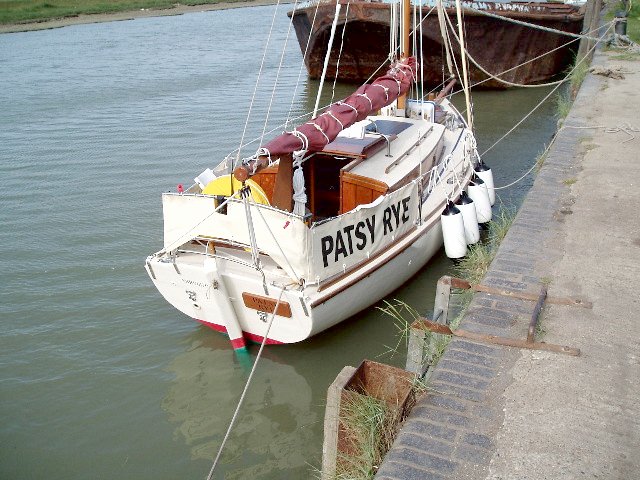
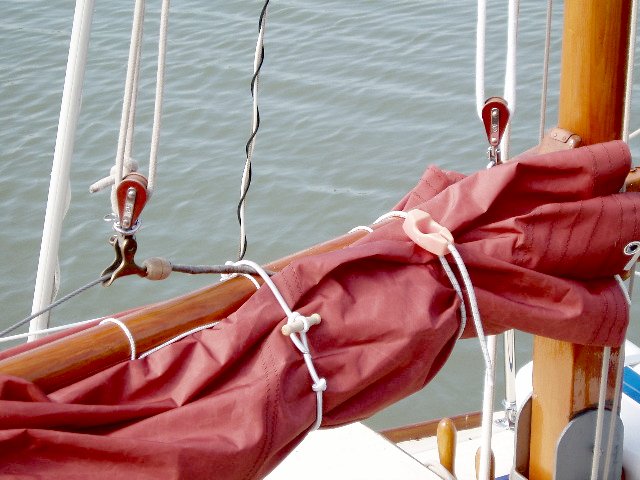
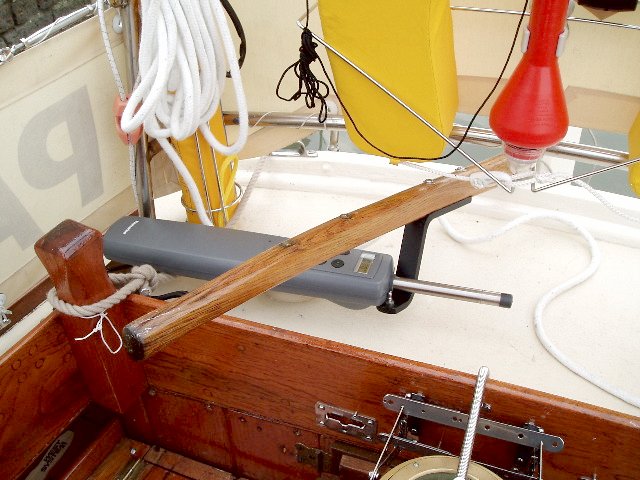
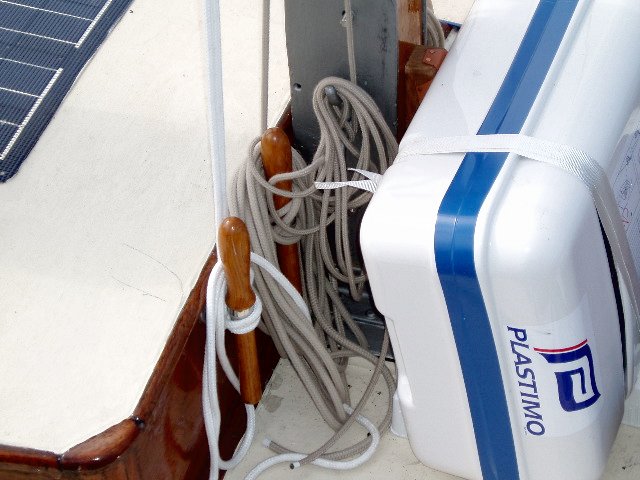
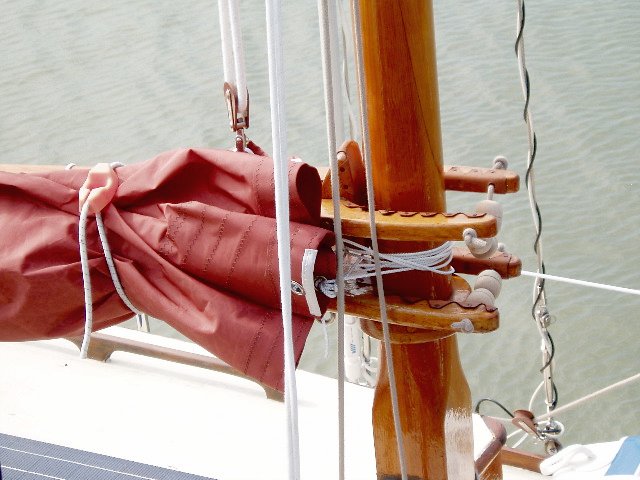
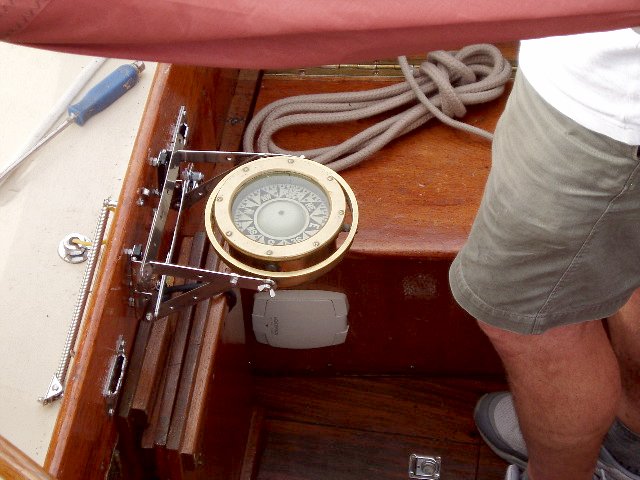
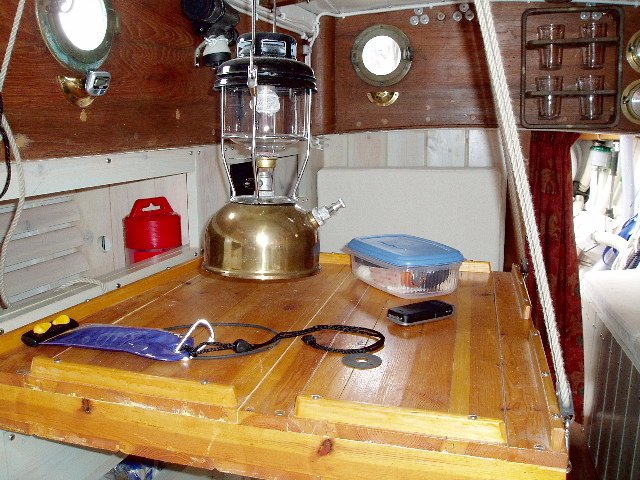
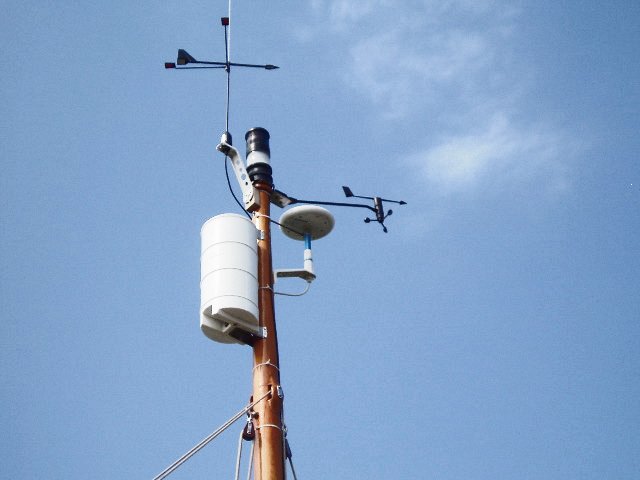
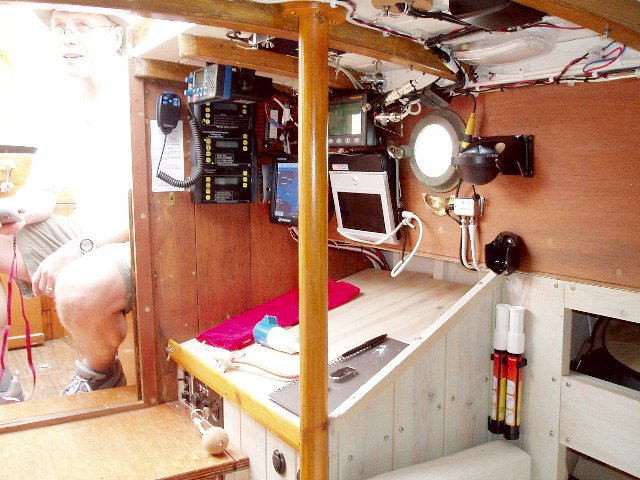
Well known Faversham chandler Nigel Davidson’s Patsy Rye prepares for sea. Thanks for the photos go to regular contributor and friend of intheboatshed.net Bob Telford

For some time, one of the sights of Faversham Creek has been a sweet little yacht undergoing a major refit outside the chandlery at Iron Wharf. The Patsy Rye belongs to the chandler himself, Nigel Davidson, and it turns out that he’s planning a major voyage in a rather special little boat. Here’s his story:

‘Patsy Rye is a 22′, Hillyard 4 tonner built in 1937. Originally named Patsy, she was one of two specially commissioned by the British Army Yacht Club of Alexandria in Egypt. This meant she is teak on oak, to resist the heat, and consequently is in great nick.
‘However some previous owner had sheathed her pine decks with ply and polyester which caused the inevitable widespread rot. The owner before me therefore had had the foredeck, transom and side decks all replaced professionally. This left my only significant structural repair the replacement of three cabin deck planks, scarfing in the ends of 5 deck beams and sheathing the deck with ply and epoxy.

‘I bought Patsy, as she was then, about two and a half years ago. I had long planned to retire in 2008 and was looking specifically for a 4 ton Hillyard to fulfill my ambition of seeing the UK by sailing round it. In the ’80s I’d owned a 4 tonner before, Fortuna II, and knew they were good sea boats, easy to manage single handed, and that they motored well. As a gaffer I would be able to raise and lower the mast on my own.

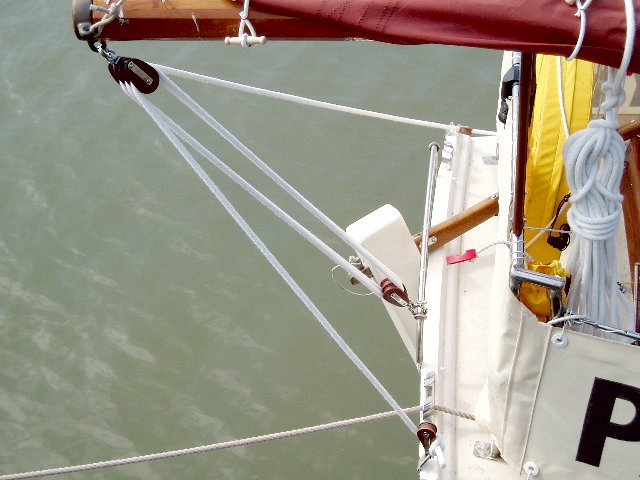
‘Patsy Rye was originally a Bermudan cutter, so I had her changed to gaff rig. Masts and spars were by Dan Tester of Hollowshore. Sail plan and sails were by Rochester Sails.

‘When I bought her the inside was sound, probably original, but astonishingly impractical. Fortunately all those years ago I’d totally refitted Fortuna so I had a readymade blue print for Patsy Rye – and I could have her placed right outside my chandlery – heaven!

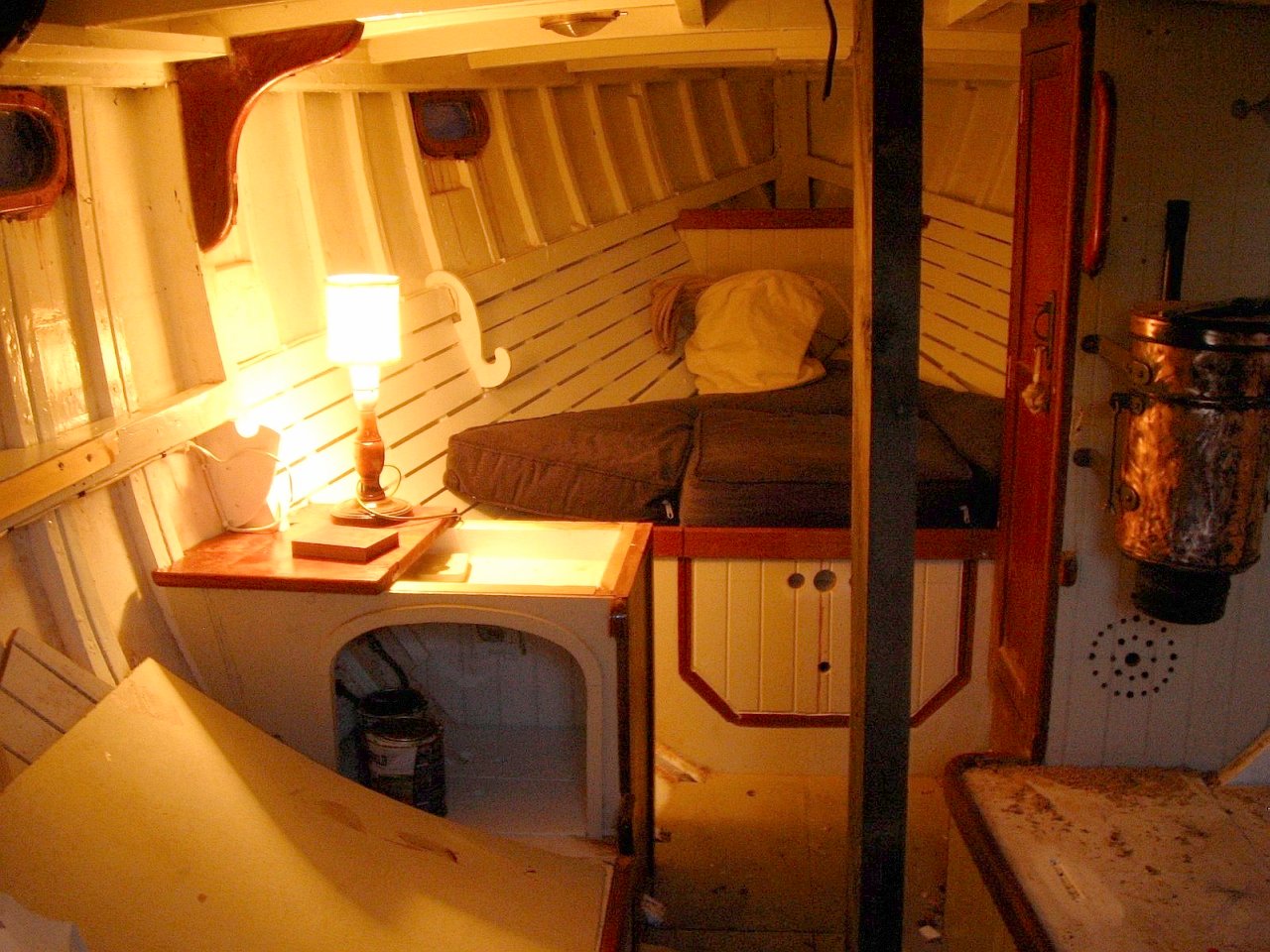
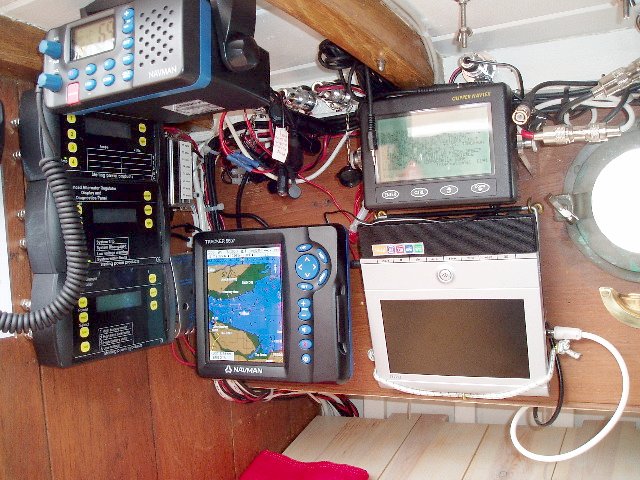
‘The refit took two years. Everything inside is new – except the engine, which is a 1999 Yanmar 1GM10. The layout is simple. Sink/drainer, cooker and bunk to starboard. 200ltr flexi water tank under the bunk. Chart table and dinette to port. Numerous electrics under the chart table, Cupboards under the dinette seats and the table drops to form a second bunk. Heads, black tank, hanging cupboard and stowage in the forecabin. Fridge under the starboard cockpit seat, batteries under the port one.

‘She was finished and launched in June. The chandlery is now up for sale. I’ve had about four weekends learning to sail again. I’ve one more scheduled in October, to try out my cold weather sytems, and I plan to set off at the end of March. I’d have like to have gone anti-clockwise, but the east coast is just too cold early in the year. It’ll be London first then down the Thames and turn right!’

The best of luck Nigel, and thanks for telling your story.

I do hope Nigel will be kind enough to update us on his progress from time to time. And if you’re interested in buying a nicely set-up chandlery with a regular customer base, contact Nigel at creek_chandlery@btconnect.com. All of us who sail in the area will be most grateful if you do!

Pass this link to interested friends:

http://intheboatshed.net/2007/09/19/hillyard-4-tonner-patsy-rye-prepares-for-sea/

Please tell us your story: gmatkin@gmail.com