An 18ft sharpie drawn by Reuel Parker

Mack Horton sharpie Mack Horton sharpie Mack Horton sharpie

Send this link to interested friends: http://intheboatshed.net/?p=521

By now, dear reader, you will know that I have a strange affliction in which almost every day something grips my stomach and says: YOU must BUILD a sharpie NOW!

I guess it’s partly because I’m not terribly skilled in the carpentry department, and however elegant they may be, sharpies always look a lot easier to build than any round-bottomed boat.

It’s a bit like that moment when you buy your first house and walk into a DIY shed. Young and impressionable, you look around, size up the hardware and the free instruction leaflets, and all of a sudden you’re thinking ‘I could install a new back door and put in a central heating system system while I’m at it – and everything I need is here in front of me, right now. I CAN do anything if I want to! DIY sheds are of course meant to make any man feel that way. They even fill them with a syrupy love song soundtrack to remind us we can do it all for our partners…

The idea that I have the power to build a sharpie is only one of the reasons I get gripped by them. Another is that I read Howard Irving Chappelle’s book American Small Sailing Craft far too early in life – I wasn’t yet 40, and it had a terrible and long-lasting effect. And yet another is that they can be such elegant boats, despite their relative simplicity.

Here’s a sweet example of one of these boats. It’s an 18ft sharpie that many sharpie enthusiasts read about first in Reuel Parker’s The Sharpie Book. In this case it was built by a chap called Mack Horton, and a very nice job he has made of it.

Anyway, I’ve included it here partly because I’m nuts about sharpies, and partly because that warm blue sea and water is really attractive when viewed from Southern England in February!

Mack Horton builds a sharpie here:
http://mackhorton.com

If you don’t know about Reuel Parker, the source of Mack’s plans, click here:
http://www.parker-marine.com/parker2_2.htm

Are there any other Brits out there with a liking for sharpies? If so, why not comment below and get in touch? We could form an underground movement…

[ad name=”amazon-chappelle-small-american-sailing-craft”] [ad name=”amazon-chappelle-boatbuilding”] [ad name=”amazon-parker-sharpie”]

[ad name=”mailspeed”]

The Fleet Trow

Fleet trow Fleet trow Fleet trow

Fleet trow Fleet trow Fleet trow

Fleet trow Fleet trow

This may be the most unusual and least known boat type we’ve discussed in these pages. The Fleet trow is designed for use in the often very shallow water of the Fleet, a body of water tucked behind the gravel bank of Chesil Beach. The beach itself is an interesting feature of physical geography and rather overshadows the flash of water behind it. However, this is a place that’s famous in its own right for birds, and for wildfowling from these interesting and heavy flat-bottomed boats.

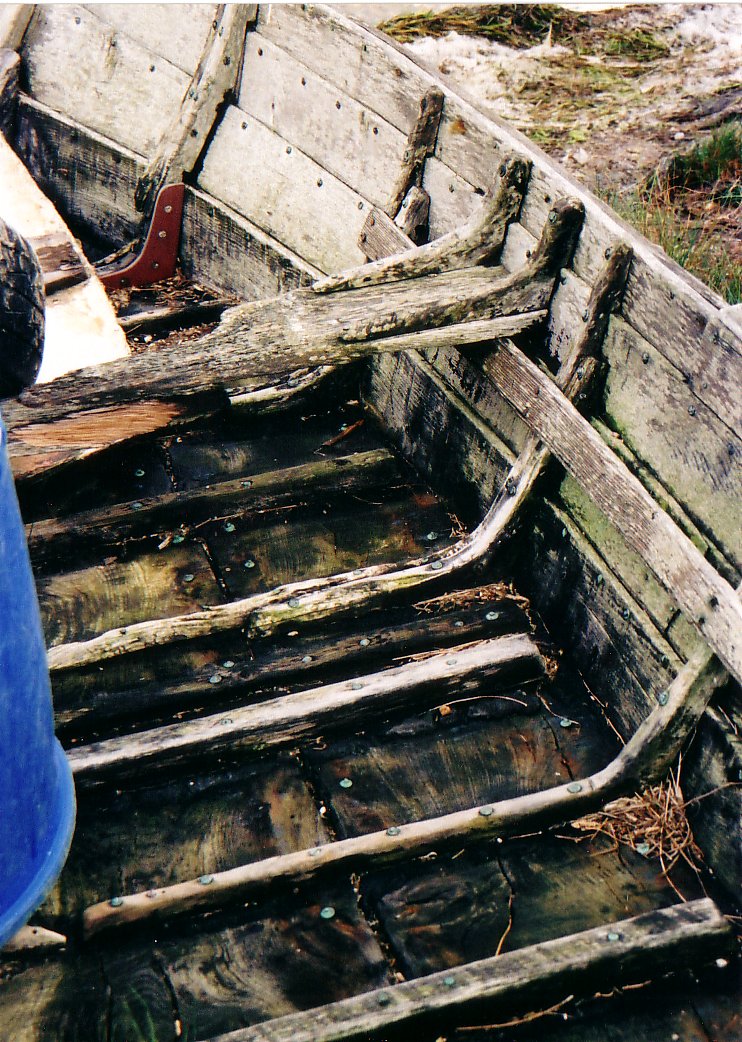
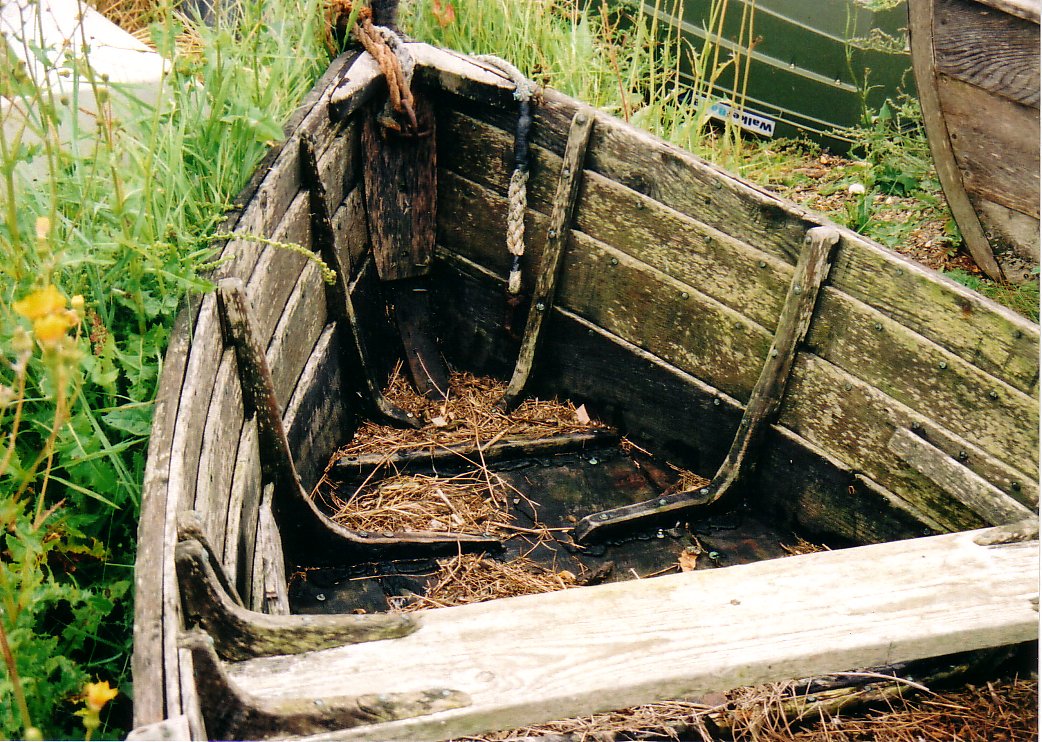
The best known image of a Fleet trow is probably the one in Eric McKee’s Working Boats of Britain – I can’t think of any others that I’ve seen in the magazines or books, but the images above are scans of photos I took of trows on the water and the beach by the Fleet some time ago using a film camera. I’ve got some further images of a trow at a little museum dedicated to Fleet, and I’ll put up some scans of them some day.

The boats are heavily built, as you will see from the photos, and have no rocker fore-and-aft. They are powered either by very old-fashioned square-section oars that mount on the thole pins you will see in the photos or a quant when in weedy water. The oars themselves are interesting because they are counterbalanced by a weight called a ‘copse’.

If you take a peek at Ben Crawshaw’s blog about building my Light Trow design http://www.theinvisibleworkshop.blogspot.com/, you’ll see that while it may have been inspired by Eric McKee’s drawings of these boats, the design I came up with is a very different creature, with its light structure, rockered bottom and even a small sailing rig – I suppose it’s what you might expect from a small boat noodler who admires the purposeful lines and easily developed panels of the Fleet trow, and could see that a faster and lighter version influenced by US-style plywood dories and skiffs could also be sailed and rowed. Some of you will loathe it, but here’s my version for those of you who might be interested:

Light Trow

47 John Gardner small boat designs for £13.19p!

John Gardner Book
This little gem available from Amazon is now a much better price than the one I seem to remember paying a few years ago.It really is a bargain too: 47 designs, many of them classics, and all drawn and described by an acknowledged master of American traditional boat building.

There’s a lot to learn from a book like this, no matter what the nationality of the author may be, and the price is equal to the cost of a small round of drinks. Mine’s a strong bitter please!
John Gardner’s Building Classic Small Craft