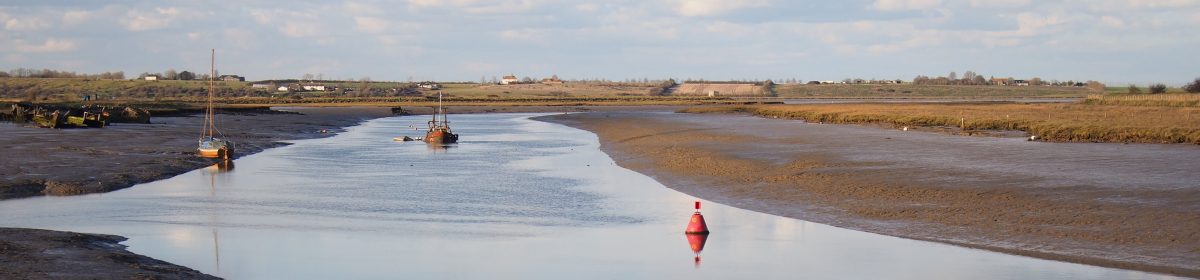
Environment Agency to keep lock-keepers’ houses on the Thames

The Environmental Agency has decided to keep lock keepers’ cottages
along the banks of the Thames. This example is at Sonning

The Environment Agency has decided it now wishes to maintain the chain of resident lock and weir keepers at each of its 45 lock sites along the River Thames.

The organisation changed its mind after staff, MPs, river users and those who live in the flood plain raised objections to earlier proposals to sell off ten of the lock keepers’ cottages.

It still plans to sell some houses, but these will be properties that are not either on or adjacent to locks and weirs.

‘We are confident that this proposal will address the concerns raised previously, while ensuring that we are able to use the assets we no longer need to raise money which we can reinvest in managing the river,’ said EA regional director Howard Davidson.

He added that no lock and weir staff will be made homeless or redundant as a result of any decision on lock houses and that staff in the five off-site houses due to be sold will be moved into houses at or adjacent to a lock in due course.

The EA says that it currently own 57 lock houses, and that of these, 52 are on or adjacent to lock sites.

For more intheboatshed.net posts relating to the River Thames, click here.

A new edition of Practical Boat Building for Amateurs from Ken Hanson

[ad name=”intheboatshed-post”]

The Rob Roy canoe, from Practical Boat Building for Amateurs

‘To be able to build a boat well, and to his own ideas and plans, requires that the amateur should be both a designer and builder, which, in their turn require that he should be an efficient draughtsman and carpenter. No one can hope to succeed in building a boat to his own plan, unless he is fully able to design and lay down the lines and body plan of the proposed craft, and added to this in many kinds of boats, such as a small sailing boat, or a steam launch, it is necessary that he should be able to calculate the displacement and the position of the centre of buoyancy. With this knowledge at his command, an unlimited field is opened to the amateur boat-builder, as he will be able to build after his own ideas.’

Ken Hanson is about to publish a new edition of Adrian Neison’s famous book Practical Boat Building for Amateurs – as he says,  he has scanned the book, cleaned up the illustrations and then did some editing to catch the odd mistake and to re-paragraph some of the overly-Victorian sections to make them easier to read. The new layout has larger type for the same reason.

I’m delighted to say that he’s also made a pdf file of the new edition available for download from intheboatshed.net: click here to receive it.

I should warn you that this is about 10megs in size, and even with a broadband connection it’s likely to take some moments to arrive safely on your computer!

The new PBBA will be available at Amazon or through special order at any booksellers (distribution from Ingram and Blackwells) at the most attractive, Christmas stocking-filler price of $9.99 (US) and  £5.37 (UK). Click here for the book details.

For earlier posts including a full set of scans of my personal copy of Practical Boat Building for Amateurs, click here.

Saving the SS Columbia

[ad name=”intheboatshed-post”]

SS Columbia – as usual, click on the thumbnail for a
larger photo of this amazine craft

The project to restore the SS Columbia, the USA’s oldest surviving passenger steamer, is a seriously big one – but she’s an astonishing vessel. She was designed in 1902 by the naval architect Frank Kirby and artist Louis O Keil to transport people from the city into the countryside, and was adorned with mahogany panelling, murals, glass artworks, gilded mouldings, a grand staircase and an innovative open-air ballroom.

She was powered by a massive 1200 horsepower steam engine that could be viewed by the public.

Once restored, the restorers plan to put her to work as an education resource, as a cultural venue and museum, and to provide regular excursions visiting the Hudson River and New York’s harbour.

It’s an awesome project, and I’m sure we all hope they’re successful. The photo below of the Columbia’s bridge and project president Richard Anderson gives some idea of the work that needs to be done.

Read more at the project weblog: http://www.sscolumbia.org

Project president Richard Anderson standing by Columbia’s
bridge. There’s a lot of work to do!