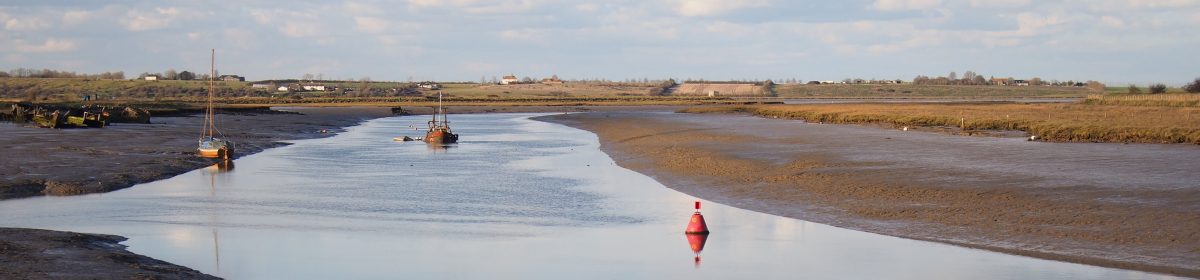
Famous Thames sailing barge Cambria comes to Faversham for restoration

[ad name=”intheboatshed-post”]

Famous Thames sailing barge Cambria comes to Faversham for restoration

Famous

The Thames sailing barge Cambria arriving at Faversham for restoration. Photos by Bob Telford

Thames sailing barge Cambria has been brought to Standard Quay in Faversham for restoration and rebuilding, and from these photos there’s clearly going to be a lot of work to do.

The Cambria is arguably the most famous of all the Thames barges, partly because she was the last British registered vessel to carry a commercial cargo under sail. In fact, she worked under sail without any kind of engine right up until 1970, and so forms a unique part of our industrial and maritime heritage. But that’s only part of her story, for the Cambria’s skipper was also a national treasure for his collection of songs and his way of singing them. See this very nice article about him by members of his family: http://www.eatmt.org.uk/bob_roberts.htm

Cambria is a wooden Thames sailing barge built at Greenhithe, Kent in 1906. Her National Lottery-funded restoration will cost Continue reading “Famous Thames sailing barge Cambria comes to Faversham for restoration”

An ancient Irish skin boat engraving to hang on your wall

[ad name=”intheboatshed-post”]

Ancient Irish skin boat engraving - ancestor of the curragh

Ancient Irish skin boat engraving - ancestor of the curragh

Engraving of ancient Irish skin boat based on a model in the Broyghter hoard, and a drawing in the Pepysian Library

All this talk of curraghs inspired by Jim Van Den Bos’s holiday photos from Ireland has reminded me that I have a lovely old book that includes an engraving of an ancient Irish skin boat that would be well worth hanging on a convenient wall or setting as screensaver – so here it is for your entertainment!

The smaller image provides some explanations, but the mast is made of a tree that has been incompletely trimmed, and the square object near the bows is an early anchor. The author reports that the sail was probably made of skin, but I have difficulty imagining how sailors of the time would have been able to manage with such a heavy sail – particularly if their boat had the same round sections we see in today’s curraghs.

For more posts on curraghs:
Irish curragh skin fishing boats on the Dingle Peninsula
The curraghs of Ireland
Some curragh photos

Irish curragh skin fishing boats on the Dingle Peninsula

[ad name=”intheboatshed-post”]

Irish curragh fishing sikin boats on the Dingle Peninsula

Irish curragh fishing skin boats on the Dingle Peninsula Irish curragh fishing skin boats on the Dingle Peninsula

The legendary Irish curragh skin boat is still used for fishing and racing on the remote and beautiful Dingle Peninsula

My good friends Jim and Eileen Van Den Bos recently visited Eileen’s family in Ireland, and along the way Jim managed to bag these photos showing important details of modern curraghs.

There are some features to notice here: the traditional square-section, non-feathering oars are still clearly in use for auxiliary power, but the boats have outboard wells in what is otherwise very much the hull form you see in old photos and books. Also, these are long, narrow hulls with very round sections, and they also have no skeg and no more than a very slight rubbing strake. These features will allow seas to slide under the hull rather than throw it around, and their low wetted area will also contribute to these boats’ speed under oars or outboard. I’ve several times heard these boats described as canoes, although they’re not really paddling boats.

I’d guess that on such an exposed Atlantic coast these are exactly the characteristics that have enabled this amazing ancient boat type to survive into the 21st Century.

I’m also struck that there may be a suggestion that these boats may have a Continue reading “Irish curragh skin fishing boats on the Dingle Peninsula”